


COVID-19 severity is associated with worsened neurological outcomes in multiple sclerosis and related disorders
- PMID: 35709663
- PMCID: PMC9556032
- DOI: 10.1016/j.msard.2022.103946
COVID-19 severity is associated with worsened neurological outcomes in multiple sclerosis and related disorders
Abstract
Background: Neurologic outcomes in patients with multiple sclerosis (MS) and related disorders (MSRD) following COVID-19 is not well understood. The objective of this study was to investigate neurologic outcomes in patients with MSRD post-COVID-19.
Methods: This was a retrospective medical records review study of adult patients with MSRD and COVID-19 infection at the Brigham MS Center. Neurologic worsening post-COVID-19 was defined as having a relapse, pseudorelapse, new brain MRI activity, worsening of preexisting MSRD symptoms, or development of other long-term neurologic symptoms.
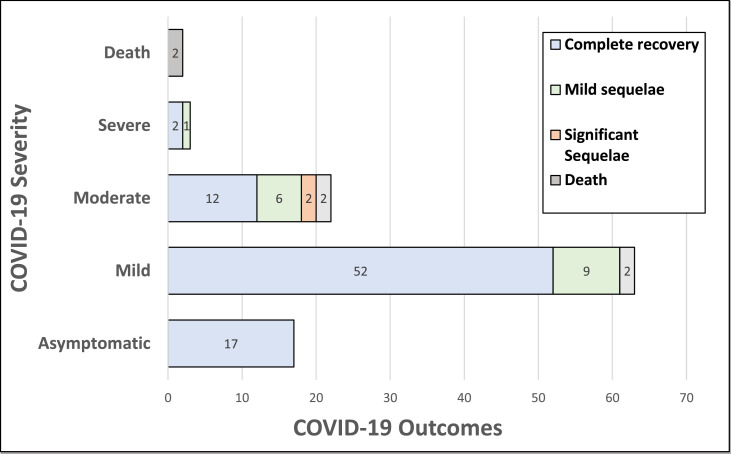
Results: 111 patients, 85 (76.6%) females, with a mean [SD] age of 49.3 [12.2] years and median [range] EDSS of 2.5 [0, 8.5] were identified. 41 patients (36.9%) had neurologic worsening post-COVID-19. Of those, 19 (46.3%) had pseudorelapses, 2 (4.8%) had relapses, and 24 (58.5%) patients reported worsening of preexisting MSRD symptoms, or other new long-term neurologic symptoms. Neurologic worsening was associated with hospitalized (moderate or severe) COVID-19 (p = 0.001), treatment for COVID-19 (p = 0.006), and incomplete COVID-19 recovery (p = 0.0267) but not with age, sex, MS type, race, disease duration, EDSS, vitamin D use, or disease modifying therapy use.
Conclusions: COVID-19 severity and lack of complete systemic recovery were associated with new or worsening neurologic symptoms in 36.9% of MSRD patients.
Keywords: COVID-19; Clinical outcomes; Multiple sclerosis.
Copyright © 2022. Published by Elsevier B.V.
Figures
References
MeSH terms
LinkOut - more resources
Full Text Sources
Medical
