


Evaluation of the Relationship Between the Changes in the Corneal Biomechanical Properties and Changes in the Anterior Segment OCT Parameters Following Customized Corneal Cross-Linking
- PMID: 35711971
- PMCID: PMC9192785
- DOI: 10.2147/OPTH.S361836
Evaluation of the Relationship Between the Changes in the Corneal Biomechanical Properties and Changes in the Anterior Segment OCT Parameters Following Customized Corneal Cross-Linking
Abstract
Purpose: This study aimed to investigate the relationship between changes in corneal biomechanical properties and changes in anterior segment optical coherence tomography (AS-OCT) parameters preoperatively and following customized corneal cross-linking (C-CXL) in eyes with progressive keratoconus.
Patients and methods: This study included 44 eyes of 44 patients (33 men, 11 women; average age 22.8 ± 6.4 years) who underwent C-CXL for progressive keratoconus. Scheimpflug-based tonometer (SBT) and AS-OCT findings were evaluated preoperatively and 3 months following CXL. Parameters related to changes in SBT parameters were examined by multiple regression analysis using the stepwise method.
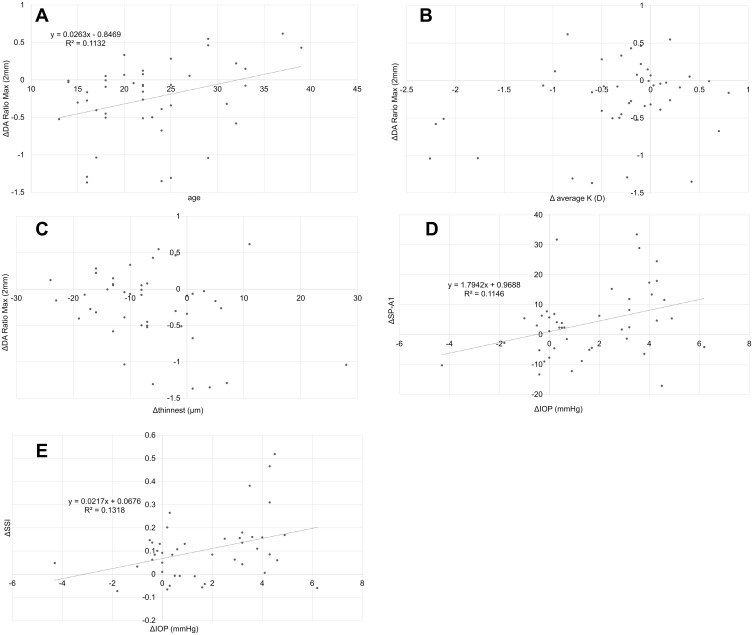
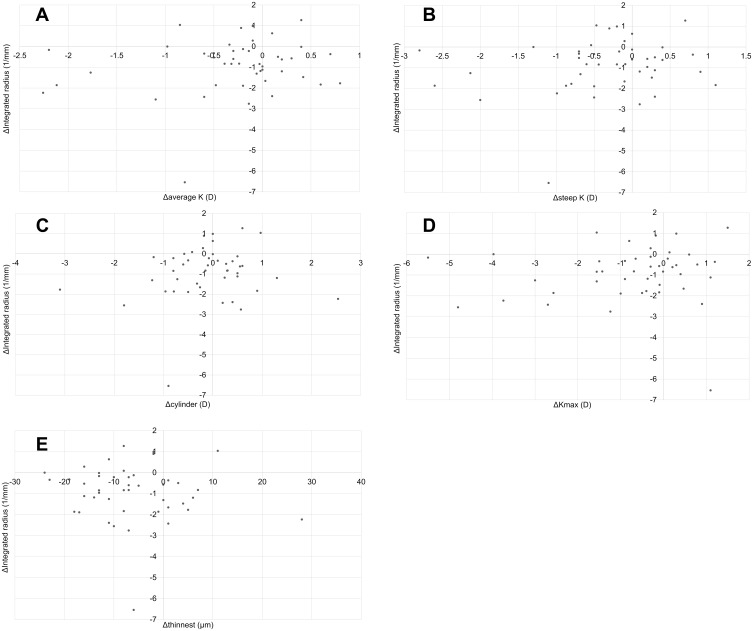
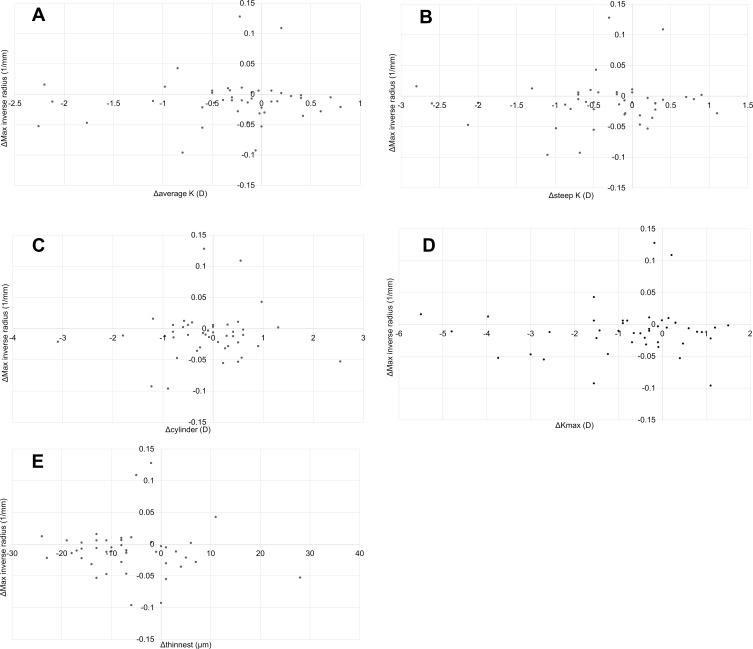
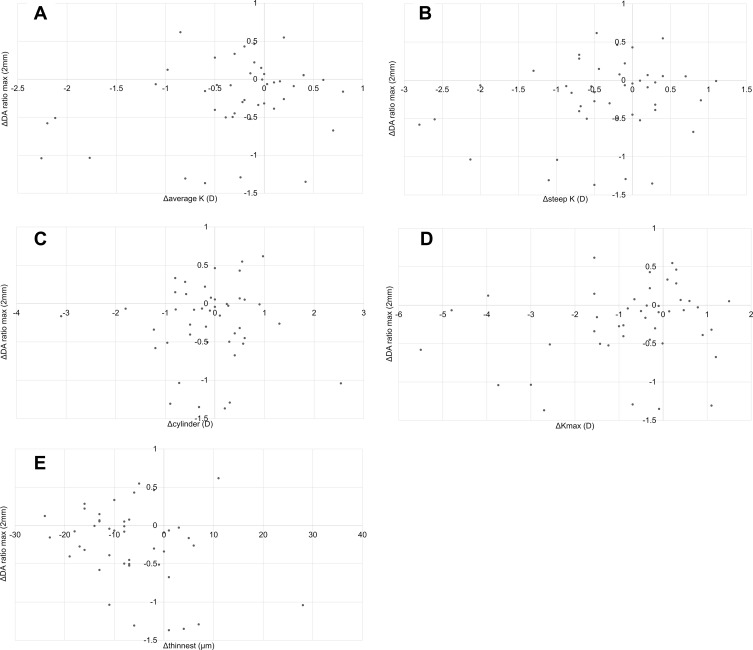
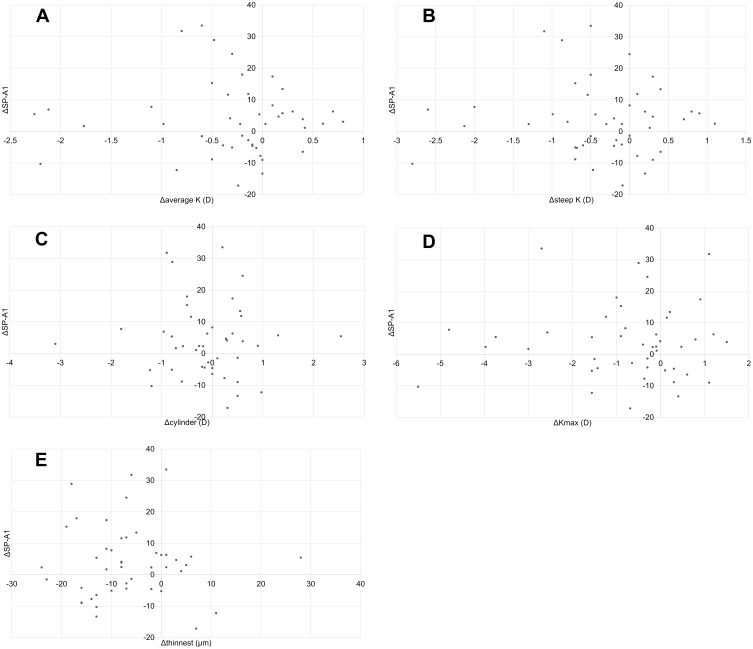
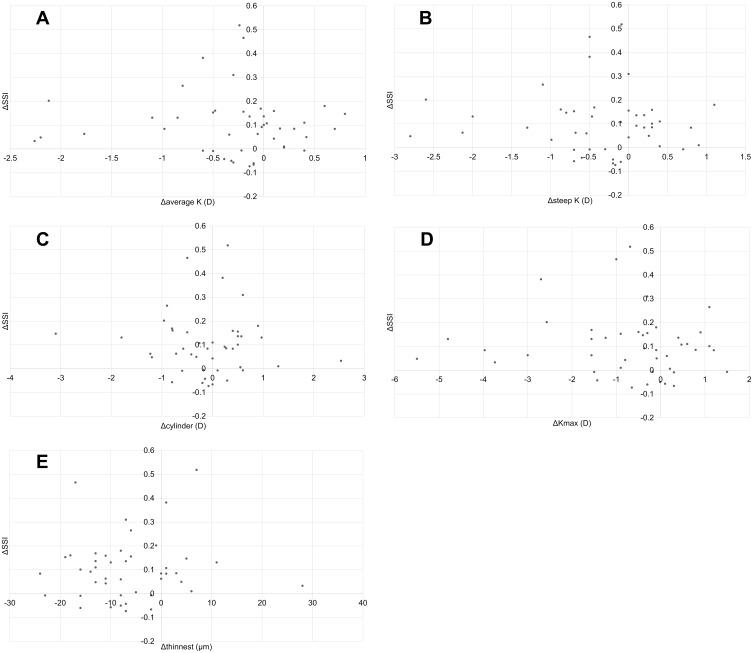
Results: Regarding SBT parameters, significant changes were observed in the integrated area under the curve of the inverse concave radius (pre, 12.19 ± 1.95/mm; post, 11.26 ± 1.89/mm; p < 0.0001), maximum inverse radius (pre, 0.24 ± 0.04/mm; post, 0.23 ± 0.04/mm; p = 0.0053), deformation amplitude ratio max 2 mm (pre, 5.53 ± 0.81; post, 5.29 ± 0.71; p = 0.0048), and stress-strain index (pre, 0.74 ± 0.16; post, 0.84 ± 0.20; p < 0.0001), pre and post C-CXL. Regarding AS-OCT parameters, significant changes were observed in average keratometry (pre, 47.87 ± 3.61 D; post, 47.56 ± 3.29 D, p = 0.0104), steep keratometry (pre, 49.61 ± 4.01 D; post, 49.25 ± 3.59 D; p = 0.0115), maximum keratometry (pre, 55.44 ± 6.22 D; post, 54.68 ± 5.56 D; p = 0.0061), and thinnest corneal thickness (pre, 450.43 ± 41.74 μm; post, 444.00 ± 39.35 μm; p < 0.0001), pre and post C-CXL. Multiple regression analysis demonstrated that when the change in the deformation amplitude (DA) ratio max (2 mm) was the dependent variable, age, change in average keratometry, and change in the thinnest corneal thickness were selected as explanatory variables. When changes in the stiffness parameter at applanation 1 and stress-strain index were the dependent variables, change in the intraocular pressure (IOP) was selected as the explanatory variable.
Conclusion: Change in the SBT parameters following C-CXL could be related to the age, change in the IOP value, change in average keratometry, and thinnest corneal thickness.
Keywords: corneal biomechanics; corneal tomography; customized corneal cross-linking; keratoconus.
© 2022 Nishida et al.
Conflict of interest statement
Mr. Nishida has no commercial interests to disclose. Dr. Kojima reports receiving personal fees from Staar Surgical, Santen Pharmaceutical, Otsuka Pharmaceutical, and Alcon Japan, outside of the submitted work. Dr. Kojima also has a patent (2019-045345) licensed to Takashi Kojima. Mr. Kataoka, Mr. Isogai, and Dr. Yoshida have no commercial interests to disclose. Dr. Nakamura reports receiving personal fees from Staar Surgical, Santen Pharmaceutical, Otsuka Pharmaceutical, Carl Zeiss Meditec, and Johnson & Johnson, outside the submitted work. The authors report no other conflicts of interest in this work.
Figures
References
LinkOut - more resources
Full Text Sources
Research Materials
