


Comparison of COVID-19 Induced Respiratory Failure and Typical ARDS: Similarities and Differences
- PMID: 35712114
- PMCID: PMC9196311
- DOI: 10.3389/fmed.2022.829771
Comparison of COVID-19 Induced Respiratory Failure and Typical ARDS: Similarities and Differences
Abstract
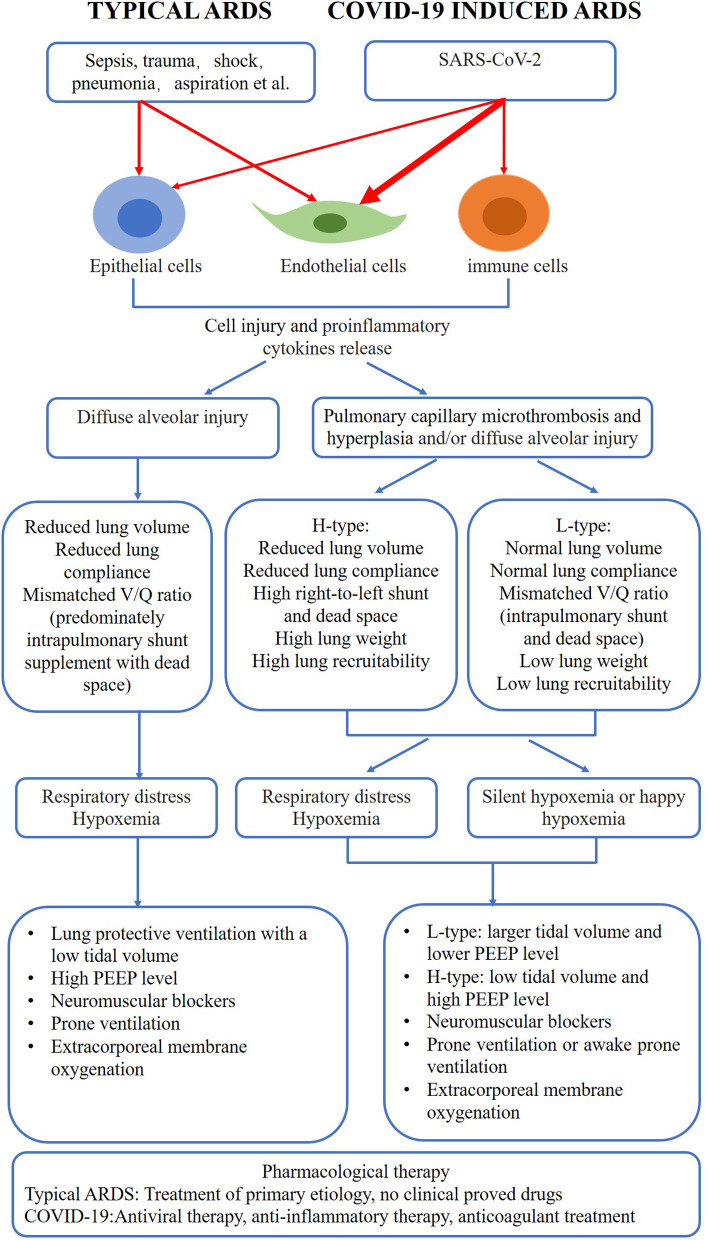
Coronavirus disease 2019 (COVID-19) is a predominantly respiratory infectious disease caused by novel coronavirus infection (SARS-CoV-2), respiratory failure is the main clinical manifestation and the leading cause of death. Even though it can meet the acute respiratory distress syndrome (ARDS) Berlin definition, only some clinical features of COVID-19 are consistent with typical ARDS, and which has its own peculiar phenotypes. When compared with typical ARDS, in addition to the typical diffuse alveolar injury, COVID-19 has unique pathological and pathophysiological features, such as endothelial injury, extensive microthrombus, and pulmonary capillary hyperplasia. The clinical features of patients with respiratory failure caused by COVID-19 are heterogeneous and can be generally divided into two phenotypes: progressive respiratory distress and unique "silent hypoxemia". The "H-type" characteristics of reduced lung volume, decreased lung compliance, and unmatched ventilator-perfusion ratio. While some patients may have close to normal lung compliance, that is "L-type". Identifying the exact phenotype in whom are suffered with COVID-19 is crucial to guide clinicians to adopt appropriate treatment strategies. This review discussed the similarities and differences in the pathogenesis, pathophysiology, clinical features and treatment strategies of COVID-19 induced acute respiratory failure and typical ARDS.
Keywords: ARDS; COVID-19; pathogenesis; pathophysiology; treatment.
Copyright © 2022 Lu, Huang, Liu, Lan, Lei, Zeng, Tang and He.
Conflict of interest statement
The authors declare that the research was conducted in the absence of any commercial or financial relationships that could be construed as a potential conflict of interest.
Figures
References
Publication types
LinkOut - more resources
Full Text Sources
Miscellaneous
