


Impact of fentanyl use on initiation and discontinuation of methadone and buprenorphine/naloxone among people with prescription-type opioid use disorder: secondary analysis of a Canadian treatment trial
- PMID: 35712892
- PMCID: PMC9969999
- DOI: 10.1111/add.15954
Impact of fentanyl use on initiation and discontinuation of methadone and buprenorphine/naloxone among people with prescription-type opioid use disorder: secondary analysis of a Canadian treatment trial
Abstract
Background and aims: Fentanyl is primarily responsible for the current phase of the overdose epidemic in North America. Despite the benefits of treatment with medications for opioid use disorder (MOUD), there are limited data on the association between fentanyl, MOUD type and treatment engagement. The objectives of this analysis were to measure the impact of baseline fentanyl exposure on initiation and discontinuation of MOUD among individuals with prescription-type opioid use disorder (POUD).
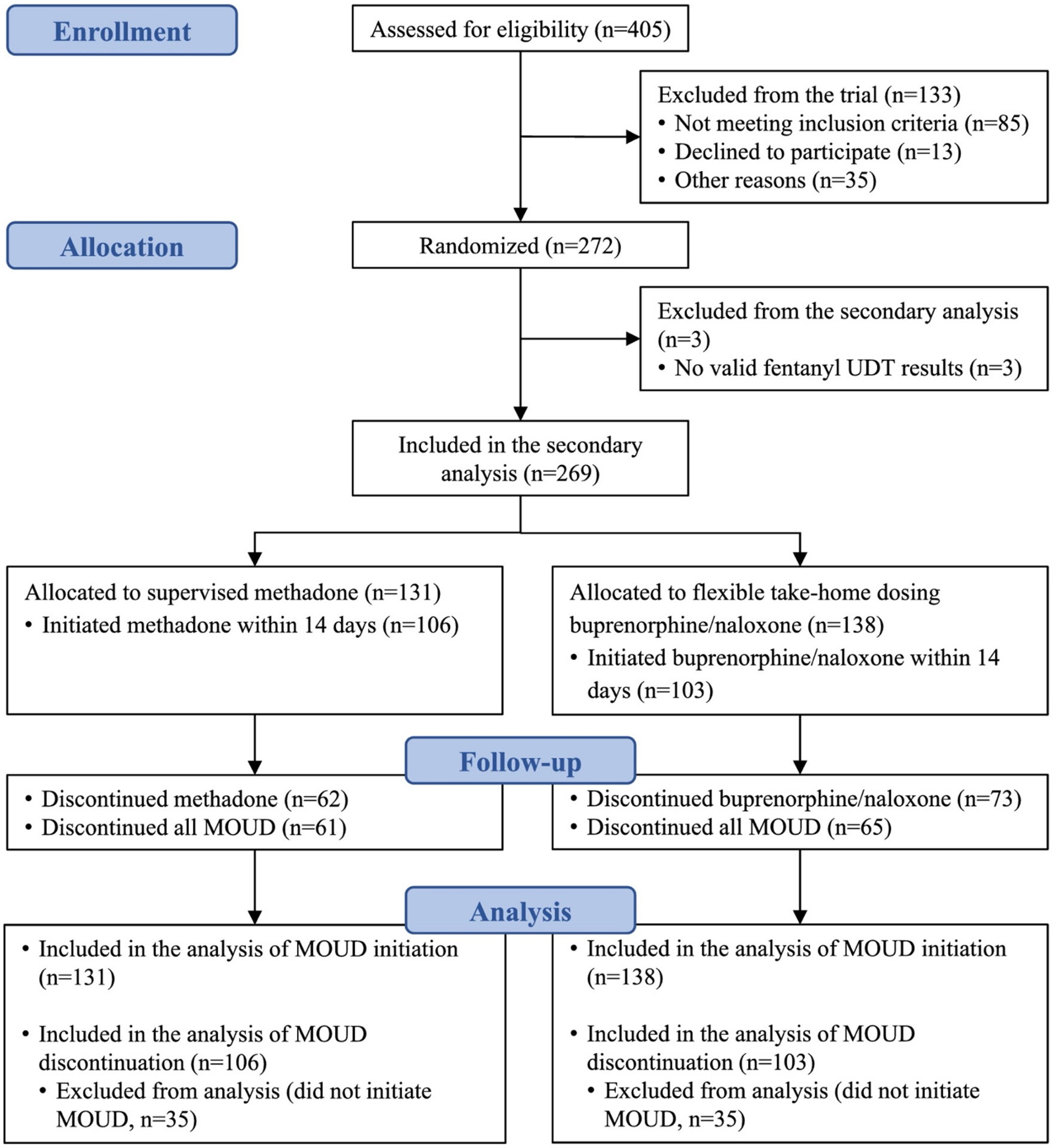
Design, setting and participants: Secondary analysis of a Canadian multi-site randomized pragmatic trial conducted between 2017 and 2020. Of the 269 randomized participants, 65.4% were male, 67.3% self-identified as white and 55.4% had a positive fentanyl urine drug test (UDT) at baseline. Fentanyl-exposed participants were more likely to be younger, to self-identify as non-white, to be unemployed or homeless and to be currently using stimulants than non-fentanyl-exposed participants.
Interventions: Flexible take-home dosing buprenorphine/naloxone or supervised methadone models of care for 24 weeks.
Measurements: Outcomes were (1) MOUD initiation and (2) time to (a) assigned and (b) overall MOUD discontinuation. Independent variables were baseline fentanyl UDT (predictor) and assigned MOUD (effect modifier).
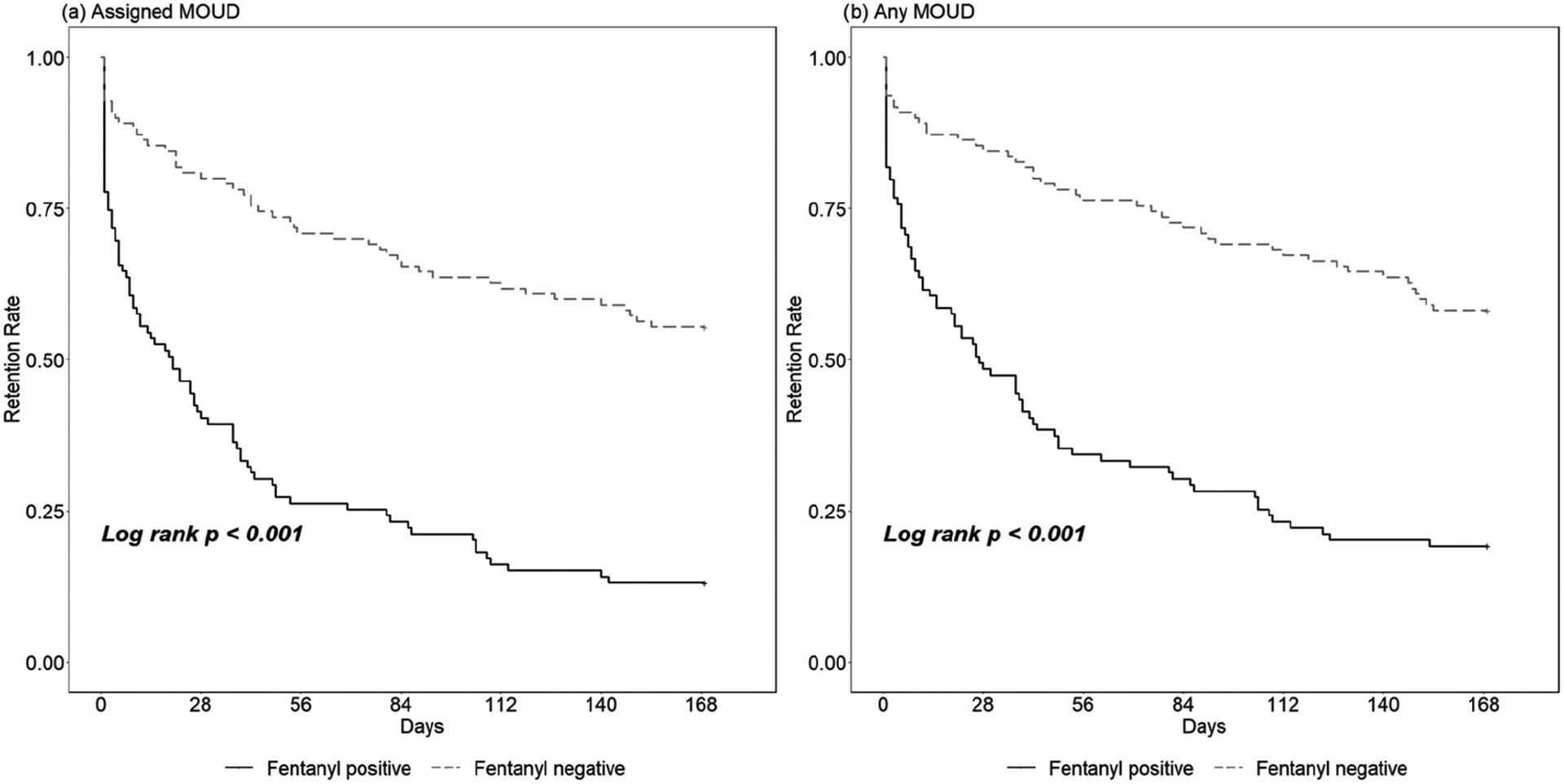
Findings: Overall, 209 participants (77.7%) initiated MOUD. In unadjusted analyses, fentanyl exposure was associated with reduced likelihood of treatment initiation [odds ratio (OR) = 0.18, 95% confidence interval (CI) = 0.08-0.36] and shorter median times in assigned [20 versus 168 days, hazard ratio (HR) = 3.61, 95% CI = 2.52-5.17] and any MOUD (27 versus 168 days, HR = 3.32, 95% CI = 2.30-4.80). The negative effects were no longer statistically significant in adjusted models, and no interaction between fentanyl and MOUD was observed for any of the outcomes (all P > 0.05).
Conclusions: Both buprenorphine/naloxone and methadone may be appropriate treatment options for people with prescription-type opioid use disorder regardless of fentanyl exposure. Other characteristics of fentanyl-exposed individuals appear to be driving the association with poorer treatment outcomes.
Keywords: Buprenorphine; clinical trial; fentanyl; methadone; opioid use disorder; prescription opioids.
© 2022 Society for the Study of Addiction.
Figures
References
-
- Donroe JH, Socias ME, Marshall BDL. The deepening opioid crisis in North America: historical context and current solutions. Curr Addict Rep. 2018; 5: 454–63.
-
- Special Advisory Committee on the Epidemic of Opioid Overdoses. Opioids and Stimulant-related Harms in Canada. Public Health Agency of Canada. Available at: https://health-infobase.canada.ca/substance-related-harms/opioids-stimul... Accessed 7 October 2021.
-
- Ahmad F, Rossen L, Sutton P. Provisional drug overdose death counts. National Center for Health Statistics. Available at: https://www.cdc.gov/nchs/nvss/vsrr/drug-overdose-data.htm Accessed 7 October 2021.
Publication types
MeSH terms
Substances
Grants and funding
LinkOut - more resources
Full Text Sources
Medical
