


Multilocus sequence typing (MLST) analysis reveals many novel genotypes and a high level of genetic diversity in Candida tropicalis isolates from Italy and Africa
- PMID: 35713604
- PMCID: PMC9796097
- DOI: 10.1111/myc.13483
Multilocus sequence typing (MLST) analysis reveals many novel genotypes and a high level of genetic diversity in Candida tropicalis isolates from Italy and Africa
Abstract
Background: Candida tropicalis is a human pathogenic yeast frequently isolated in Latin America and Asian-Pacific regions, although recent studies showed that it is also becoming increasingly widespread throughout several African and south-European countries. Nevertheless, relatively little is known about its global patterns of genetic variation as most of existing multilocus sequence typing (MLST) data come from Asia and there are no genotyped African isolates.
Objectives: We report detailed genotyping data from a large set of C. tropicalis isolates recovered from different clinical sources in Italy, Egypt and Cameroon in order to expand the allele/genotype library of MLST database (https://pubmlst.org/ctropicalis), and to explore the genetic diversity in this species.
Methods: A total of 103 C. tropicalis isolates were genotyped using the MLST scheme developed for this species. All isolates were also tested for in vitro susceptibility to various antifungals to assess whether certain genotypes were associated with drug-resistance.
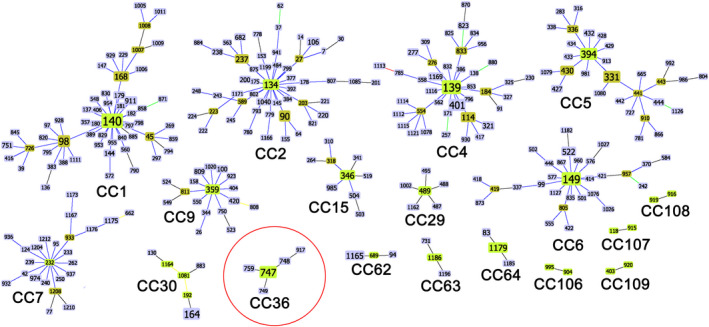
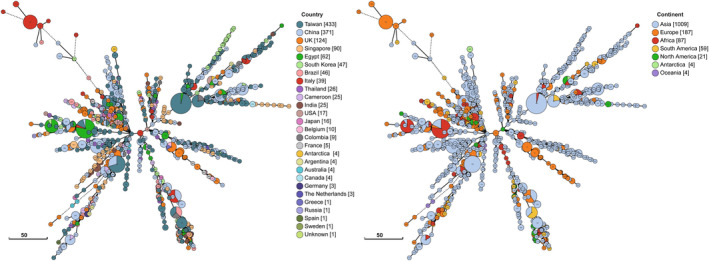
Results and conclusions: A total of 104 different alleles were detected across the MLST-loci investigated. The allelic diversity found at these loci resulted in 51 unique MLST genotypes of which 36 (70.6%) were novel. Global optimal eBURST analysis identified 18 clonal complexes (CCs) and confirm the existence of a specific Italian-cluster (CC36). Three CCs were also statistically associated with fluconazole resistance, which was elevated in Cameroon and Egypt. Our data show high genetic diversity in our isolates suggesting that the global population structure of C. tropicalis is still poorly understood. Moreover, its clinical impact in Italy, Egypt and Cameroon appears to be relevant and should be carefully considered.
Keywords: Candida tropicalis; fluconazole resistance; genetic diversity; non-albicans Candida species, candidiasis, multilocus sequence typing (MLST); population structure.
© 2022 The Authors. Mycoses published by Wiley-VCH GmbH.
Conflict of interest statement
The authors declare that there are no conflicts of interest.
Figures
References
-
- Mahase E. Covid‐19: WHO declares pandemic because of “alarming levels” of spread, severity, and inaction. BMJ. 2020;368:m1036. - PubMed
MeSH terms
Substances
Grants and funding
LinkOut - more resources
Full Text Sources
Medical
