


Expression of a novel mycobacterial phosphodiesterase successfully lowers cAMP levels resulting in reduced tolerance to cell wall-targeting antimicrobials
- PMID: 35718063
- PMCID: PMC9293780
- DOI: 10.1016/j.jbc.2022.102151
Expression of a novel mycobacterial phosphodiesterase successfully lowers cAMP levels resulting in reduced tolerance to cell wall-targeting antimicrobials
Abstract
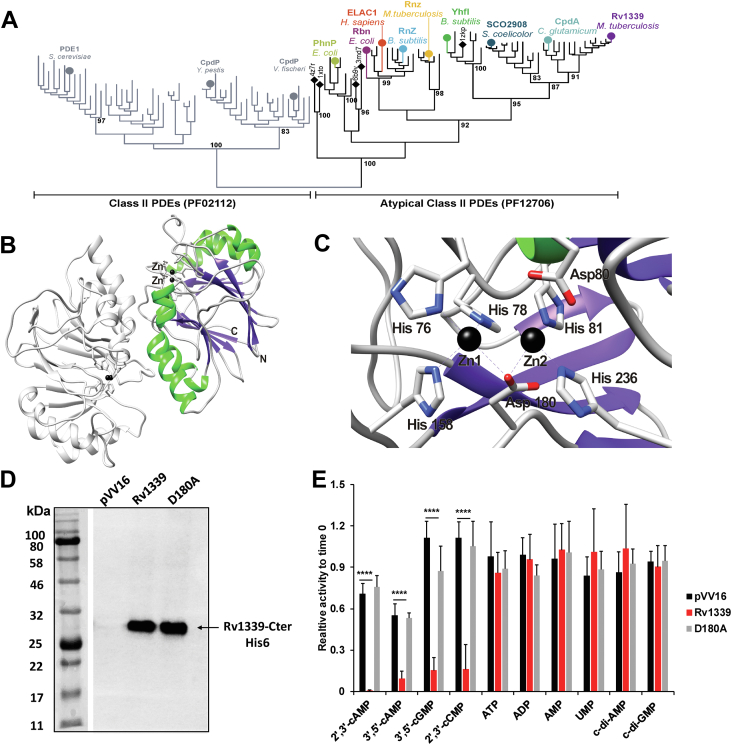
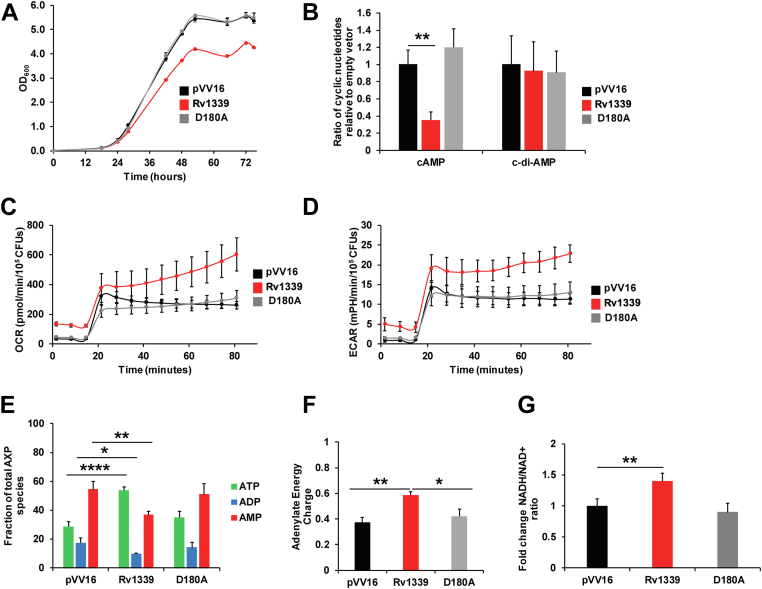
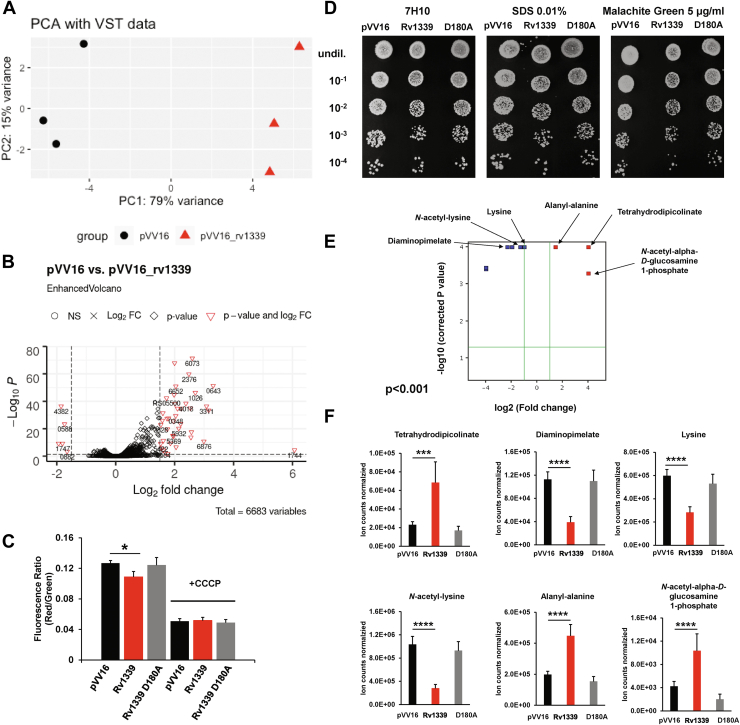
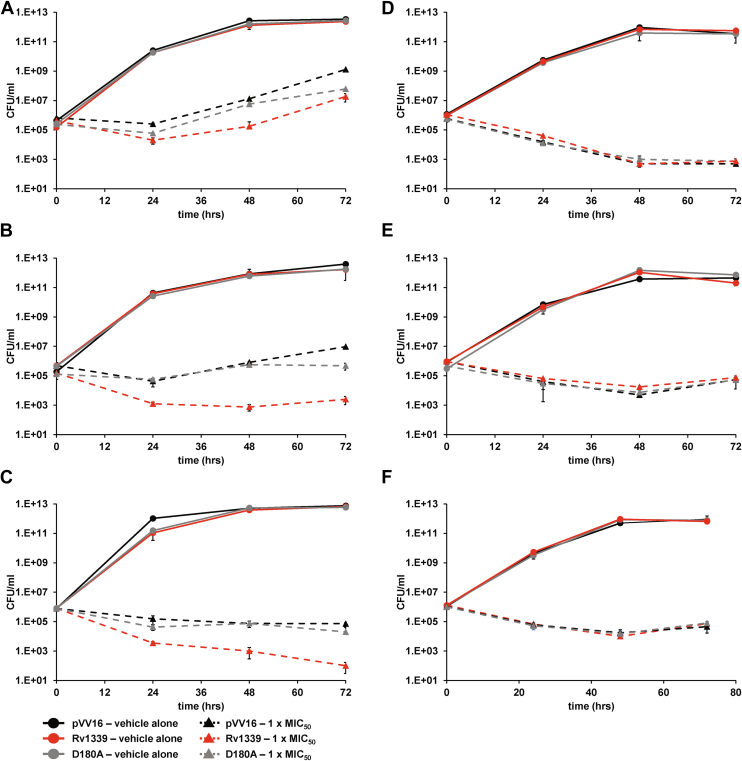
cAMP and antimicrobial susceptibility in mycobacteriaAntimicrobial tolerance, the ability to survive exposure to antimicrobials via transient nonspecific means, promotes the development of antimicrobial resistance (AMR). The study of the molecular mechanisms that result in antimicrobial tolerance is therefore essential for the understanding of AMR. In gram-negative bacteria, the second messenger molecule 3'',5''-cAMP has been previously shown to be involved in AMR. In mycobacteria, however, the role of cAMP in antimicrobial tolerance has been difficult to probe due to its particular complexity. In order to address this difficulty, here, through unbiased biochemical approaches consisting in the fractionation of clear protein lysate from a mycobacterial strain deleted for the known cAMP phosphodiesterase (Rv0805c) combined with mass spectrometry techniques, we identified a novel cyclic nucleotide-degrading phosphodiesterase enzyme (Rv1339) and developed a system to significantly decrease intracellular cAMP levels through plasmid expression of Rv1339 using the constitutive expression system, pVV16. In Mycobacterium smegmatis mc2155, we demonstrate that recombinant expression of Rv1339 reduced cAMP levels threefold and resulted in altered gene expression, impaired bioenergetics, and a disruption in peptidoglycan biosynthesis leading to decreased tolerance to antimicrobials that target cell wall synthesis such as ethambutol, D-cycloserine, and vancomycin. This work increases our understanding of the role of cAMP in mycobacterial antimicrobial tolerance, and our observations suggest that nucleotide signaling may represent a new target for the development of antimicrobial therapies.
Keywords: 3′,5′-cAMP; antimicrobials tolerance; bioenergetics; mycobacteria; peptidoglycan; phosphodiesterases.
Copyright © 2022 The Authors. Published by Elsevier Inc. All rights reserved.
Conflict of interest statement
Conflict of interest The authors declare that they have no conflicts of interest with the contents of this article.
Figures
References
-
- Brauner A., Fridman O., Gefen O., Balaban N.Q. Distinguishing between resistance, tolerance and persistence to antibiotic treatment. Nat. Rev. Microbiol. 2016;14:320–330. - PubMed
-
- Levin-Reisman I., Ronin I., Gefen O., Braniss I., Shoresh N., Balaban N.Q. Antibiotic tolerance facilitates the evolution of resistance. Science. 2017;355:826–830. - PubMed
-
- Makman R.S., Sutherland E.W. Adenosine 3',5'-phosphate in Escherichia coli. J. Biol. Chem. 1965;240:1309–1314. - PubMed
-
- Pastan I., Perlman R. Cyclic adenosine monophosphate in bacteria. Science. 1970;169:339–344. - PubMed
Publication types
MeSH terms
Substances
Grants and funding
LinkOut - more resources
Full Text Sources
Medical
Molecular Biology Databases
