


Evaluation of an Antibiotic Cocktail for Fecal Microbiota Transplantation in Mouse
- PMID: 35719145
- PMCID: PMC9204140
- DOI: 10.3389/fnut.2022.918098
Evaluation of an Antibiotic Cocktail for Fecal Microbiota Transplantation in Mouse
Abstract
Objective: This study aimed to evaluate the effect of an antibiotic cocktail on gut microbiota and provide a reference for establishing an available mouse model for fecal microbiota transplantation (FMT) of specific microbes.
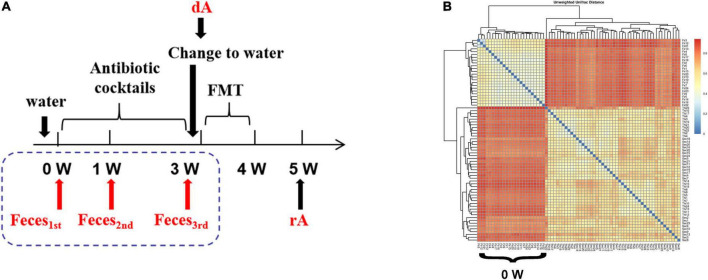
Design: C57BL/6J mice (n = 24) had free access to an antibiotic cocktail containing vancomycin (0.5 g/L), ampicillin (1 g/L), neomycin (1 g/L), and metronidazole (1 g/L) in drinking water for 3 weeks. Fecal microbiota was characterized by 16S rDNA gene sequencing at the beginning, 1st week, and 3rd week, respectively. The mice were then treated with fecal microbiota from normal mice for 1 week to verify the efficiency of FMT.
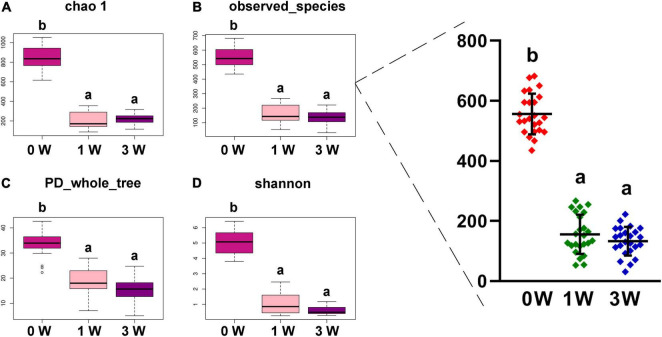
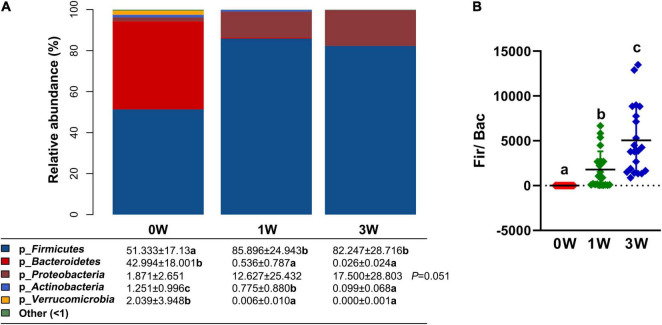
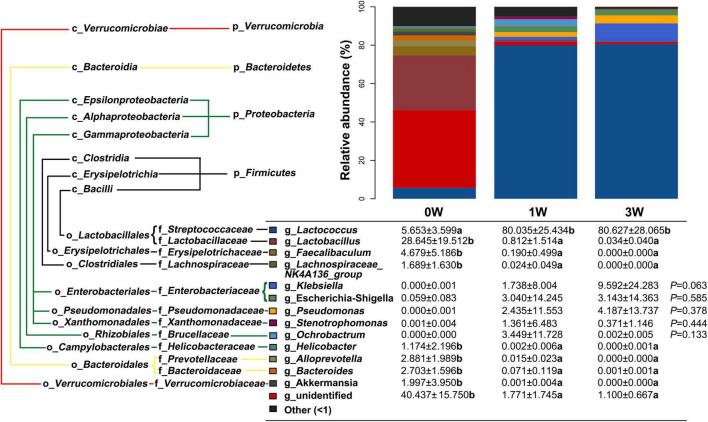
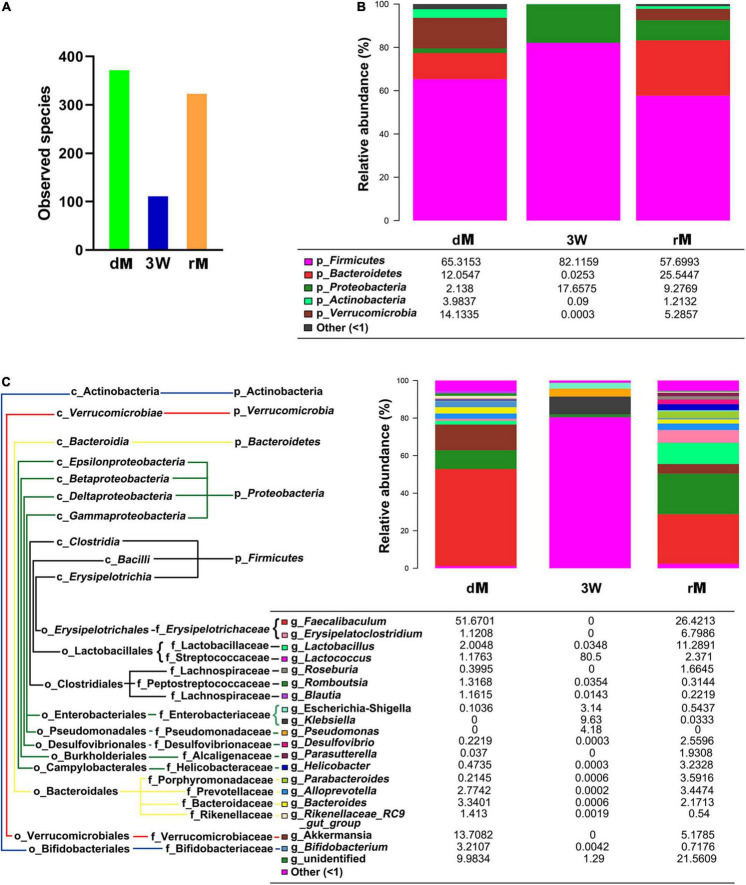
Results: The diversity of microbiota including chao1, observed species, phylogenetic diversity (PD) whole tree, and Shannon index were decreased significantly (P < 0.05) after being treated with the antibiotic cocktail for 1 or 3 weeks. The relative abundance of Bacteroidetes, Actinobacteria, and Verrucomicrobia was decreased by 99.94, 92.09, and 100%, respectively, while Firmicutes dominated the microbiota at the phylum level after 3 weeks of treatment. Meanwhile, Lactococcus, a genus belonging to the phylum of Firmicutes dominated the microbiota at the genus level with a relative abundance of 80.63%. Further FMT experiment indicated that the fecal microbiota from the receptor mice had a similar composition to the donor mice after 1 week.
Conclusion: The antibiotic cocktail containing vancomycin, ampicillin, neomycin, and metronidazole eliminates microbes belonging to Bacteroidetes, Actinobacteria, and Verrucomicrobia, which can be recovered by FMT in mice.
Keywords: antibiotic cocktail; fecal microbiota transplantation; gut microbiota; mouse model; pretreatment.
Copyright © 2022 Tan, Gong, Liu, Li, Li, You, He and Wu.
Conflict of interest statement
The authors declare that the research was conducted in the absence of any commercial or financial relationships that could be construed as a potential conflict of interest.
Figures
References
-
- Zhang XY, Chen J, Yi K, Peng L, Xie J, Gou X, et al. Phlorizin ameliorates obesity-associated endotoxemia and insulin resistance in high-fat diet-fed mice by targeting the gut microbiota and intestinal barrier integrity. Gut Microbes. (2020) 12:1–18. 10.1080/19490976.2020.1842990 - DOI - PMC - PubMed
LinkOut - more resources
Full Text Sources
