


Comprehensive Analyses of Ferroptosis-Related Alterations and Their Prognostic Significance in Glioblastoma
- PMID: 35720126
- PMCID: PMC9204216
- DOI: 10.3389/fmolb.2022.904098
Comprehensive Analyses of Ferroptosis-Related Alterations and Their Prognostic Significance in Glioblastoma
Abstract
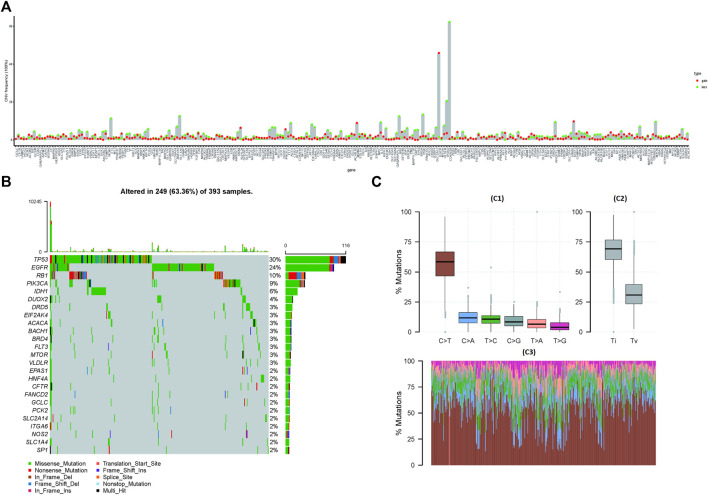
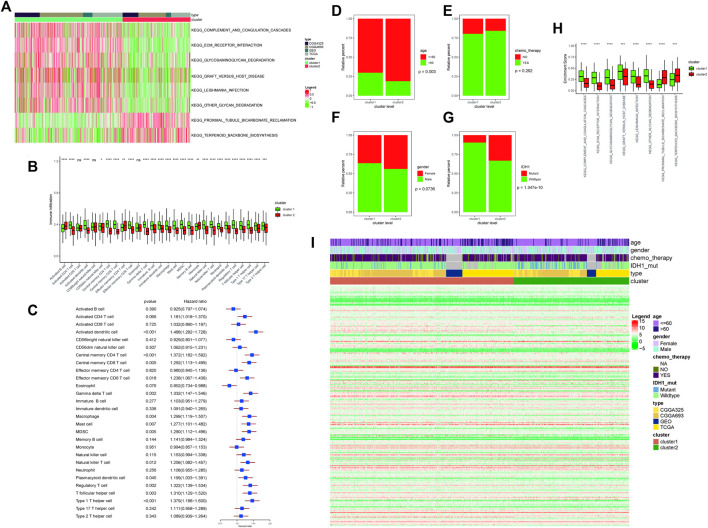
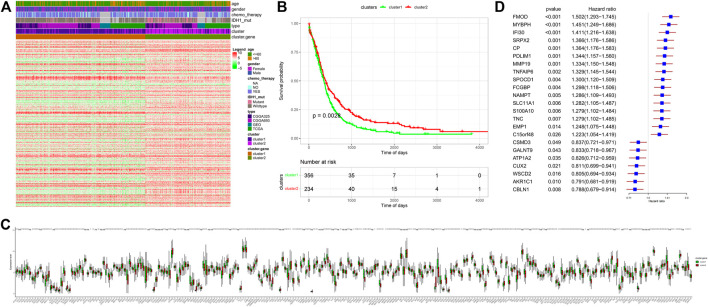
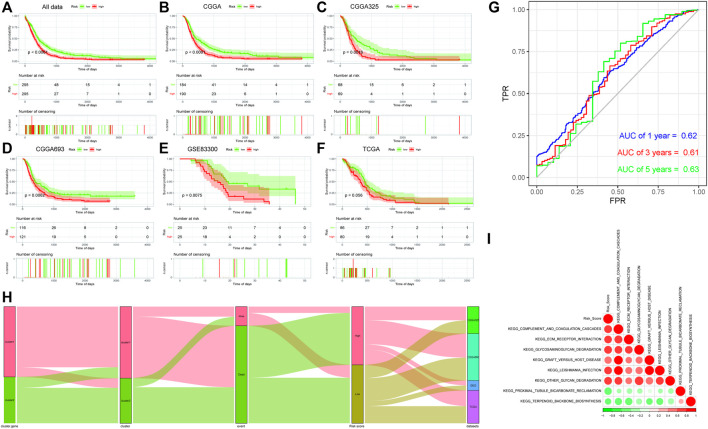
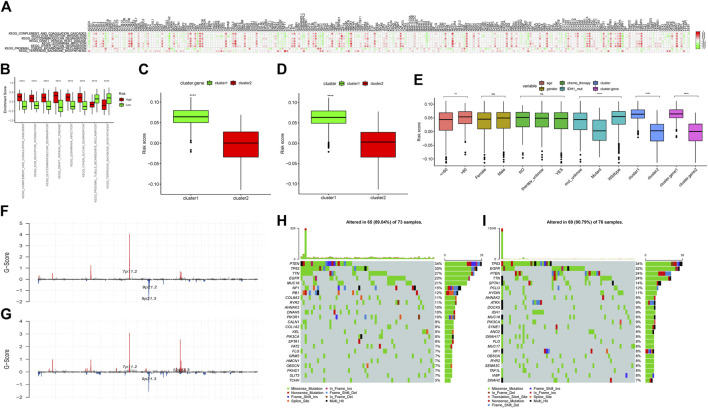
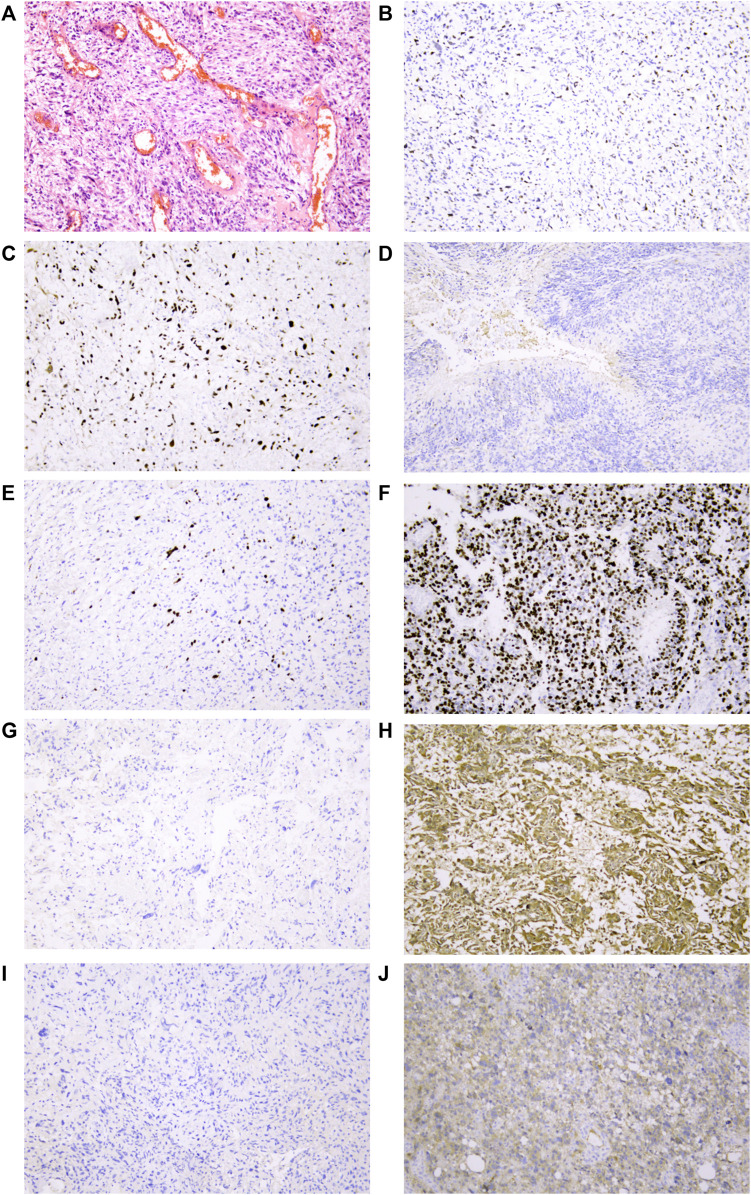
Background: This study was designed to explore the implications of ferroptosis-related alterations in glioblastoma patients. Method: After obtaining the data sets CGGA325, CGGA623, TCGA-GBM, and GSE83300 online, extensive analysis and mutual verification were performed using R language-based analytic technology, followed by further immunohistochemistry staining verification utilizing clinical pathological tissues. Results: The analysis revealed a substantial difference in the expression of ferroptosis-related genes between malignant and paracancerous samples, which was compatible with immunohistochemistry staining results from clinicopathological samples. Three distinct clustering studies were run sequentially on these data. All of the findings were consistent and had a high prediction value for glioblastoma. Then, the risk score predicting model containing 23 genes (CP, EMP1, AKR1C1, FMOD, MYBPH, IFI30, SRPX2, PDLIM1, MMP19, SPOCD1, FCGBP, NAMPT, SLC11A1, S100A10, TNC, CSMD3, ATP1A2, CUX2, GALNT9, TNFAIP6, C15orf48, WSCD2, and CBLN1) on the basis of "Ferroptosis.gene.cluster" was constructed. In the subsequent correlation analysis of clinical characteristics, tumor mutation burden, HRD, neoantigen burden and chromosomal instability, mRNAsi, TIDE, and GDSC, all the results indicated that the risk score model might have a better predictive efficiency. Conclusion: In glioblastoma, there were a large number of abnormal ferroptosis-related alterations, which were significant for the prognosis of patients. The risk score-predicting model integrating 23 genes would have a higher predictive value.
Keywords: alterations; ferroptosis; glioblastoma; predictive models; prognosis.
Copyright © 2022 Tian, Liu, Zhang, Liu, Wu, Yang, Zhao and Sun.
Conflict of interest statement
The authors declare that the research was conducted in the absence of any commercial or financial relationships that could be construed as a potential conflict of interest.
Figures
References
-
- Adolfsson A., Ackerman M., Brownstein N. C. (2019). To Cluster, or Not to Cluster: An Analysis of Clusterability Methods. Pattern Recognit. 88, 13–26. 10.1016/j.patcog.2018.10.026 - DOI
-
- Bayik D., Zhou Y., Park C., Hong C., Vail D., Silver D. J., et al. (2020). Myeloid-Derived Suppressor Cell Subsets Drive Glioblastoma Growth in a Sex-specific Manner. Cancer Discov. 10 (8), 1210–1225. 10.1158/2159-8290.CD-19-1355 - DOI - PMC - PubMed
-
- Binder Z. A., Thorne A. H., Bakas S., Wileyto E. P., Bilello M., Akbari H., et al. (2018). Epidermal Growth Factor Receptor Extracellular Domain Mutations in Glioblastoma Present Opportunities for Clinical Imaging and Therapeutic Development. Cancer Cell 34 (1), 163–177. 10.1016/j.ccell.2018.06.006 - DOI - PMC - PubMed
LinkOut - more resources
Full Text Sources
Research Materials
Miscellaneous
