


Substantiating Clinical Effectiveness and Potential Barriers to the Widespread Implementation of Spinal Cord Injury Telerehabilitation: A Systematic Review and Qualitative Synthesis of Randomized Trials in the Recent Past Decade
- PMID: 35720743
- PMCID: PMC8989076
- DOI: 10.1089/tmr.2020.0026
Substantiating Clinical Effectiveness and Potential Barriers to the Widespread Implementation of Spinal Cord Injury Telerehabilitation: A Systematic Review and Qualitative Synthesis of Randomized Trials in the Recent Past Decade
Abstract
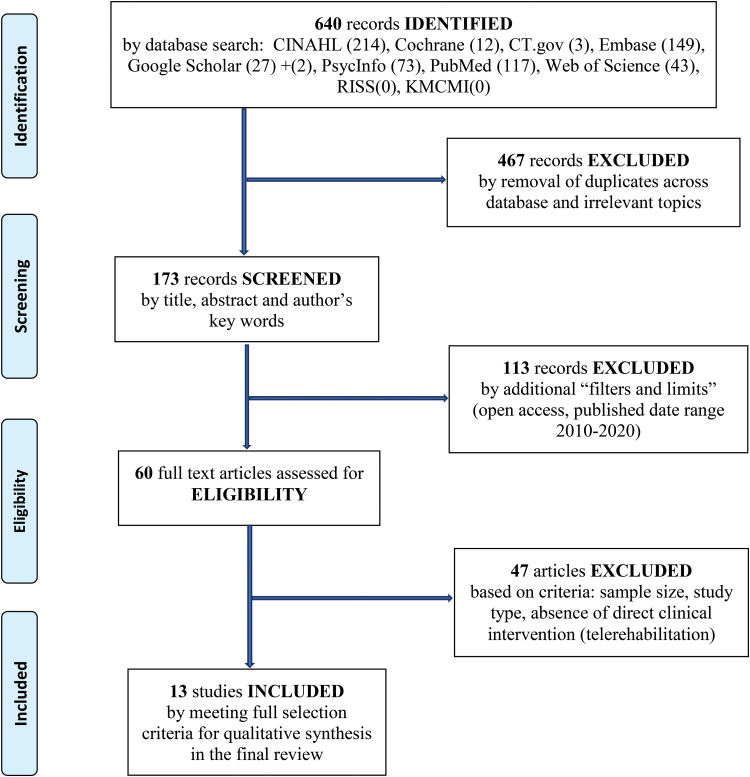
Introduction: Telemedicine across many specialties in clinical practice has been established in the literature regarding technology platforms, privacy issues, cost, and clinical effectiveness. However, the lack of data in these areas applicable to spinal cord injury telerehabilitation (teleSCI) still exists. The gaps in these knowledge areas continue to hinder its widespread implementation and serve as pathways for focused efforts in teleSCI research. Objective: This systematic review aims to substantiate the clinical effectiveness and potential barriers to teleSCI implementation by verifying the statistical significance of various clinical outcomes from randomized trials published within the recent past decade. Methods: A qualitative synthesis of randomized studies, conducted across various regions, was systematically reviewed after identifying relevant records from database search engines. Applied filters in the search included publication dates (2010-2020), humans, full-text, and no language preference. The 13 studies were selected per Preferred Reporting Items for Systematic Reviews and Meta-Analyses flow diagram, and the risk of bias across studies was evaluated by using the Physiotherapy Evidence Database scale of quality assessment. Results: Quantitative outcome measurements demonstrated positive impact across studies: 79.1% (34/43) of all measurements were statistically significant for positive outcomes and 18.6% (8/43) yielded no effect but were significant. Primary outcomes addressed various spinal cord injury (SCI) management areas; 38.5% (5/13) of studies also assessed secondary outcomes. Interventional platforms were conventional technologies used in telemedicine. One study (7.7%) achieved data encryption; no studies presented cost-analysis data. Conclusion: The majority of studies demonstrated significant positive outcomes to validate teleSCI clinical effectiveness through conventional technology. These results further expand our understanding of teleSCI's impact and its demonstrated potential for improving SCI individuals' lives. However, heterogeneity of selected studies limits the conclusive recommendations to address potential barriers to its widespread implementation. Moreover, the development of new data is warranted to promote "buy-in" of widespread teleSCI implementation.
Keywords: SCI; spinal cord injury; technology; telemedicine; telerehabilitation.
© Seungbok Lee et al., 2021; Published by Mary Ann Liebert, Inc.
Conflict of interest statement
The authors declare no conflict of interest.
Figures
References
-
- Liem NR, McColl MA, King W, et al. Aging with a spinal cord injury: factors associated with the need for more help with activities of daily living. Arch Phys Med Rehabil 2004;85:1567–1577. - PubMed
-
- Amatachaya S, Wannapakhe J, Arrayawichanon P, et al. Functional abilities, incidences of complications and falls of patients with spinal cord injury 6 months after discharge. Spinal Cord 2011;49:520–524. - PubMed
-
- Krueger H, Noonan VK, Trenaman LM, et al. The economic burden of traumatic spinal cord injury in Canada. Chronic Dis Inj Can 2013;33:113–122. - PubMed
-
- Korea Spinal Cord Injury Association. Available at www.kscia.org/board/view/menu03_05/21450 Accessed February 1, 2020.
LinkOut - more resources
Full Text Sources
Miscellaneous