


High-Flow Nasal Cannula Oxygen Therapy: Physiological Mechanisms and Clinical Applications in Children
- PMID: 35721052
- PMCID: PMC9203852
- DOI: 10.3389/fmed.2022.920549
High-Flow Nasal Cannula Oxygen Therapy: Physiological Mechanisms and Clinical Applications in Children
Abstract
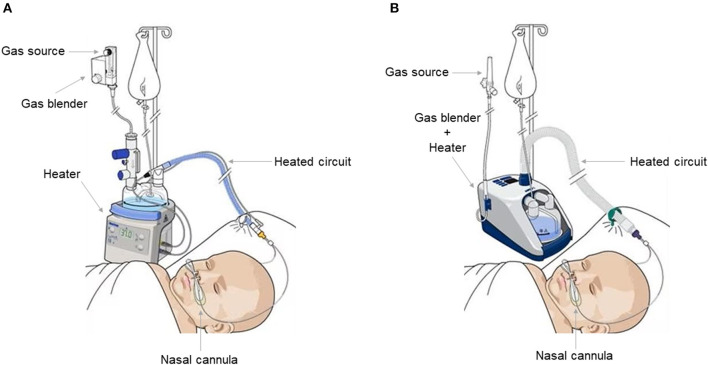
High-flow nasal cannula (HFNC) oxygen therapy has rapidly become a popular modality of respiratory support in pediatric care. This is undoubtedly due to its ease of use and safety, which allows it to be used in a wide variety of settings, ranging from pediatric intensive care to patients' homes. HFNC devices make it possible to regulate gas flow and temperature, as well as allowing some nebulized drugs to be administered, features very useful in children, in which the balance between therapeutic effectiveness and adherence to treatment is pivotal. Although the physiological effects of HFNC are still under investigation, their mechanisms of action include delivery of fixed concentration of oxygen, generation of positive end-expiratory pressure, reduction of the work of breathing and clearance of the nasopharyngeal dead space, while providing optimal gas conditioning. Nevertheless, current evidence supports the use of HFNC mainly in moderate-to-severe bronchiolitis, whereas for asthma exacerbations and breath sleeping disorders there is a lack of randomized controlled trials comparing HFNC to continuous positive airway pressure (CPAP) and non-invasive ventilation (NIV), which are essentials for the identification of response and non-response predictors. In this regard, the development of clinical guidelines for HFNC, including flow settings, indications, and contraindications is urgently needed.
Keywords: bronchiolitis; children; high-flow nasal cannula (HFNC); oxygen therapy; pediatric; respiratory distress; respiratory failure.
Copyright © 2022 Nolasco, Manti, Leonardi, Vancheri and Spicuzza.
Conflict of interest statement
The authors declare that the research was conducted in the absence of any commercial or financial relationships that could be construed as a potential conflict of interest.
Figures
References
-
- Manley BJ, Owen L, Doyle LW, Davis PG. High-flow nasal cannulae and nasal continuous positive airway pressure use in non-tertiary special care nurseries in Australia and New Zealand: Non-tertiary high-flow nasal cannulae and CPAP use. J Paediatr Child Health. (2012) 48:16–21. 10.1111/j.1440-1754.2011.02186.x - DOI - PubMed
Publication types
LinkOut - more resources
Full Text Sources
