


Synergistic action of Trichoderma koningiopsis and T. asperellum mitigates salt stress in paddy
- PMID: 35722516
- PMCID: PMC9203646
- DOI: 10.1007/s12298-022-01192-6
Synergistic action of Trichoderma koningiopsis and T. asperellum mitigates salt stress in paddy
Abstract
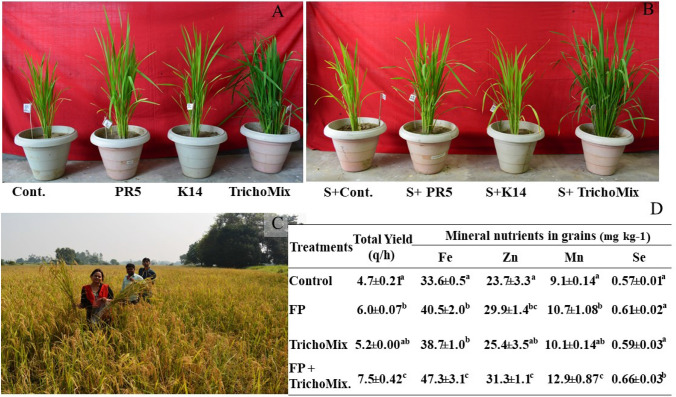
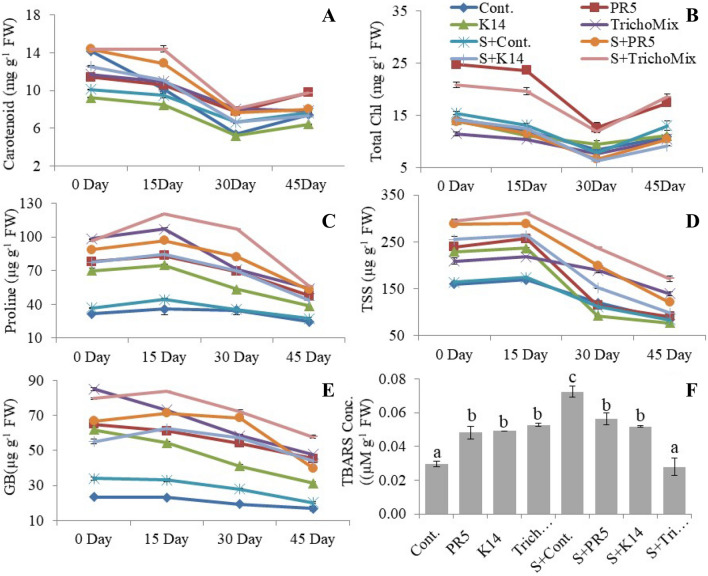
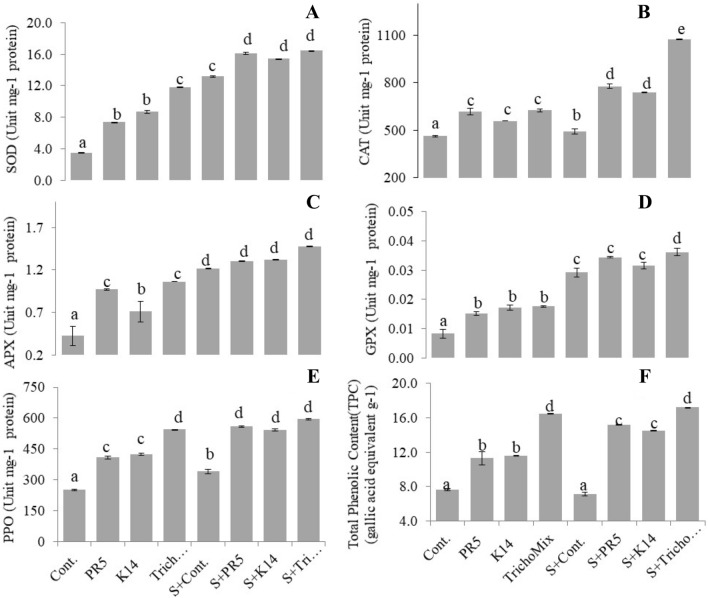
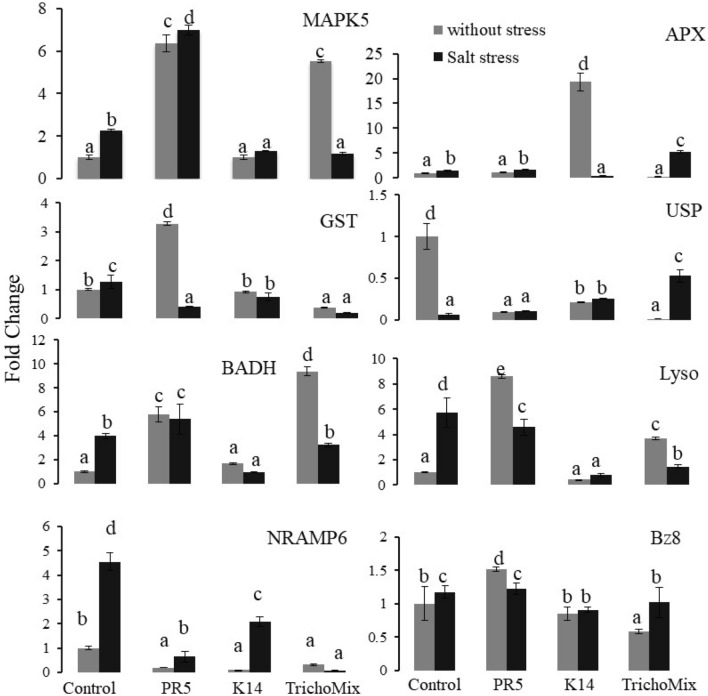
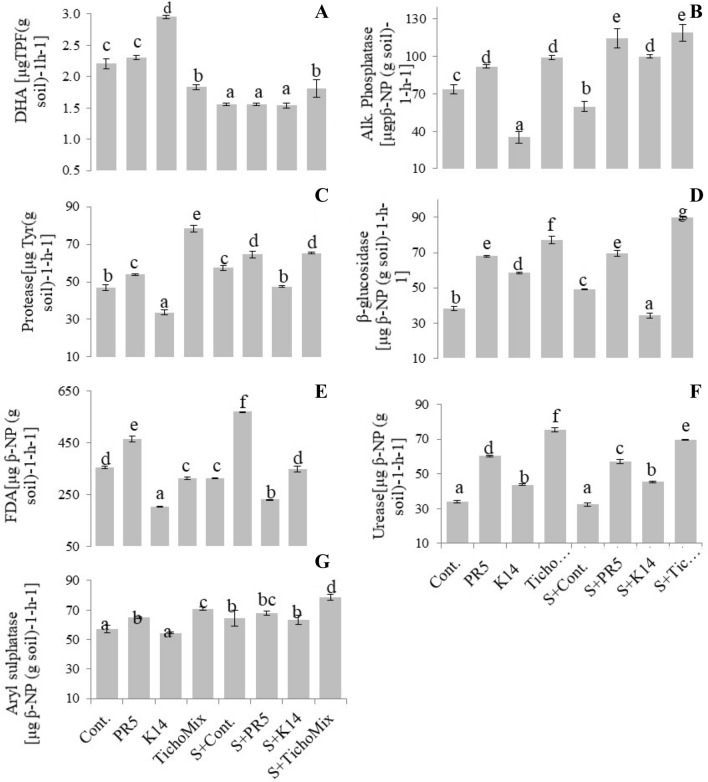
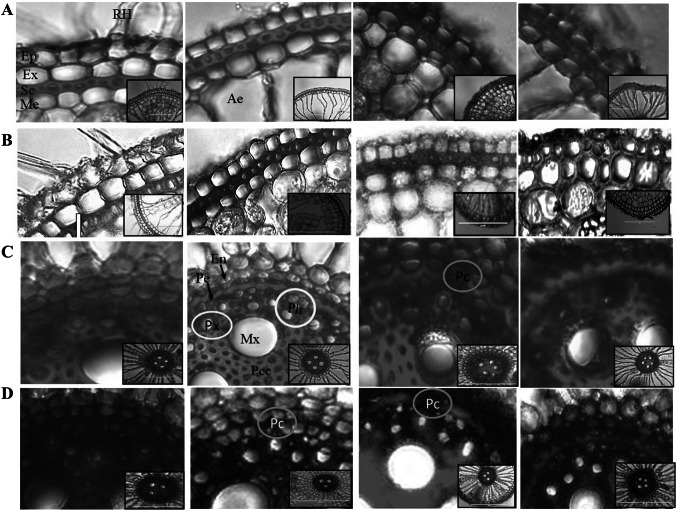
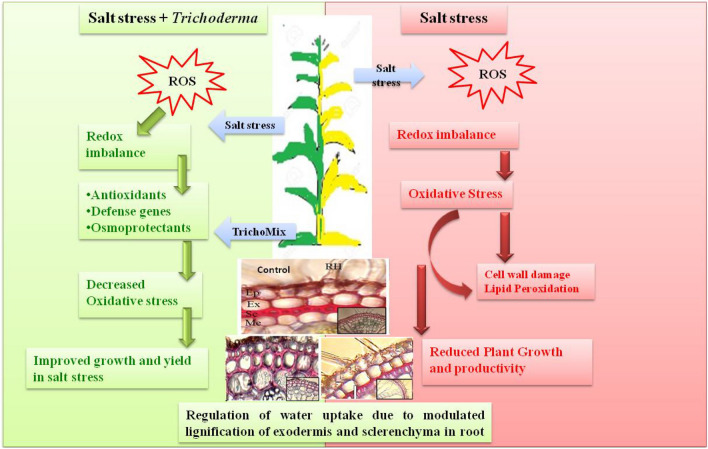
Intensive cultivation increases the salinity and alkalinity of soil leading to its degradation. Such soil lead to abiotic stress conditions in plants causing ROS-mediated cellular damage. Microbes constitute an important group of bio-stimulants, which are promising alternatives to reduce ROS-mediated abiotic stresses and improve plant growth. In the present study synergistic activity of stress-tolerant Trichoderma koningiopsis NBRI-PR5 (MTCC 25372) and T. asperellum NBRI-K14 (MTCC 25373) (TrichoMix) was assessed in paddy crop under salt stress conditions. Improved soil microbial biomass carbon (MBC), total organic carbon (TOC), and available nutrients N/P/K by 2-3 folds was observed in the pot experiment using the TrichoMix. It restored the heterogeneous microbial population of the paddy rhizosphere during salt stress and modulated the soil enzyme activities. The anatomical distortions in rice roots due to salt stress were stabilized in presence of the TrichoMix. Different stress marker genes (OsMAPK5, OsAPX, OsGST, OsUSP, OsBADH, OsLYSO, OsNRAMP6, and OsBz8) were differentially modulated by the TrichoMix in presence of salt stress as compared to the control. The TrichoMix increased the yield by 10% in marginally stressed fields; however, it enhanced the yield by approximately 60% when used with the 50% recommended dose of NPK. In the integrated treatment, Fe and Zn were fortified by approximately 40% and 29% respectively in the grains. From the present study, it was concluded that the TrichoMix stimulated the rice plants to accumulate osmoprotectants, improved the anatomical features, modulated the plant defense system, and improved the grain yield and quality. Therefore, the NBRI-PR5 and NBRI-K14 mixture may be used as a bio-stimulant to increase productivity in the rapidly deteriorating soil and reduce the NPK inputs.
Supplementary information: The online version contains supplementary material available at 10.1007/s12298-022-01192-6.
Keywords: Biostimulants; Paddy; Salt tolerance; Synergistic; T. asperellum; T. koningiopsis; TrichoMix.
© Prof. H.S. Srivastava Foundation for Science and Society 2022.
Conflict of interest statement
Conflict of interestThe authors declare no conflict of interest.
Figures
References
-
- Agarwal P, Singh PC, Chaudhry V, Shirke PA, Chakrabarty D, Farooqui A, Nautiyal CS, Sane AP, Sane VA. PGPR-induced OsASR6 improves plant growth and yield by altering root auxin sensitivity and the xylem structure in transgenic Arabidopsis thaliana. J Plant Physiol. 2019;240:153010. doi: 10.1016/j.jplph.2019.153010. - DOI - PubMed
-
- Ahmed S, Heo TY, Roy Choudhury A, Walitang DI, Choi J, Sa T. Accumulation of compatible solutes in rice (Oryza sativa L.) cultivars by inoculation of endophytic plant growth promoting bacteria to alleviate salt stress. App Biol Chem. 2021;64(1):1–14.
-
- Ainsworth EA, Gillespie KM (2007) Nature protocols 2(4):875–7. 10.1038/nprot.2007.101 - PubMed
LinkOut - more resources
Full Text Sources