Effects of Muscles on Bone Metabolism-with a Focus on Myokines
- PMID: 35722780
- PMCID: PMC9271391
- DOI: 10.4235/agmr.22.0054
Effects of Muscles on Bone Metabolism-with a Focus on Myokines
Abstract
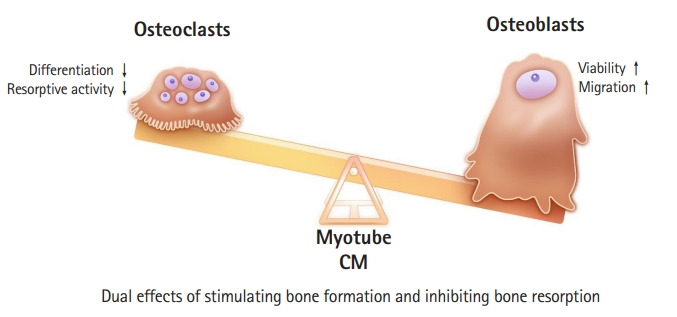
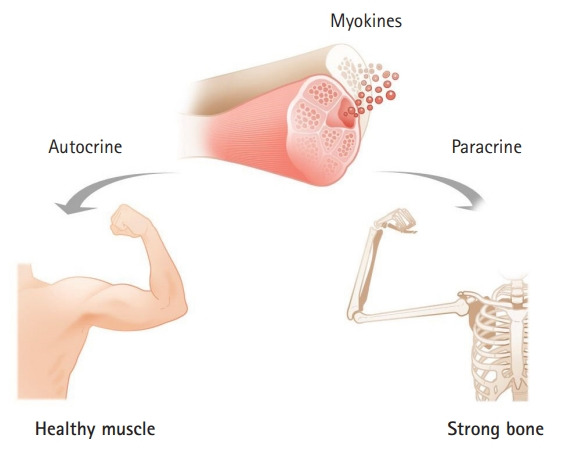
Skeletal muscles and bones, the largest tissues in the body of a non-obese person, comprise the musculoskeletal system, which allows mobility and protects internal organs. Although muscles and bones are intimately related throughout life, observations during development and aging and in human and animal disuse models have revealed the synchronization of tissue mass such that muscle phenotype changes precede alterations in bone mineral density and strength. This review discussed that mechanical forces, which have been the traditional research focus, are not the only mechanism by which muscle-derived signals may affect bone metabolism and emphasized the significance of skeletal muscles as an endocrine organ that secretes bone-regulatory factors. Consequently, both mechanical and biochemical aspects should be considered to fully understand muscle-bone crosstalk. This review also suggested that specific myokines could be ideal therapeutic targets for osteoporosis to both increase bone formation and reduce bone resorption; moreover, these myokines could also be potential circulating biomarkers to predict musculoskeletal health.
Keywords: Biomarkers; Bone; Fractures; Skeletal muscle.
Conflict of interest statement
The researcher claims no conflicts of interest.
Figures
References
-
- Burge R, Dawson-Hughes B, Solomon DH, Wong JB, King A, Tosteson A. Incidence and economic burden of osteoporosis-related fractures in the United States, 2005-2025. J Bone Miner Res. 2007;22:465–75. - PubMed
-
- Miller CW. Survival and ambulation following hip fracture. J Bone Joint Surg Am. 1978;60:930–4. - PubMed
Grants and funding
LinkOut - more resources
Full Text Sources