


Association Between Clostridium innocuum and Antibiotic-Associated Diarrhea in Adults and Children: A Cross-sectional Study and Comparative Genomics Analysis
- PMID: 35724319
- PMCID: PMC10169446
- DOI: 10.1093/cid/ciac483
Association Between Clostridium innocuum and Antibiotic-Associated Diarrhea in Adults and Children: A Cross-sectional Study and Comparative Genomics Analysis
Abstract
Background: A recent study from Taiwan suggested that Clostridium innocuum may be an unrecognized cause of antibiotic-associated diarrhea (AAD) and clinically indistinguishable from Clostridioides difficile infection. Our objective was to compare C. innocuum prevalence and strain between those with AAD and asymptomatic controls.
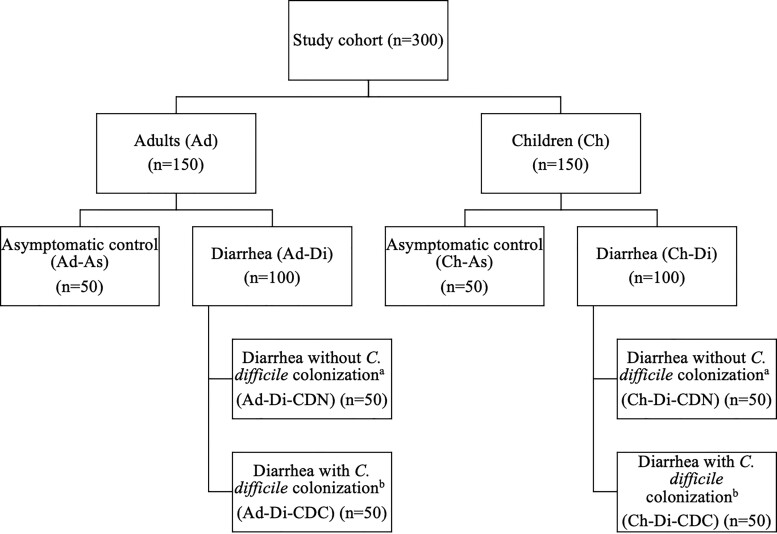
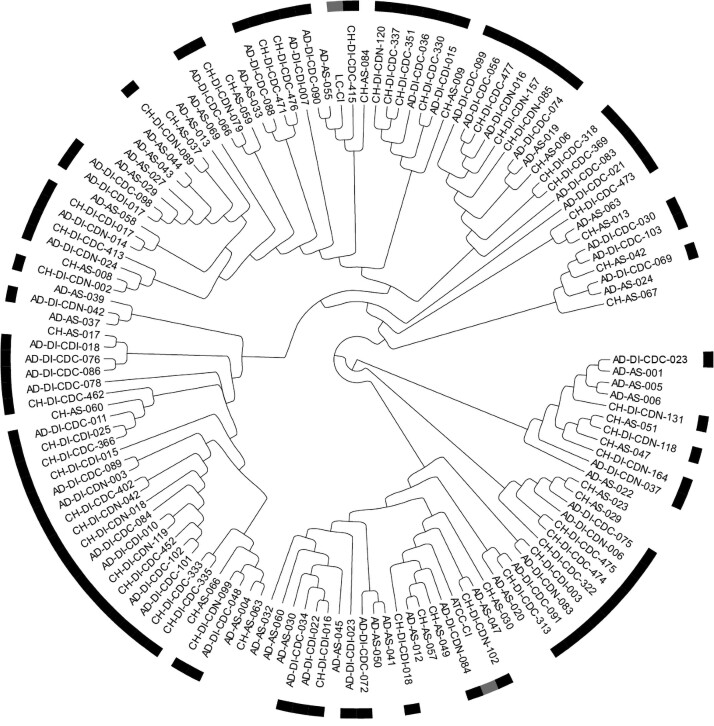
Methods: In this cross-sectional study, we collected stool from 200 individuals with AAD and 100 asymptomatic controls. We evaluated the association between AAD and C. innocuum in stool using anaerobic culture and quantitative polymerase chain reaction (qPCR). To identify strain-specific associations with AAD, we performed whole-genome sequencing of C. innocuum isolates using Illumina MiSeq and constructed comparative genomics analyses.
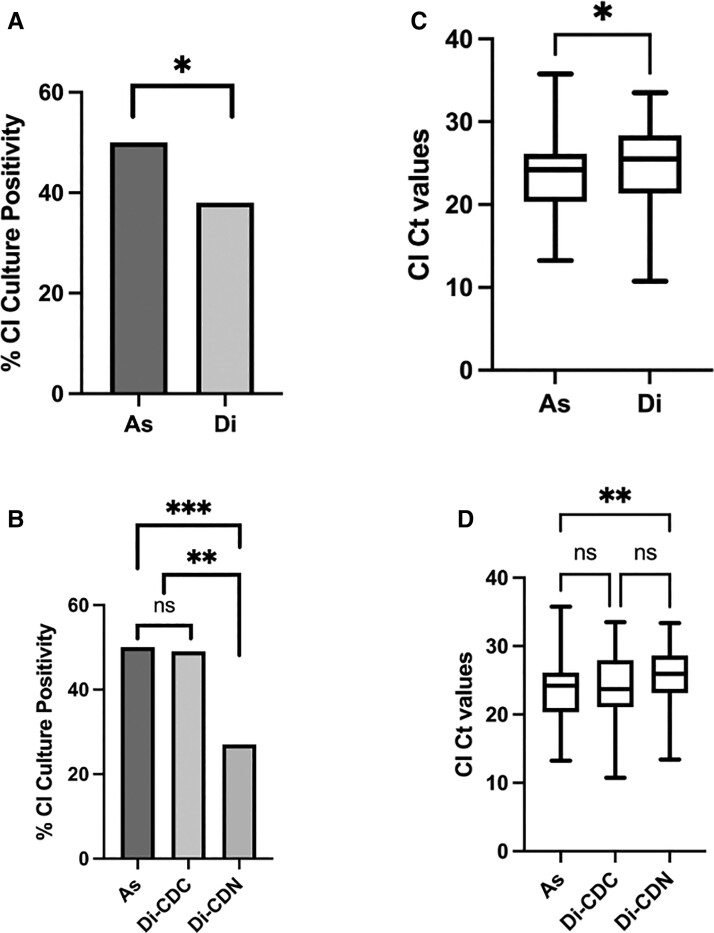
Results: C. innocuum was isolated from stool of 126/300 (42%) subjects and more frequently from asymptomatic controls than AAD subjects (50/100 [50%] vs 76/200 [38%], respectively; P = .047). C. innocuum isolation frequency was not associated with AAD in either the adult or pediatric subgroups. C. innocuum and C. difficile were frequently co-prevalent in individuals with and without diarrhea. There were no phylogenetic differences or accessory genome associations between C. innocuum isolates from AAD subjects and asymptomatic controls.
Conclusions: C. innocuum was frequently isolated and at a greater frequency in asymptomatic controls than those with AAD. We did not identify strain lineages or accessory genomic elements associated with AAD. These data highlight that differentiating C. innocuum-associated diarrhea from asymptomatic colonization, and differentiating diarrhea caused by C. difficile from C. innocuum, are clinical microbiology challenges that require additional investigation to identify host-specific factors and/or biomarkers that distinguish these conditions.
Keywords: Clostridioides difficile; Clostridium innocuum; antibiotic-associated diarrhea; comparative genomics; whole-genome sequencing.
© The Author(s) 2022. Published by Oxford University Press on behalf of Infectious Diseases Society of America. All rights reserved. For permissions, please e-mail: journals.permissions@oup.com.
Conflict of interest statement
Potential conflicts of interest. L. K. K. has received research grants from Merck, unrelated to this study. M. P. A. reports lecture honoraria and development of educational content with DKBMed and participation on a Data Safety and Monitoring Board for AbbVie Pharmaceuticals. All other authors report no potential conflicts. All authors have submitted the ICMJE Form for Disclosure of Potential Conflicts of Interest. Conflicts that the editors consider relevant to the content of the manuscript have been disclosed.
Figures
Comment in
-
Gut Colonization and Antibiotic-Associated Diarrhea by Clostridium innocuum in Children and Adults.Clin Infect Dis. 2023 Jan 13;76(2):369-371. doi: 10.1093/cid/ciac696. Clin Infect Dis. 2023. PMID: 36029096 No abstract available.
References
-
- Nasiri MJ, Goudarzi M, Hajikhani B, Ghazi M, Goudarzi H, Pouriran R. Clostridioides (Clostridium) difficile infection in hospitalized patients with antibiotic-associated diarrhea: a systematic review and meta-analysis. Anaerobe 2018; 50:32–7. - PubMed
-
- Chia J-H, Wu T-S, Wu T-L, et al. Clostridium innocuum is a vancomycin-resistant pathogen that may cause antibiotic-associated diarrhoea. Clin Microbiol Infect 2018; 24:1195–9. - PubMed
