


Increase in admission rates and symptom severity of childhood and adolescent anorexia nervosa in Europe during the COVID-19 pandemic: data from specialized eating disorder units in different European countries
- PMID: 35725621
- PMCID: PMC9208345
- DOI: 10.1186/s13034-022-00482-x
Increase in admission rates and symptom severity of childhood and adolescent anorexia nervosa in Europe during the COVID-19 pandemic: data from specialized eating disorder units in different European countries
Abstract
Background: The COVID-19 pandemic, associated with confinement and social isolation, seems to have impacted the course of many mental disorders in children and adolescents. An increase in hospital admission rates for juvenile anorexia nervosa (AN) has been documented in many regions of the world. However, data from Europe are scarce.
Methods: We asked clinicians in specialized eating disorder units in hospitals of maximum care in France, Germany, Italy, Spain, Sweden, and the Netherlands to report on (i) overall (inpatient and outpatient) and (ii) inpatient admission rates for adolescents with AN during 2019 and 2020. Additionally, a modified version of the COVID Isolation Eating Scale (CIES) was used to assess the child and adolescent psychiatrists' estimations of a possible increase in symptom severity in children and adolescents with AN during the COVID-19 pandemic and to (iii) inquire about the contributing factors perceived by the caring professionals.
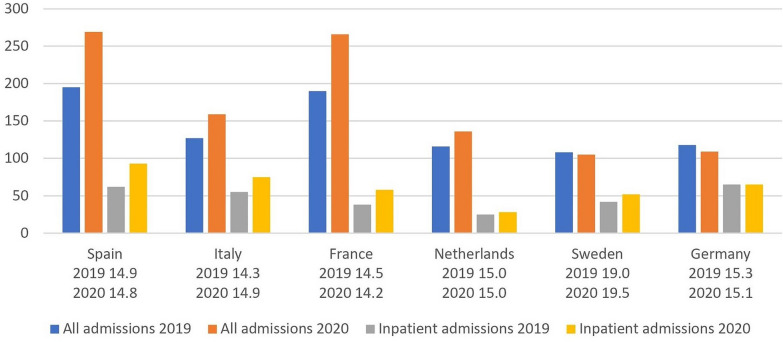
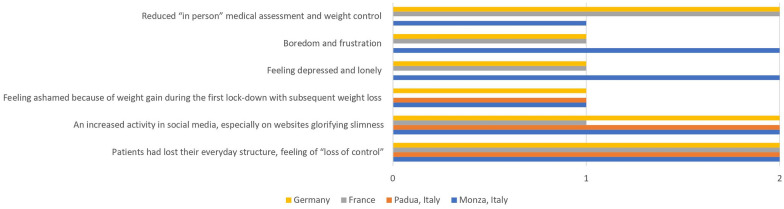
Results: Four out of six representatives of European hospitals described a higher rate of overall admissions during the pandemic. Three hospitals out of six reported an increase in inpatient admissions, and two centres had constant high numbers of admissions of both outpatients and inpatients. The clinicians perceived a higher symptom severity in 2020 than in 2019, especially involving more frequent use of social media, longer duration of exercising, and more restrictive eating. They supposed an increase in social media consumption, a perceived "loss of control", and a lack of in-person assessments and weight controls as the main contributing factors for the deterioration in AN numbers and symptomatology.
Conclusions: The COVID-19 pandemic seems to have had a deep impact on symptom severity in AN, which is mirrored by a large increase in admission rates across Europe. An increase in exercise, social media consumption, a perceived "loss of control", and a lack of face-to-face health care seem to have contributed to this development. Further investigation is required to identify which factors may lead to the increase in incidence and deterioration of childhood and adolescent AN. Possible preventive means for the future could include educating paediatricians and health care workers about AN, regular weight assessment, and home-based treatments.
Keywords: Anorexia nervosa; COVID-19 pandemic; Europe; Hospital admissions.
© 2022. The Author(s).
Conflict of interest statement
The authors declare that they have no competing interests.
Figures

References
-
- Fernández-Aranda F, Munguía L, Mestre-Bach G, Steward T, Etxandi M, Baenas I, et al. COVID Isolation Eating Scale (CIES): Analysis of the impact of confinement in eating disorders and obesity—a collaborative international study. In: European Eating Disorders Review. John Wiley and Sons Ltd; 2020. p. 871–83. - PMC - PubMed
