


Ethnobotany of medicinal plants used by the Yao people in Gongcheng County, Guangxi, China
- PMID: 35729593
- PMCID: PMC9210605
- DOI: 10.1186/s13002-022-00544-6
Ethnobotany of medicinal plants used by the Yao people in Gongcheng County, Guangxi, China
Abstract
Background: Gongcheng Yao Autonomous County (Gongcheng) is typical for the Yao people in northeastern Guangxi, southern China. The Yao people have a long history of using medicinal plants. In this study, we used ethnobotanical methods to collect traditional knowledge regarding herbal medicines in Gongcheng. Our study provides fundamental data for developing and applying local ethnic medicines and their protection.
Methods: Ethnobotanical data were collected from 103 villages in nine townships from 2014 to 2018 in Gongcheng. A total of 352 informants (279 male and 73 female) were interviewed through semi-structured interviews, key informant interviews, and guided field walks. All the informants were local inhabitants aged between 28 and 101 years of age, of which 40 key informants were selected based on the recommendations of knowledgeable elders and local medical institutions. The informant consensus factor (ICF) was used to evaluate the degree and importance of differences in medicinal plant species and calculated the relative frequencies of citation (RFC) for the recorded medicinal plants.
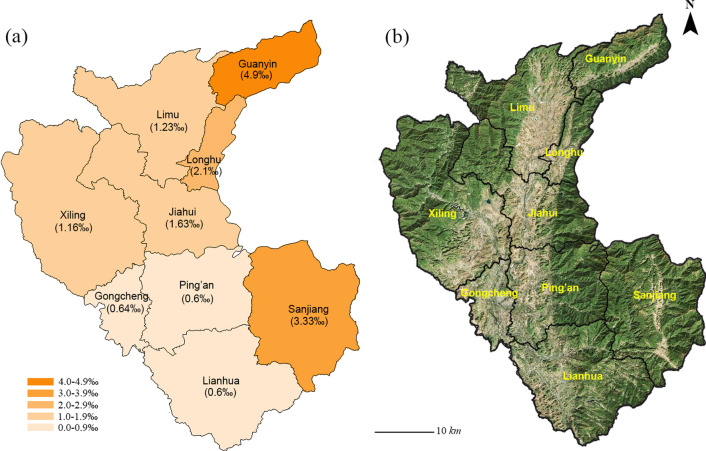
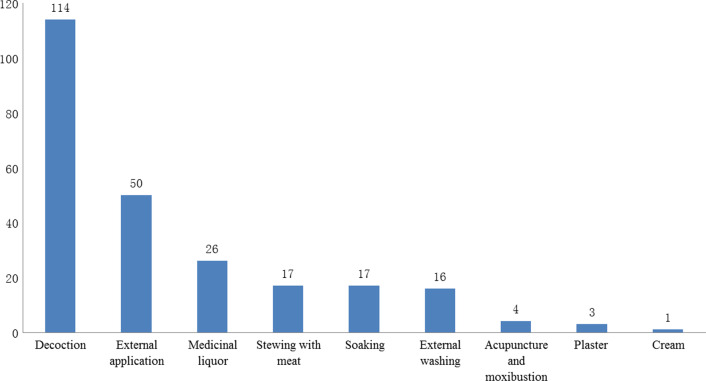
Results: Data from 352 local healers were collected for the study. The Guanyin and Sanjiang townships had the highest distribution of per capita healers (Pch), while the Gongcheng, Lianhua, and Ping'an townships were relatively lower. Of the 352 local healers, more than half were older than 60 years of age and therefore faced the problem of suitable successors and potential loss of traditional medicinal knowledge. There are 12 types of diseases treated by local healers in the study area, and most of the types had a high ICF value. The highest ICF (0.80) was reported for digestive system disease, followed by urinary system disease (0.78) and nervous system disease (0.77). Traumatic injury and orthopedics, digestive system, and rheumatic disease are the most common ailments. The RFC value calculated in 33 medicinal plant species (with an FC of more than 5) ranged from 0.024 to 0.056. The higher RFC values included Kadsura longipedunculata, Schefflera heptaphylla, Plantago asiatica, etc. The most commonly used medicinal method was decoction; plasters, creams, and some form of moxibustion and cupping skills were locally practiced, but only rarely. The local healers used 306 medicinal plant species (116 families and 255 genera). Herbal plants were most commonly used among these, with whole plants and roots being favored.
Conclusion: The Yao people are highly skilled at using medicinal plants to treat various diseases in Gongcheng. Their treatment methods are varied, convenient, and efficient. Due to the impact of urbanization and economic development, knowledge of traditional medicine is under threat, with declining numbers of local healers and a lack of suitable successors. In order to protect and inherit Yao's traditional medicinal knowledge, it is necessary to educate young healers and to protect biodiversity.
Keywords: Ethnomedicine; Medicinal plants; Traditional knowledge; Yao ethnic group.
© 2022. The Author(s).
Conflict of interest statement
The authors declare that they have no competing interests.
Figures




References
-
- Tewelde F, Mesfin M, Tsewene S. Ethnobotanical survey of traditional medicinal practices in Laelay Adi-yabo District, Northern Ethiopia. Int J Ophthalmol Visual Sci. 2017;2(4):80–87. doi: 10.11648/j.ijovs.20170204.11. - DOI
MeSH terms
LinkOut - more resources
Full Text Sources
