. 2022 Jun 22;13(1):3567.
doi: 10.1038/s41467-022-30971-8.

Host control and the evolution of cooperation in host microbiomes

Affiliations

Host control and the evolution of cooperation in host microbiomes

Connor Sharp et al. Nat Commun. .

Abstract

Humans, and many other species, are host to diverse symbionts. It is often suggested that the mutual benefits of host-microbe relationships can alone explain cooperative evolution. Here, we evaluate this hypothesis with evolutionary modelling. Our model predicts that mutual benefits are insufficient to drive cooperation in systems like the human microbiome, because of competition between symbionts. However, cooperation can emerge if hosts can exert control over symbionts, so long as there are constraints that limit symbiont counter evolution. We test our model with genomic data of two bacterial traits monitored by animal immune systems. In both cases, bacteria have evolved as predicted under host control, tending to lose flagella and maintain butyrate production when host-associated. Moreover, an analysis of bacteria that retain flagella supports the evolution of host control, via toll-like receptor 5, which limits symbiont counter evolution. Our work puts host control mechanisms, including the immune system, at the centre of microbiome evolution.


Conflict of interest statement

K.F. is cofounder of Postbiotics plus research LLC.

Figures
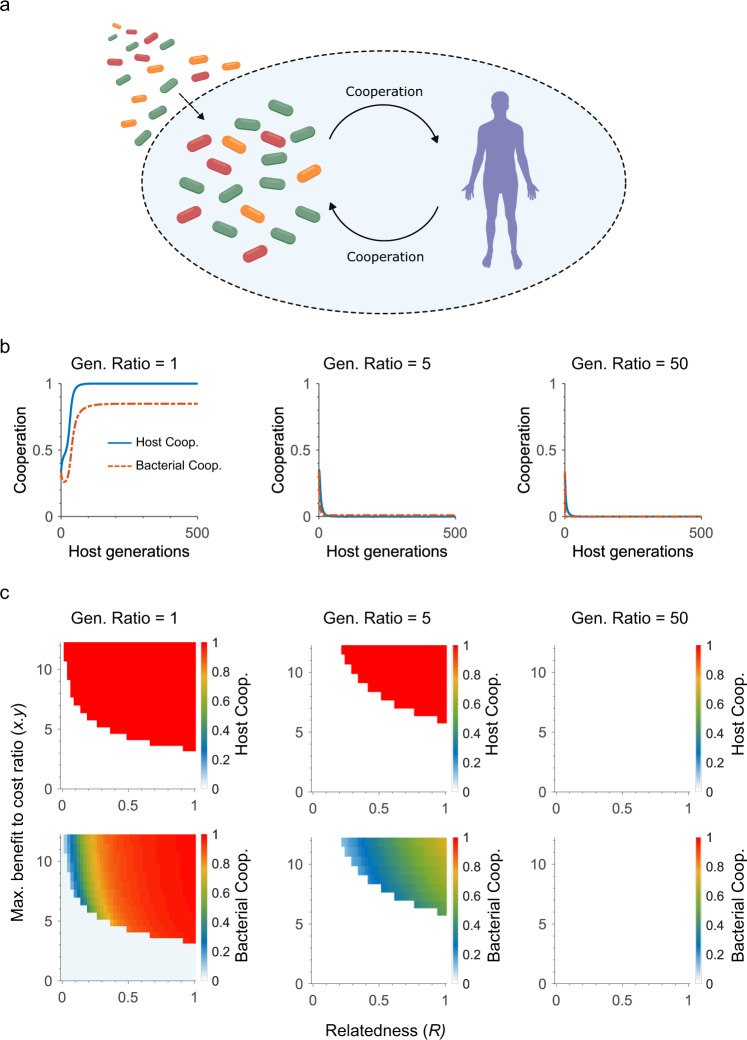
Fig. 1
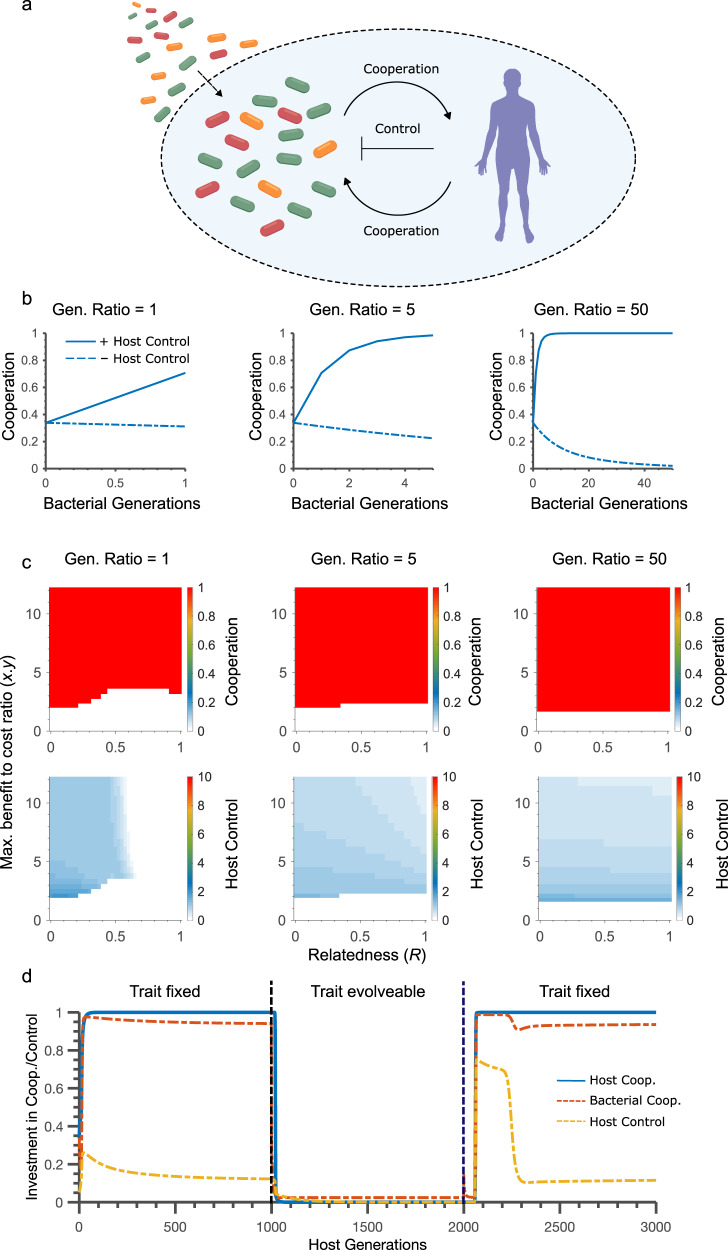
Fig. 1. Cooperation breaks down in diverse and long-lived microbiomes.
a Cartoon of the model: Both hosts and microbiota can invest in cooperation. Host can also invest in host control that preferentially benefits more cooperative symbionts. Microbes migrate into the system at rate M from a fixed environmental pool of largely uncooperative microbes between host generations, and at rate m each symbiont generation within host generations (Methods, Table 1). b Example dynamics from the model. Cooperation evolves when the benefits of cooperation are high, symbiont relatedness is high (i.e. within-species diversity is low) and the microbiome is short lived (the ratio of symbiont to host generations is 1). Increasing the number of symbiont generations within a single host generation (generation ratio) increases symbiont competition within the host and cooperation with the host collapses (unless stated, parameters are x = y = 2, R = 0.5, f = 0.02, g = 0.1, m = 1 × 10−6, M = 0.05). c Effect of relatedness and benefit to cost ratio of the evolution of cooperation. Cooperation is only stable at high relatedness, high benefit to cost ratio and low generation ratio. Increasing the generation ratio leads to the collapse of cooperation across a wide parameter space.
Fig. 2
Fig. 2. Host control stabilises the evolution of cooperation in the microbiome.
a Schematic of the model: Both hosts and microbiota can invest in cooperation and, in addition, hosts can invest in control mechanisms that favour more cooperative symbionts over less cooperative ones. Hosts control also negatively effects all symbionts at cost (f) and hosts pay a direct cost for control (g). b Within-host evolution of symbiont cooperation (shown here for the first host generation, as an illustration). Increasing symbiont generations per host generation (generation ratio) promotes symbiont cooperation when there is host control, but hinders cooperation when there is not. c  Effect of relatedness and benefit to cost ratio on the evolution of cooperation. Cooperation evolves across broad parameter ranges with host control, where increasing the symbiont to host generation ratio only increases the range of conditions where cooperation is stable. The regions where cooperation evolves for hosts and symbiont overlap perfectly and so we show only a single plot for cooperation. d Cooperation collapses when symbionts can evolve cooperation independently of the trait that is the target of host control. Mutualism is stable while the trait and cooperation are fixed (original model) but when symbionts are allowed to evolve the trait-cooperation link, cooperation and control are quickly lost. Reinstating the relationship again renders host control effective and restores cooperation. Unless stated, parameters are: x = y = 2, f = 0.02, g = 0.1, m = 1 × 10−6, M = 0.05.
Fig. 3
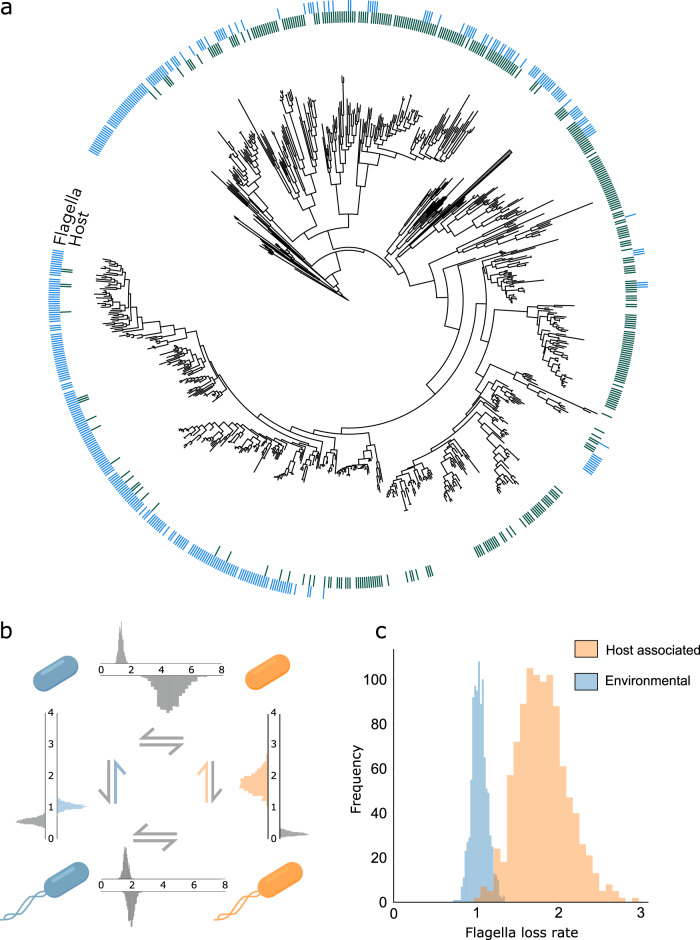
Fig. 3. Host association and possession of flagella are negatively correlated, and host-associated bacteria have a higher rate of flagella loss.
a 16 S phylogeny for strains in the PATRIC representative dataset. We only show Firmicutes here as an example because the full phylogeny is too large to show effectively. Host association was determined using metadata from the PATRIC and BacDive databases. Flagella status was determined by identified conserved motifs of flagellin genes. b Transitions between the four states in the data set, with and the posterior distributions of the transition rates calculated using Bayestraits. c Posterior distribution of flagella loss rates for host-associated and environmental bacteria. Our model provides evidence for a significant difference in the rate of flagella loss between host-associated bacteria and environmental bacteria. Source data are provided as a Source Data file.
Fig. 4
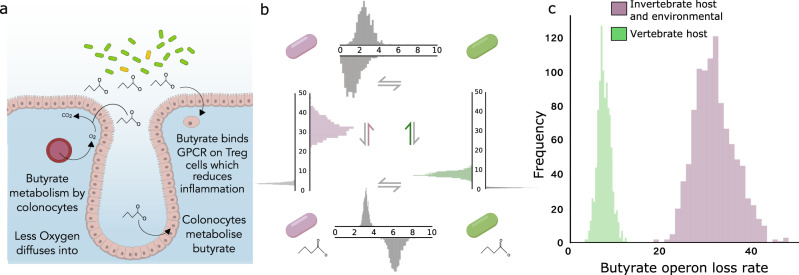
Fig. 4. The pyruvate to butyrate operon is maintained over evolutionary time in host-associated bacteria.
a Cartoon of butyrate biology: the short chain fatty acid is produced by members of the mammalian microbiome and is a key energy source for the host colonocytes. The anaerobic environment of the gut is favourable to butyrate producing bacteria and is reinforced by metabolism of butyrate by colonocytes, which lowers the oxygen potential in the gut. In addition, butyrate can reduce inflammation via effects on regulatory T cells by binding to G-protein couples receptors (GPCR),, (b) Evolutionary loss rate of a pyruvate to butyrate operon based upon the genomes of the PATRIC database (Methods). c Posterior distribution for butyrate loss rates for symbionts associated with vertebrate hosts against environmental or invertebrate associated hosts. Source data are provided as a Source Data file.
Fig. 5
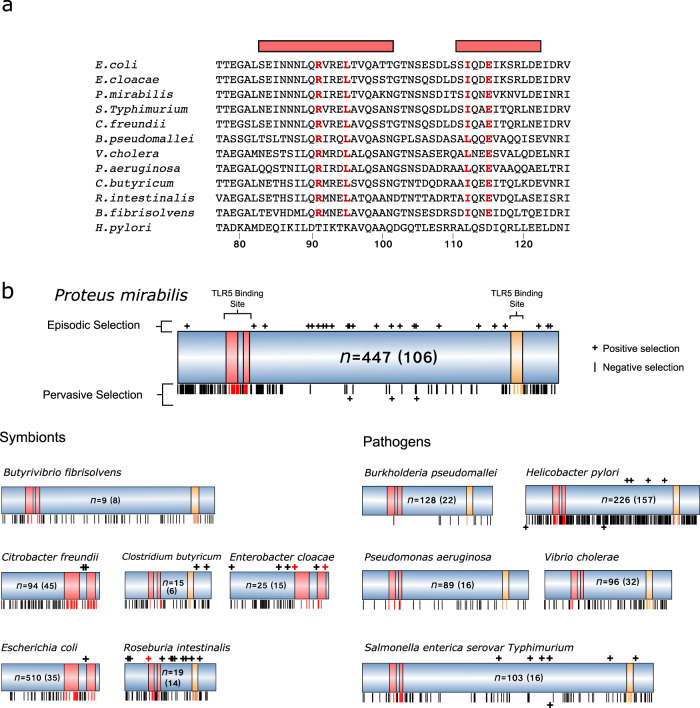
Fig. 5. TLR5 targets a conserved region of bacterial flagellin within which we find little evidence of positive selection.
a Alignment of the domain of flagellin which TLR5 recognises in symbionts and pathogens. Red bars indicate residues predicted to be in the interface between flagellin and TLR5. Red residues have been identified as important for TLR5 binding by alanine scanning mutagenesis. As a member of the ε-proteobacteria, Helicobacter pylori has managed to escape TLR5 recognition and maintain motility by a serious of compensatory mutations. b Schematic of flagellin alignments for the 12 species tested. Numbers indicate the total number of sequences in the alignment (and the number of unique sequences). Red domains indicate the TLR5 binding region as shown in the above alignment, yellow domains are a second site that also interacts with TLR5 (a C-terminal region that also forms part of the D1 domain when the protein folds). Episodic positive selection was determined as any site with an LRT > 2 and p < 0.05 (calculated by MEME, and pervasive positive selection an ω > 1 and p < 0.05 calculated by FEL and are represented by ‘+’). Lines indicate pervasive negative selection at residues predicted by FEL to have a value of ω < 0.05. For C. freundii, E. cloacae and E. coli variable domains made aligning the full flagellin sequence inaccurate, therefore we focused only on the N-terminal D1 domain, which is the primary binding site for TLR5.

References

    1. Hill MJ. Intestinal flora and endogenous vitamin synthesis. Eur. J. Cancer Prev. J. Eur. Cancer Prev. Organ. 1997;6:S43–S45. doi: 10.1097/00008469-199703001-00009. - DOI - PubMed
    1. Rowland I, et al. Gut microbiota functions: metabolism of nutrients and other food components. Eur. J. Nutr. 2018;57:1–24. doi: 10.1007/s00394-017-1445-8. - DOI - PMC - PubMed
    1. Perez PF, et al. Bacterial imprinting of the neonatal immune system: lessons from maternal cells? Pediatrics. 2007;119:e724–e732. doi: 10.1542/peds.2006-1649. - DOI - PubMed
    1. Lotz M, et al. Postnatal acquisition of endotoxin tolerance in intestinal epithelial cells. J. Exp. Med. 2006;203:973–984. doi: 10.1084/jem.20050625. - DOI - PMC - PubMed
    1. Sorbara MT, Pamer EG. Interbacterial mechanisms of colonization resistance and the strategies pathogens use to overcome them. Mucosal Immunol. 2019;12:1–9. doi: 10.1038/s41385-018-0053-0. - DOI - PMC - PubMed

Publication types