


Willingness to accept COVID-19 vaccination among people living with HIV in a high HIV prevalence community
- PMID: 35733209
- PMCID: PMC9214683
- DOI: 10.1186/s12889-022-13623-w
Willingness to accept COVID-19 vaccination among people living with HIV in a high HIV prevalence community
Abstract
Background: People living with HIV (PLWH) may have a poorer prognosis with COVID-19 infection and are an important population for COVID-19 vaccination. We assessed the willingness and reasons for COVID-19 vaccine acceptance or hesitancy among PLWH in South Africa.
Methods: We conducted a cross-sectional study consisting of telephone interviews with a randomly selected subset of participants enrolled in a prospective observational cohort study evaluating a decentralized antiretroviral therapy (ART) delivery program in South Africa. Questions assessed willingness to accept a future COVID-19 vaccine, concerns regarding COVID-19 vaccination, and overall vaccine confidence. Interviews were conducted between September 2020 and January 2021. We evaluated participant demographics, sources of COVID-19 information, stigma and medical mistrust, uptake of non-pharmaceutical interventions, and socioeconomic impacts of the COVID-19 pandemic as potential covariates of willingness to accept vaccination.
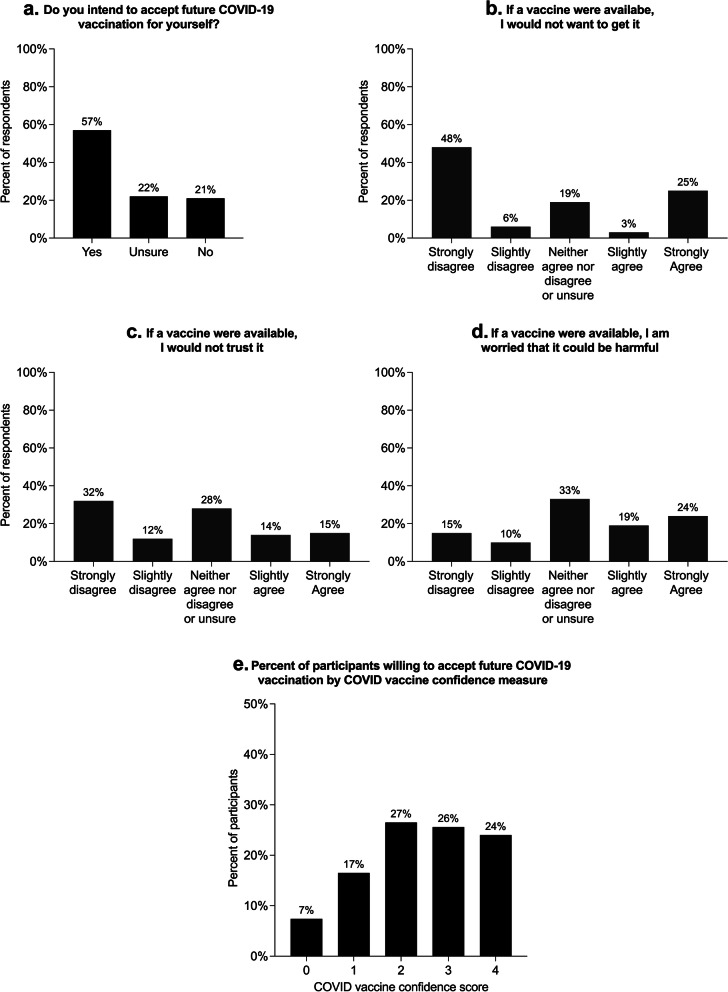
Results: We completed interviews with 213 participants; 153 (72%) were female, median age 35y, and 100 (47%) had completed secondary school. Among the participants, 121 (57%) were willing to accept future vaccination, 46 (22%) were unsure, and 45 (21%) stated they did not intend to be vaccinated. Fear of side effects, reported by 42 (20%), was the most common concern about COVID-19 vaccination. Older age was associated with willingness to accept vaccination (aOR 1.75 for every 10-year increase in age, 95% CI 1.10-2.78, p = 0.02), while higher medical mistrust related to COVID-19 (aOR 0.21, 95% CI 0.093-0.45, p < 0.001) and use of social media for COVID-19 information (aOR 0.30, 95% CI 0.11-0.84, p = 0.02) were associated with lower willingness to accept vaccination.
Conclusions: In this cohort of PLWH in South Africa, over half were willing to accept COVID-19 vaccination, although a substantial proportion remained unsure or were not willing to be vaccinated. Public health messaging should emphasize the safety and efficacy of COVID-19 vaccination and address misinformation and medical mistrust among PLWH. Ongoing efforts to ensure access to COVID-19 vaccines for vulnerable populations are crucial.
Keywords: COVID-19; HIV; South Africa; Vaccination; vaccine hesitancy.
© 2022. The Author(s).
Conflict of interest statement
The authors declare no conflicts of interest.
Figures
Update of
-
Willingness to accept COVID-19 vaccination among people living with HIV in a high HIV prevalence community.Res Sq [Preprint]. 2022 Apr 12:rs.3.rs-824083. doi: 10.21203/rs.3.rs-824083/v1. Res Sq. 2022. Update in: BMC Public Health. 2022 Jun 22;22(1):1239. doi: 10.1186/s12889-022-13623-w. PMID: 35441173 Free PMC article. Updated. Preprint.
References
-
- Bhopal S, Nielsen M. Vaccine hesitancy in low- and middle-income countries: potential implications for the COVID-19 response. Arch Dis Child. 2020. 10.1136/archdischild-2020-318988. - PubMed
Publication types
MeSH terms
Substances
Grants and funding
LinkOut - more resources
Full Text Sources
Medical
