


A randomized, placebo-controlled clinical trial of hydrogen/oxygen inhalation for non-alcoholic fatty liver disease
- PMID: 35734974
- PMCID: PMC9279585
- DOI: 10.1111/jcmm.17456
A randomized, placebo-controlled clinical trial of hydrogen/oxygen inhalation for non-alcoholic fatty liver disease
Abstract
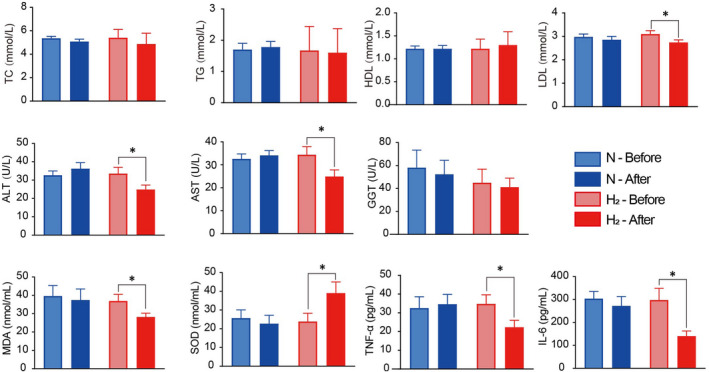
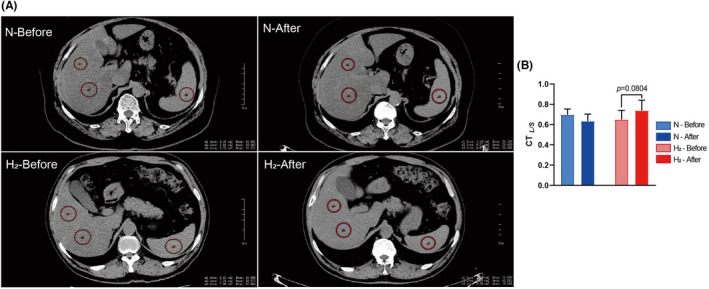
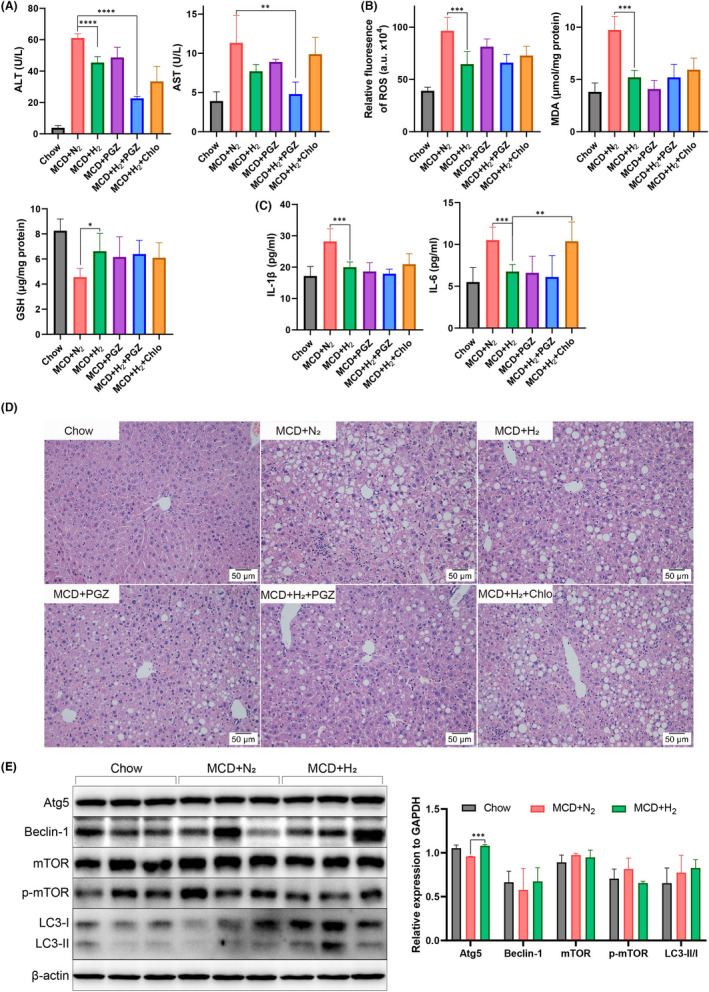
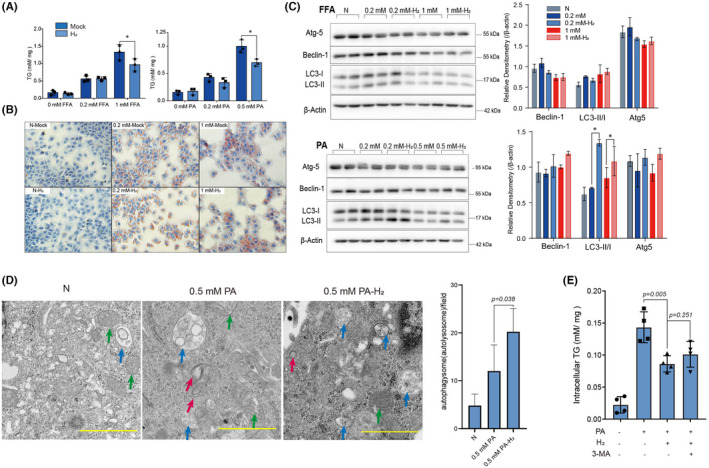
Non-alcoholic fatty liver disease (NAFLD) is the most common chronic liver disease worldwide with increasing incidence consistent with obesity, type 2 diabetes and cardiovascular diseases. No approved medication was currently available for NAFLD treatment. Molecular hydrogen (H2 ), an anti-oxidative, anti-inflammatory biomedical agent is proved to exhibit therapeutic and preventive effect in various diseases. The purpose of this study was to investigate the effect of hydrogen/oxygen inhalation on NAFLD subjects and explore the mechanism from the perspective of hepatocyte autophagy. We conducted a randomized, placebo-controlled clinical trial of 13-week hydrogen/oxygen inhalation (China Clinical Trial Registry [#ChiCTR-IIR-16009114]) including 43 subjects. We found that inhalation of hydrogen/oxygen improved serum lipid and liver enzymes. Significantly improved liver fat content detected by ultrasound and CT scans after hydrogen/oxygen inhalation was observed in moderate-severe cases. We also performed an animal experiment based on methionine and choline-deficient (MCD) diet-induced mice model to investigate effect of hydrogen on mouse NASH. Hydrogen/oxygen inhalation improved systemic inflammation and liver histology. Promoted autophagy was observed in mice inhaled hydrogen/oxygen and treatment with chloroquine blocked the beneficial effect of hydrogen. Moreover, molecular hydrogen inhibited lipid accumulation in AML-12 cells. Autophagy induced by palmitic acid (PA) incubation was further promoted by 20% hydrogen incubation. Addition of 3-methyladenine (3-MA) partially blocked the inhibitory effect of hydrogen on intracellular lipid accumulation. Collectively, hydrogen/oxygen inhalation alleviated NAFLD in moderate-severe patients. This protective effect of hydrogen was possibly by activating hepatic autophagy.
Keywords: MCD-induced NASH; NAFLD; autophagy; clinical trial; molecular hydrogen.
© 2022 The Authors. Journal of Cellular and Molecular Medicine published by Foundation for Cellular and Molecular Medicine and John Wiley & Sons Ltd.
Conflict of interest statement
The authors declared no conflicts of interest.
Figures
References
-
- Younossi ZM, Koenig AB, Abdelatif D, Fazel Y, Henry L, Wymer M. Global epidemiology of nonalcoholic fatty liver disease—Meta‐analytic assessment of prevalence, incidence, and outcomes. Hepatology. 2016;64:73‐84. - PubMed
-
- Cotter TG, Rinella M. Nonalcoholic fatty liver disease 2020: the state of the disease. Gastroenterology. 2020;158:1851‐1864. - PubMed
-
- Fan JG, Kim SU, Wong VWS. New trends on obesity and NAFLD in Asia. J Hepatol. 2017;67:862‐873. - PubMed
-
- Byrne CD, Targher G. NAFLD: a multisystem disease. J Hepatol. 2015;62:S47‐S64. - PubMed
Publication types
MeSH terms
Substances
Grants and funding
LinkOut - more resources
Full Text Sources
Medical
