


Circadian programming of the ellipsoid body sleep homeostat in Drosophila
- PMID: 35735904
- PMCID: PMC9270026
- DOI: 10.7554/eLife.74327
Circadian programming of the ellipsoid body sleep homeostat in Drosophila
Abstract
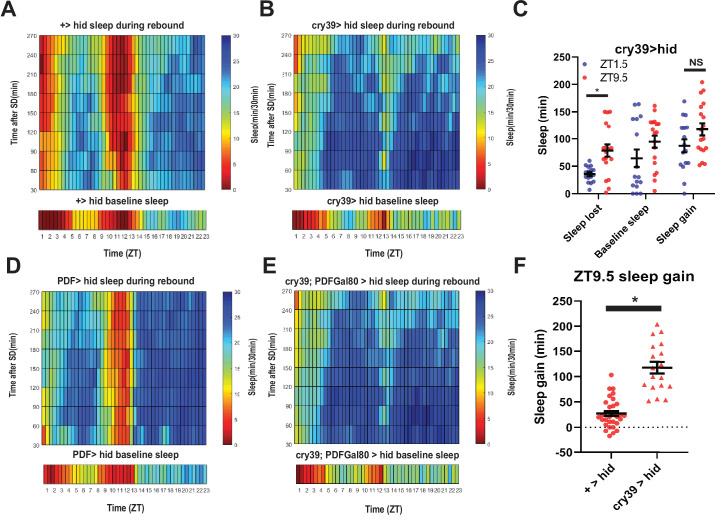
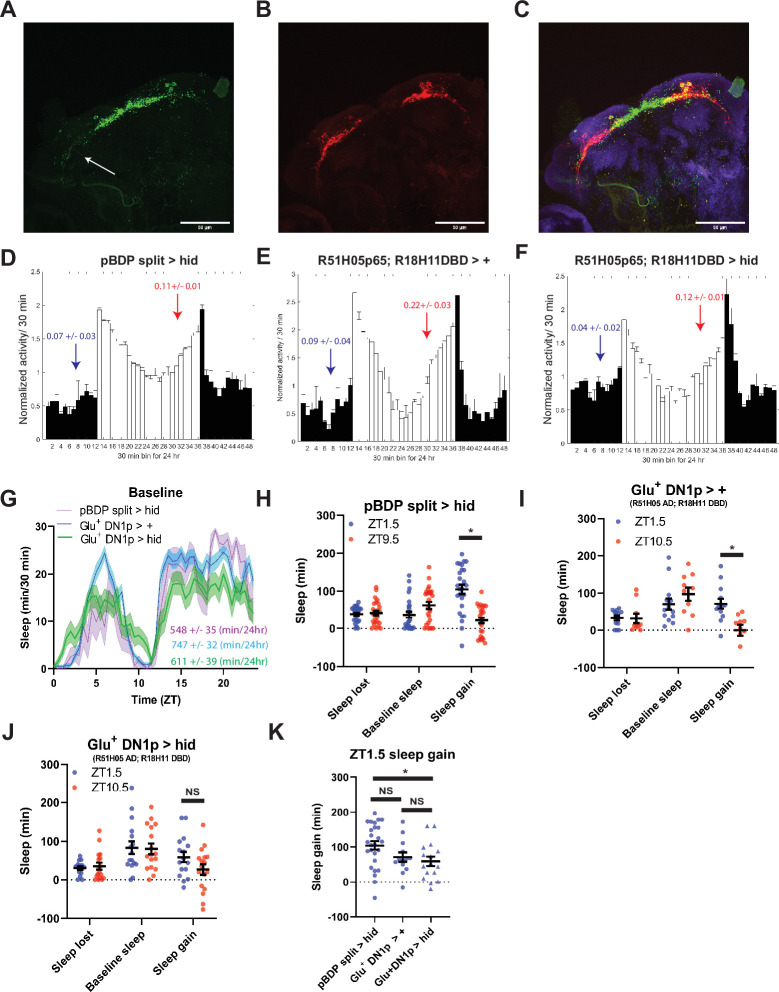
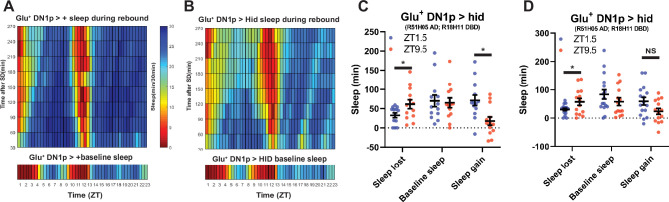
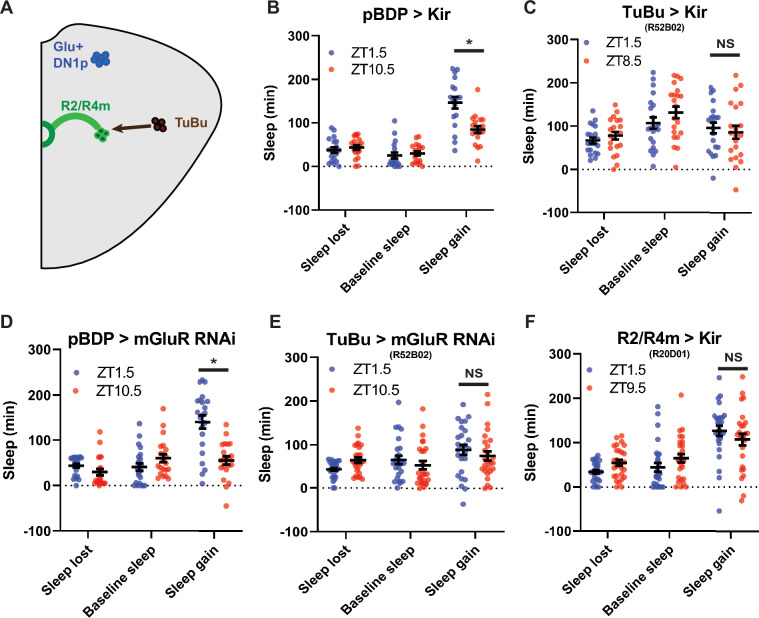
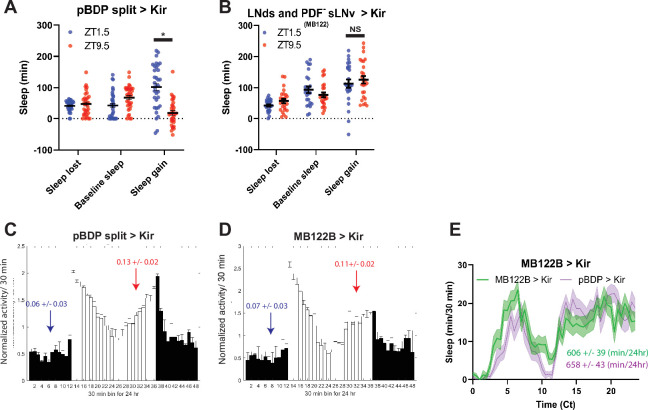
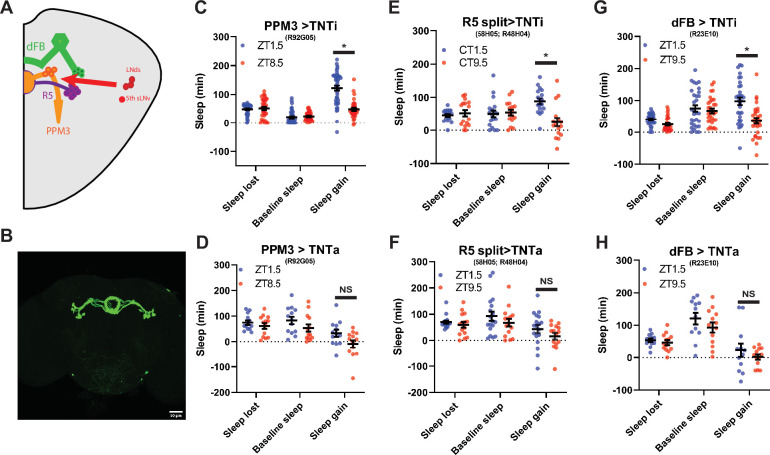
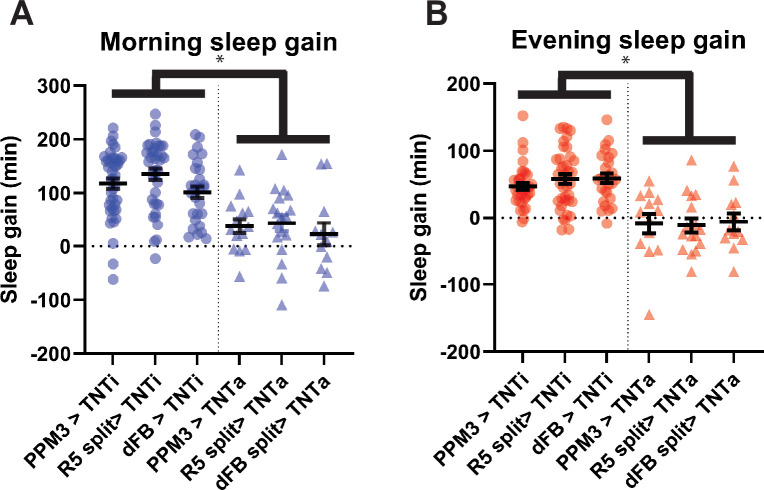
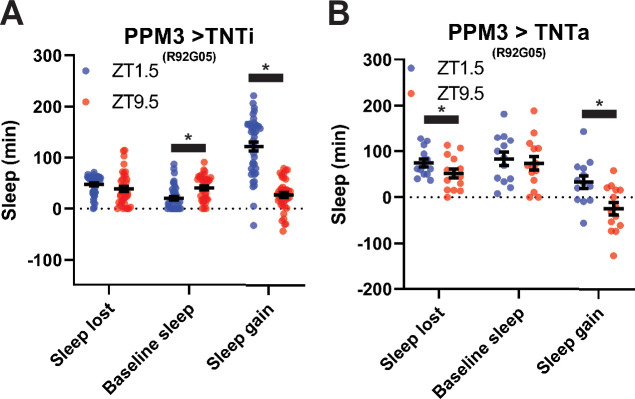
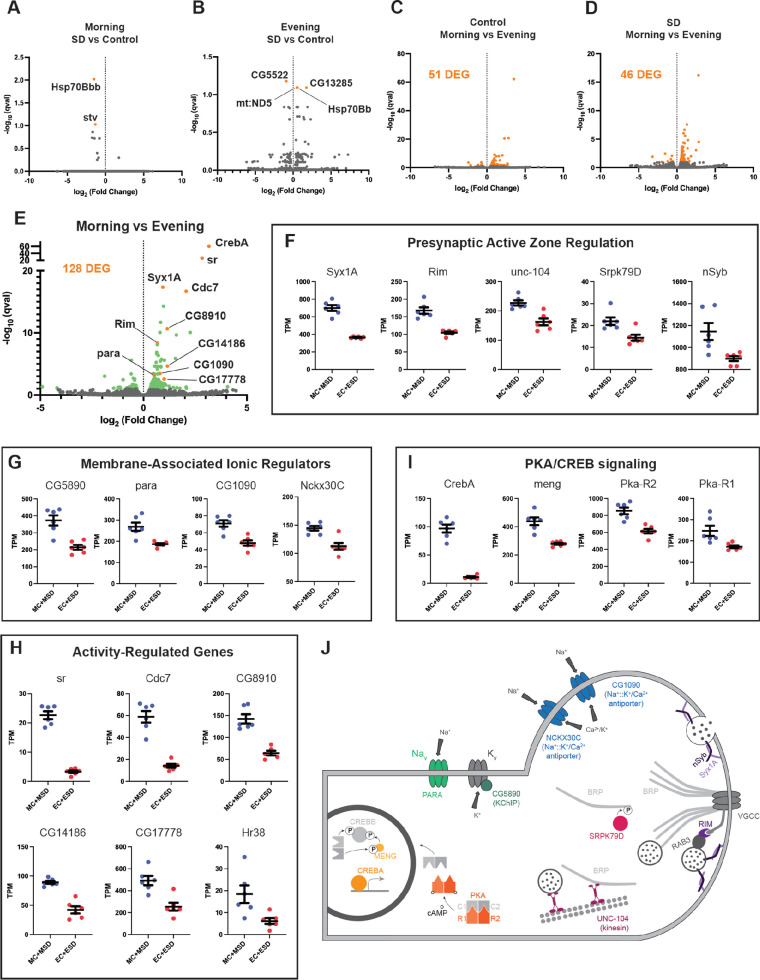
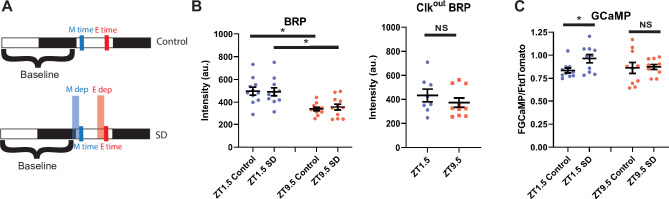
Homeostatic and circadian processes collaborate to appropriately time and consolidate sleep and wake. To understand how these processes are integrated, we scheduled brief sleep deprivation at different times of day in Drosophila and find elevated morning rebound compared to evening. These effects depend on discrete morning and evening clock neurons, independent of their roles in circadian locomotor activity. In the R5 ellipsoid body sleep homeostat, we identified elevated morning expression of activity dependent and presynaptic gene expression as well as the presynaptic protein BRUCHPILOT consistent with regulation by clock circuits. These neurons also display elevated calcium levels in response to sleep loss in the morning, but not the evening consistent with the observed time-dependent sleep rebound. These studies reveal the circuit and molecular mechanisms by which discrete circadian clock neurons program a homeostatic sleep center.
Keywords: D. melanogaster; Drosophila; circadian; clock; ellipsoid body; genetics; genomics; neuroscience; sleep homeostasis.
© 2022, Andreani et al.
Conflict of interest statement
TA, CR, SS, EO, WK, RA No competing interests declared
Figures
References
-
- Bates AS, Schlegel P, Roberts RJV, Drummond N, Tamimi IFM, Turnbull R, Zhao X, Marin EC, Popovici PD, Dhawan S, Jamasb A, Javier A, Serratosa Capdevila L, Li F, Rubin GM, Waddell S, Bock DD, Costa M, Jefferis G. Complete Connectomic Reconstruction of Olfactory Projection Neurons in the Fly Brain. Current Biology. 2020b;30:3183–3199. doi: 10.1016/j.cub.2020.06.042. - DOI - PMC - PubMed
Publication types
MeSH terms
Substances
Associated data
- Actions
Grants and funding
LinkOut - more resources
Full Text Sources
Molecular Biology Databases
