


Updated Trends on the Biodiscovery of New Marine Natural Products from Invertebrates
- PMID: 35736192
- PMCID: PMC9228037
- DOI: 10.3390/md20060389
Updated Trends on the Biodiscovery of New Marine Natural Products from Invertebrates
Abstract
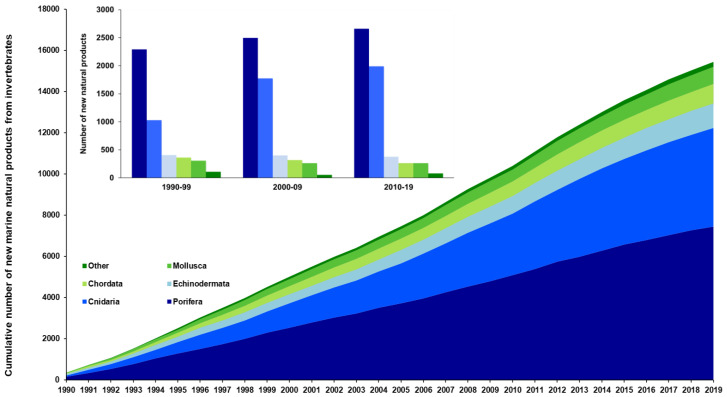
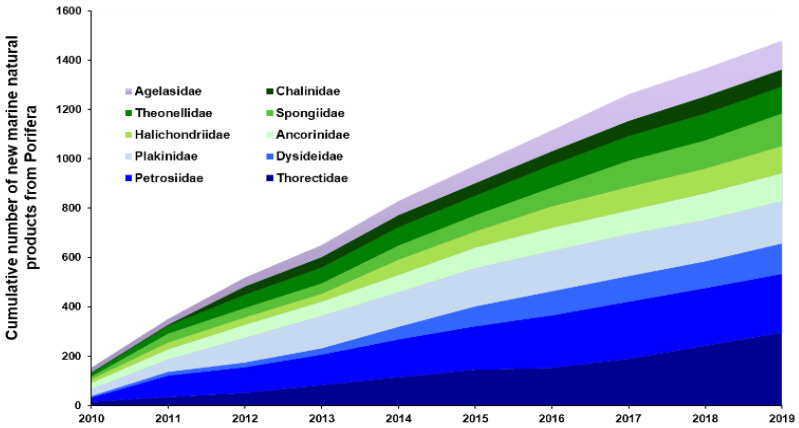
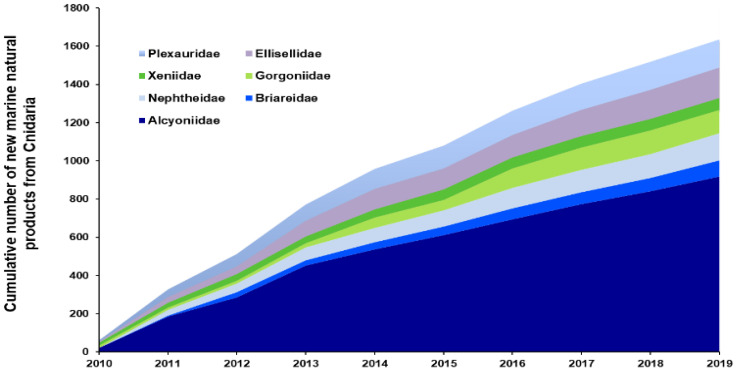
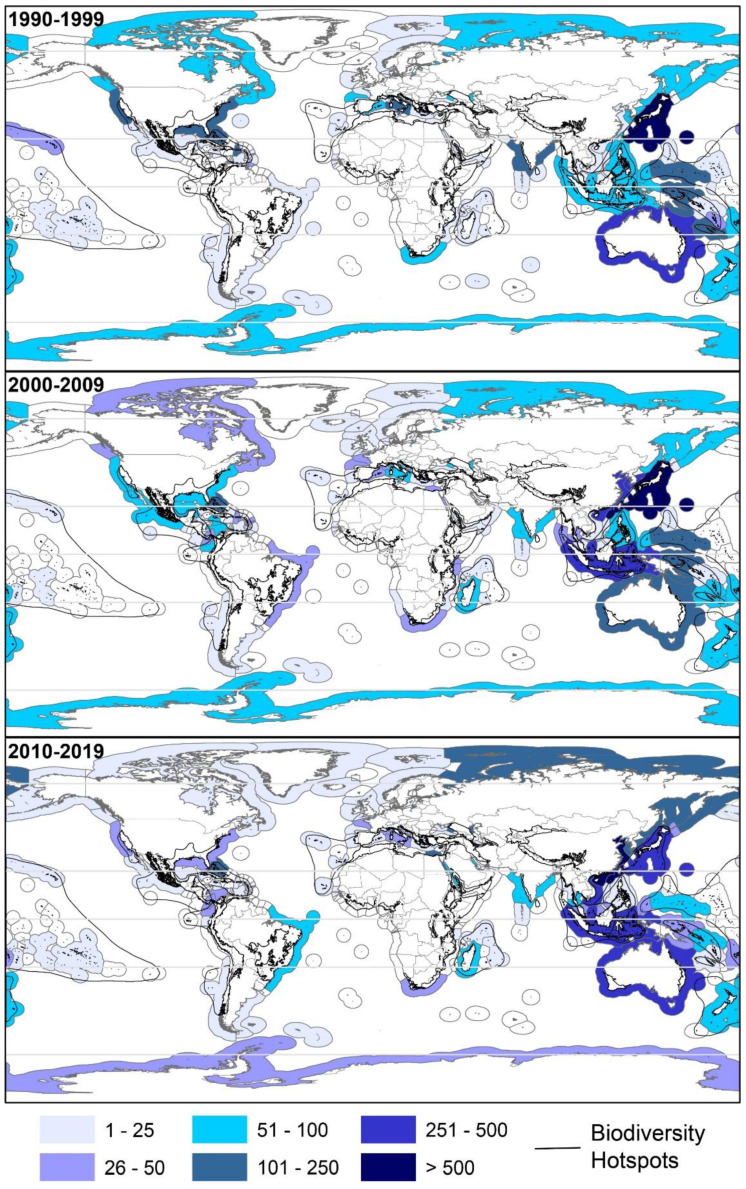
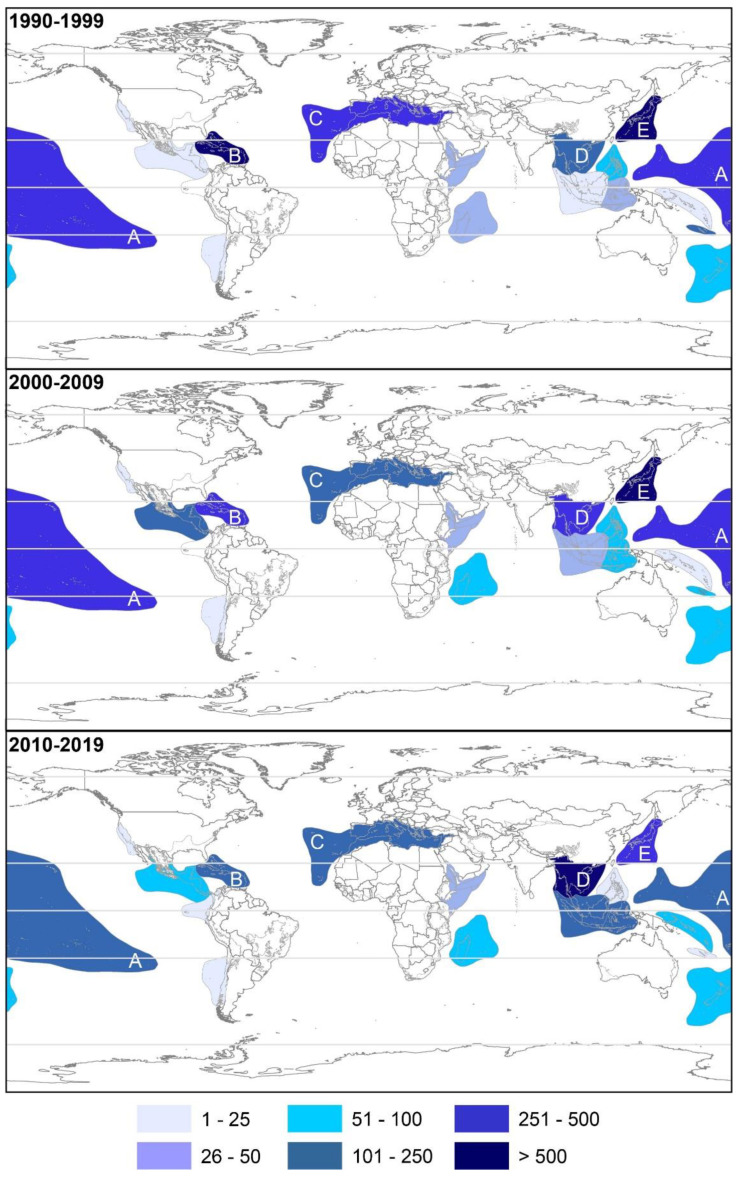
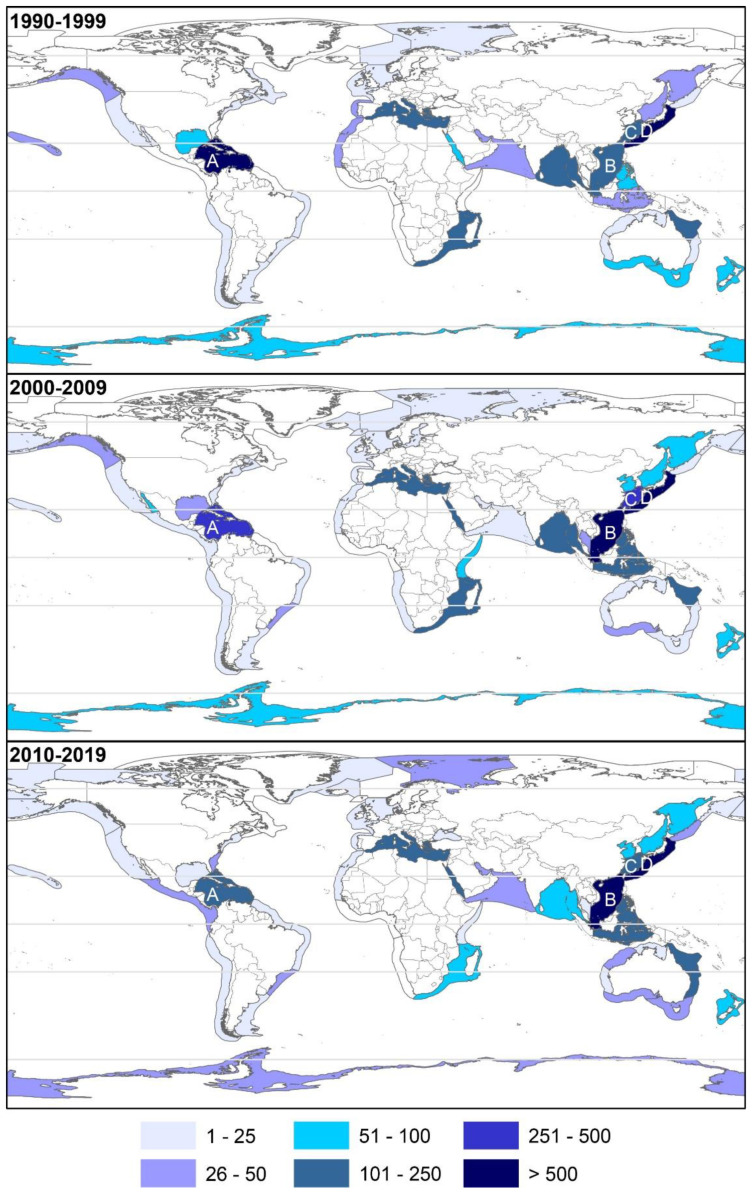
From 1990-2019, a total of 15,442 New Marine Natural Products from Invertebrates (NMNPIs) were reported. The 2010s saw the most prolific decade of biodiscovery, with 5630 NMNPIs recorded. The phyla that contributed most biomolecules were the Porifera (sponges) (47.2%, 2659 NMNPIs) and the Cnidaria (35.3%, 1989 NMNPIs). The prevalence of these two phyla as the main sources of NMNPIs became more pronounced in the 2010s. The tropical areas of the Pacific Ocean yielded more NMNPIs, most likely due to the remarkable biodiversity of coral reefs. The Indo-Burma biodiversity hotspot (BH) was the most relevant area for the biodiscovery of NMNPIs in the 2010s, accounting for nearly one-third (1819 NMNPIs) of the total and surpassing the top BH from the 1990s and the 2000s (the Sea of Japan and the Caribbean Islands, respectively). The Chinese exclusive economic zone (EEZ) alone contributed nearly one-quarter (24.7%) of all NMNPIs recorded during the 2010s, displacing Japan's leading role from the 1990s and the 2000s. With the biodiscovery of these biomolecules steadily decreasing since 2012, it is uncertain whether this decline has been caused by lower bioprospecting efforts or the potential exhaustion of chemodiversity from traditional marine invertebrate sources.
Keywords: biomolecules; bioprospecting; corals; sponges; zoogeography.
Conflict of interest statement
The authors declare no conflict of interest.
Figures
References
-
- Calado R., Leal M.C., Gaspar H., Santos S., Marques A., Nunes M.L., Vieira H. How to succeed in marketing marine natural products for nutraceutical, pharmaceutical and cosmeceutical markets. In: Rampelotto P.H., Trincone A., editors. Grand Challenges in Marine Biotechnology. Springer International Publishing; Cham, Switzerland: 2018. pp. 317–403.
-
- Buck M., Hamilton C. The Nagoya Protocol on Access to Genetic Resources and the Fair and Equitable Sharing of Benefits Arising from Their Utilization to the Convention on Biological Diversity. Rev. Eur. Comp. Int. Environ. Law. 2011;20:47–61. doi: 10.1111/j.1467-9388.2011.00703.x. - DOI
Publication types
MeSH terms
Substances
Grants and funding
LinkOut - more resources
Full Text Sources
Research Materials
