


Callus-Mediated High-Frequency Plant Regeneration, Phytochemical Profiling, Antioxidant Activity and Genetic Stability in Ruta chalepensis L
- PMID: 35736765
- PMCID: PMC9229613
- DOI: 10.3390/plants11121614
Callus-Mediated High-Frequency Plant Regeneration, Phytochemical Profiling, Antioxidant Activity and Genetic Stability in Ruta chalepensis L
Abstract
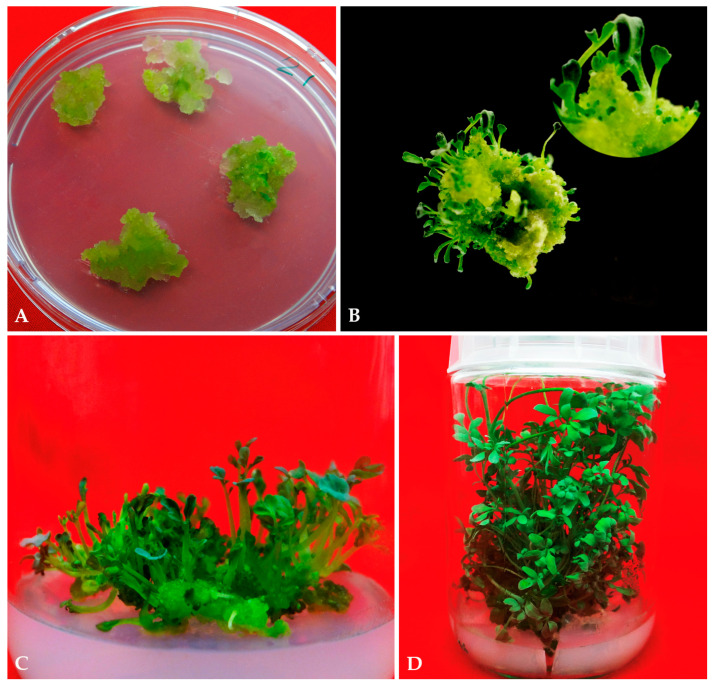
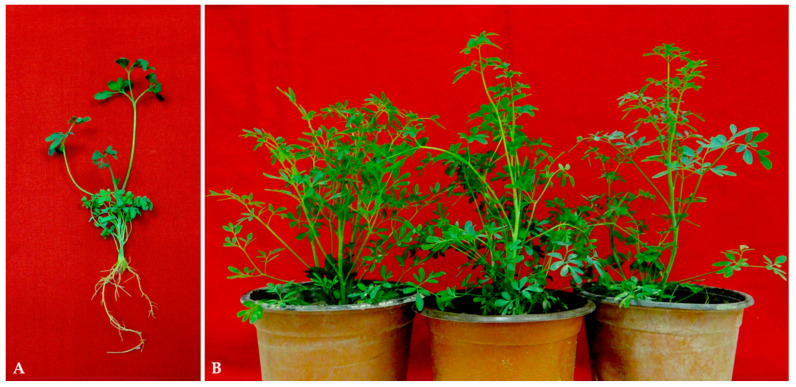
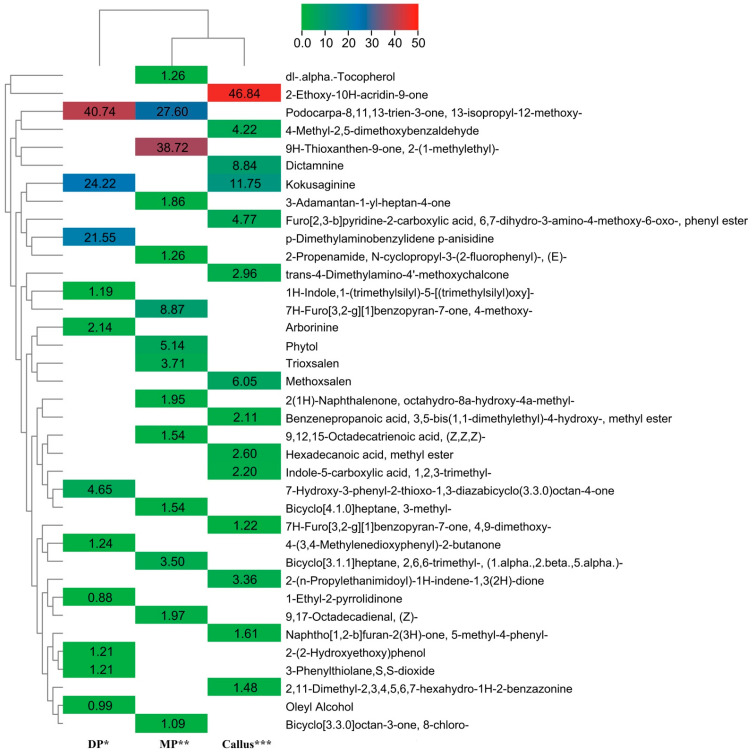
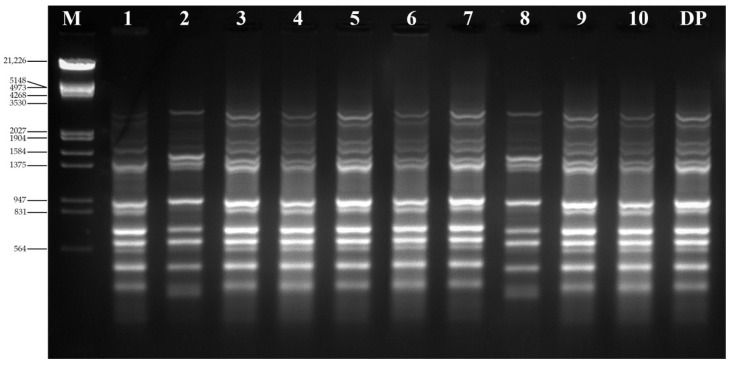
Efficient methods for callus induction and the high-frequency plant regeneration of Ruta chalepensis L. were established, and the phytochemical potential and antioxidant activity of a donor plant, ex-vitro-established micropropagated plants, and callus were also studied. Yellowish-green callus was induced with a frequency of 97.8% from internode shoot segments of the donor plant growing in soil in the botanical garden cultured on Murashige and Skoog (MS) medium containing 10 μM 2,4-D (2,4-dichlorophenoxyacetic acid) and 1 μM BA (6-benzyladenine). Adventitious shoots were regenerated from the yellowish-green callus on MS medium containing 5.0 μM (BA) and 1.0 μM 1-naphthaleneacetic acid (NAA), with a regeneration frequency of 98.4% and a maximum of 54.6 shoots with an average length of 4.5 cm after 8 weeks. The regenerated shoots were rooted in a medium containing 1.0 μM IBA (indole-3-butyric acid) and successfully transferred to ex vitro conditions in pots containing normal garden soil, with a 95% survival rate. The amounts of alkaloids, phenolics, flavonoids, tannins, and antioxidant activity of the ex-vitro-established micropropagated plants were higher than in the donor plant and callus. The highest contents of hesperidin and rutin (93.3 and 55.9 µg/mg, respectively) were found in the ex-vitro-established micropropagated plants compared to those obtained from the donor plant (91.4 and 31.0 µg/mg, respectively) and callus (59.1 and 21.6 µg/mg, respectively). The genetic uniformity of the ex-vitro-established micropropagated plants was appraised by the ISSR markers and compared with the donor plant. This is the first report describing the callus-mediated plant regeneration, as well as the production of phenolic compounds and antioxidant activities in R. chalepensis, which might be a potential alternative technique for the mass propagation and synthesis of bioactive compounds such as hesperidin and rutin.
Keywords: antioxidant activity; callus culture; in vitro regeneration; medicinal plants; phenolic compounds; plant growth regulators.
Conflict of interest statement
The authors declare no conflict of interest.
Figures
References
-
- Al-Majmaie S., Nahar L., Rahman M.M., Nath S., Saha P., Talukdar A.D., Sharples G.P., Sarker S.D. Anti-MRSA Constituents from Ruta chalepensis (Rutaceae) Grown in Iraq, and In Silico Studies on Two of Most Active Compounds, Chalepensin and 6-Hydroxy-rutin 3’,7-Dimethyl ether. Molecules. 2021;26:1114. doi: 10.3390/molecules26041114. - DOI - PMC - PubMed
Grants and funding
LinkOut - more resources
Full Text Sources
