


Non-invasive cervical vagus nerve stimulation effects on reaction time and valence image anticipation response
- PMID: 35738468
- PMCID: PMC9721369
- DOI: 10.1016/j.brs.2022.06.006
Non-invasive cervical vagus nerve stimulation effects on reaction time and valence image anticipation response
Abstract
Background: Norepinephrine (NE) driven noninvasive vagus nerve stimulation (nVNS), which improves attention and reduces reaction time, augments learning. Equally important, endogenous NE mediated arousal is highly dependent on the valence (positive or negative) of the exogenous stimulus. But to date, no study has measured valence specific effects of nVNS on both functional magnetic resonance imaging (fMRI) anticipation task response and reaction time in healthy individuals. Therefore, the aim of this pilot study was to assess whether nVNS vs sham modulates valence cortical anticipation task response and reaction time in a normative sample.
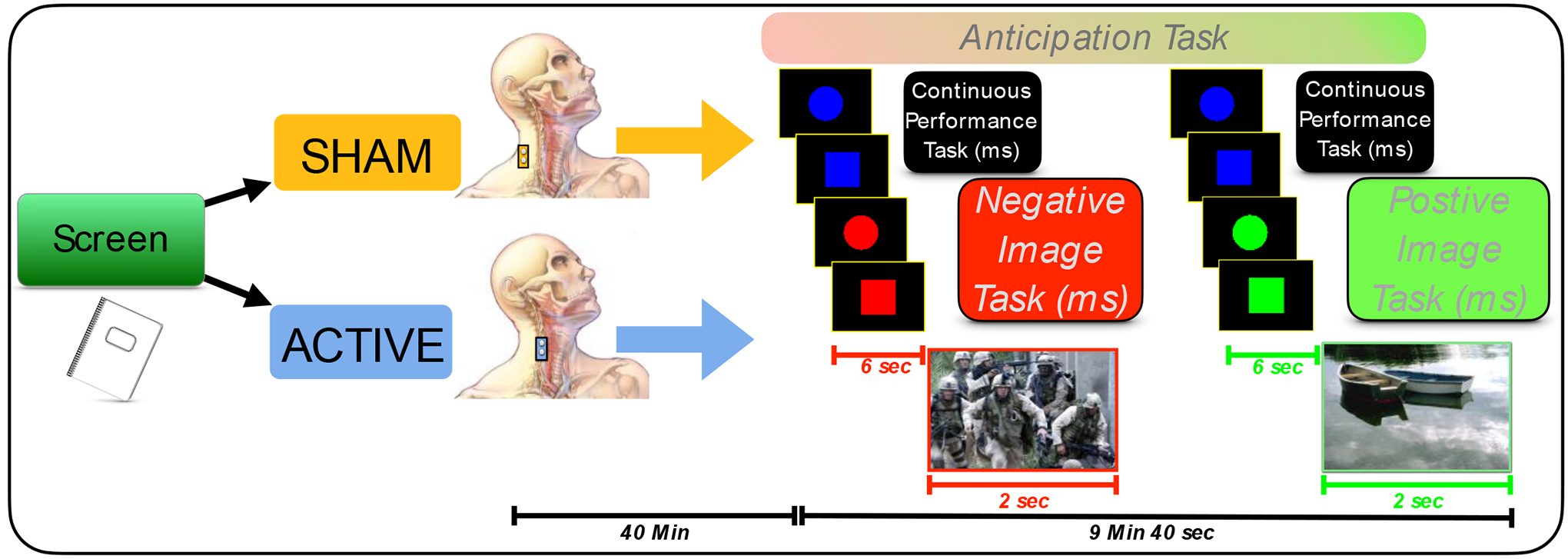
Methods: Participants received right sided transcutaneous cervical nVNS (N = 12) or sham (N = 12) stimulation during a 3T fMRI scan. Subjects first performed a continuous performance task (CPT) and then a cued anticipation task to images of positively and negatively valenced events during fMRI. Reaction times to cues and Blood oxygen level dependent (BOLD) response were examined over phase to identify effects of nVNS/sham over time.
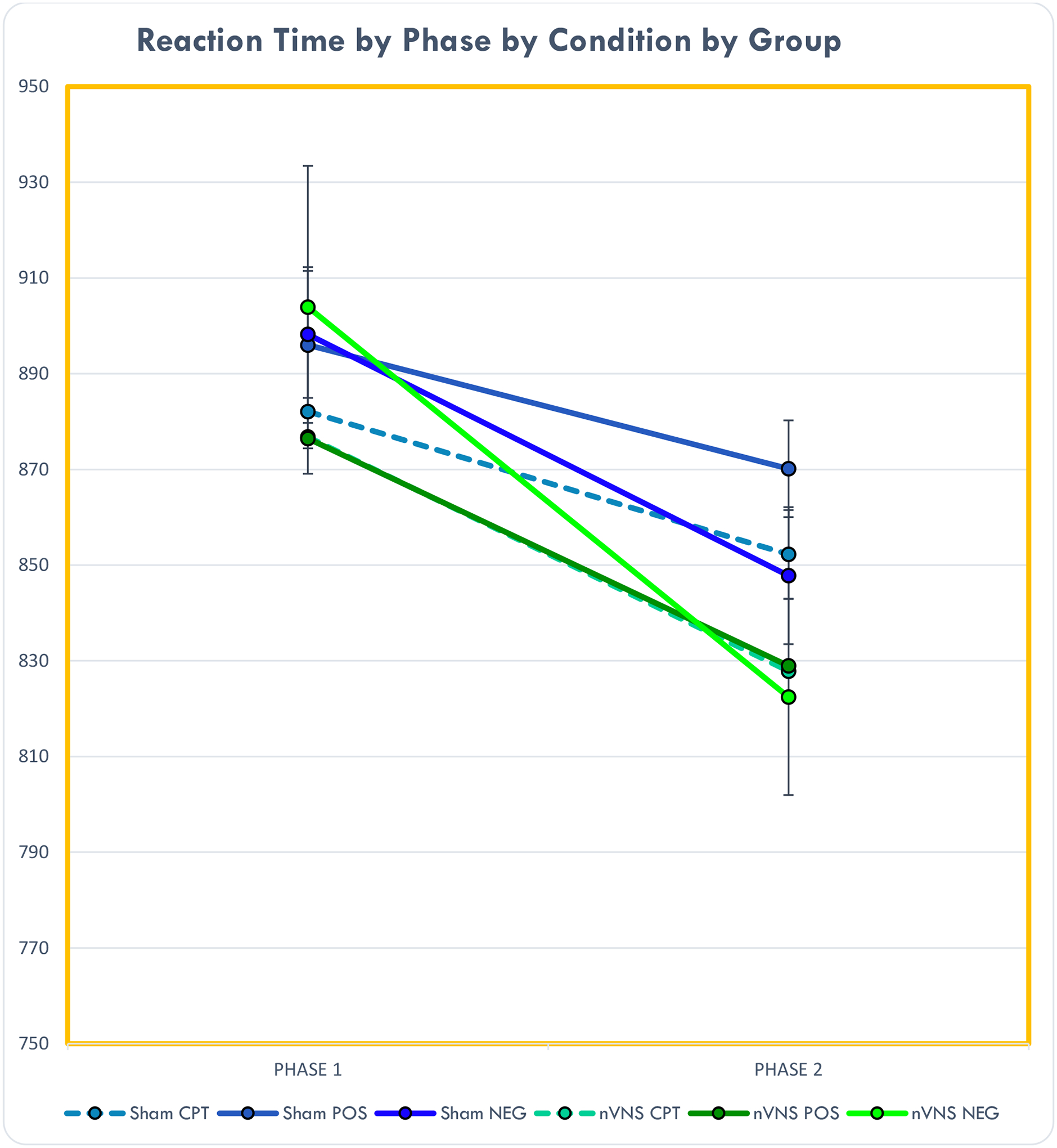
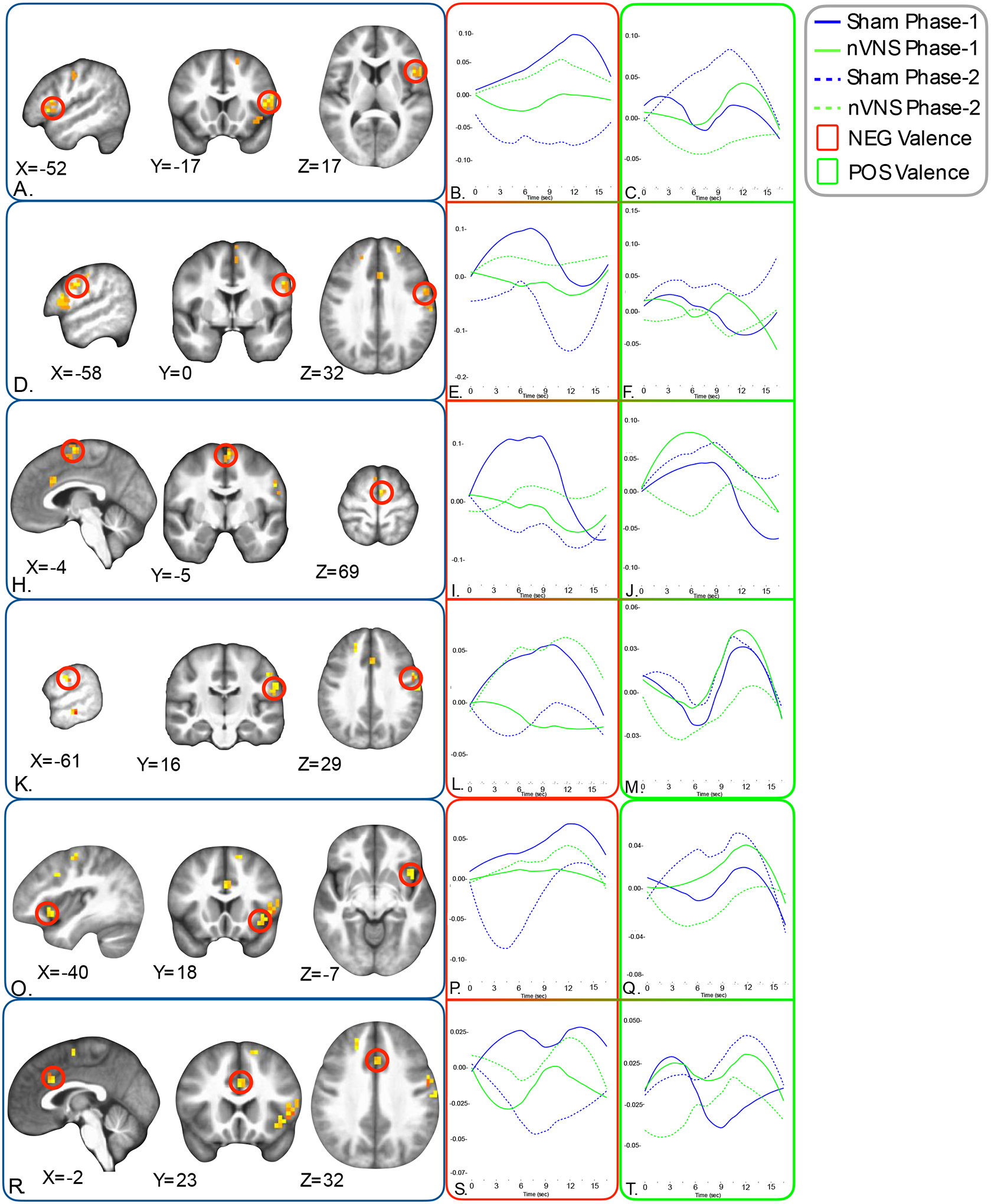
Results: nVNS reduced reaction time for all valenced image anticipation trials. With the fMRI anticipation task, we observed a valence-specific effect; nVNS increased responsivity to images with negative valence and decreased responsivity to images with positive valence, whereas sham showed an inverse valence response.
Conclusions: nVNS was linked to reduced reaction time during the anticipation task. In tandem, nVNS consistently enhanced responsivity to negatively valenced images and diminished responsivity to positively valenced images, suggesting specific nVNS driven endogenous neurotransmitter signaling may contribute.
Keywords: Anticipation; Arousal; Attention; Cervical noninvasive vagal nerve stimulation; Functional magnetic resonance imaging; Locus coeruleus; Norepinephrine.
Copyright © 2022. Published by Elsevier Inc.
Conflict of interest statement
Declaration of interests The authors declare that they have no known competing financial interests or personal relationships that could have appeared to influence the work reported in this paper.
Figures
References
-
- Frangos E, Komisaruk BR: Access to Vagal Projections via Cutaneous Electrical Stimulation of the Neck: fMRI Evidence in Healthy Humans. Brain Stimul 2017, 10(1):19–27. - PubMed
-
- McIntire L, Goodyear C, McKinley A: Peripheral Nerve Stimulation to Augment Human Analyst Performance. In: 2019. IEEE Research and Applications of Photonics in Defense Conference (RAPID): 2019: IEEE; 2019: 1–3.
-
- Fornai F, Ruffoli R, Giorgi FS, Paparelli A: The role of locus coeruleus in the antiepileptic activity induced by vagus nerve stimulation. European Journal of Neuroscience 2011, 33(12):2169–2178. - PubMed
