


Decreased Antibiotic Consumption Coincided with Reduction in Bacteremia Caused by Bacterial Species with Respiratory Transmission Potential during the COVID-19 Pandemic
- PMID: 35740153
- PMCID: PMC9219721
- DOI: 10.3390/antibiotics11060746
Decreased Antibiotic Consumption Coincided with Reduction in Bacteremia Caused by Bacterial Species with Respiratory Transmission Potential during the COVID-19 Pandemic
Abstract
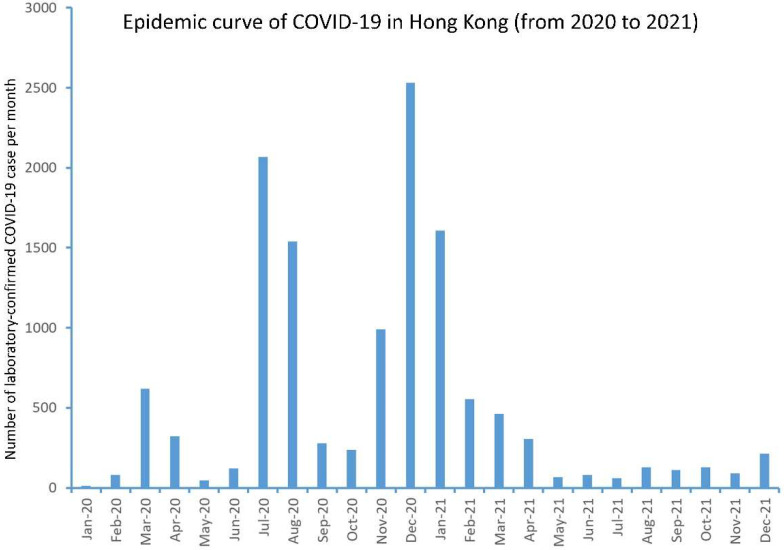
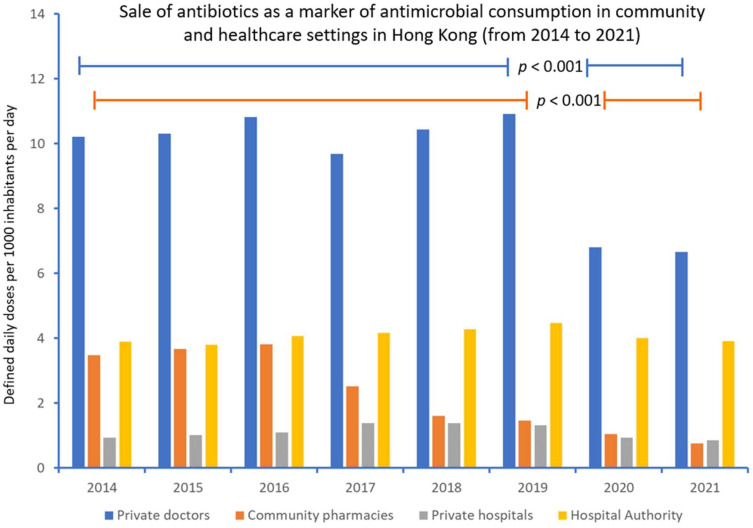
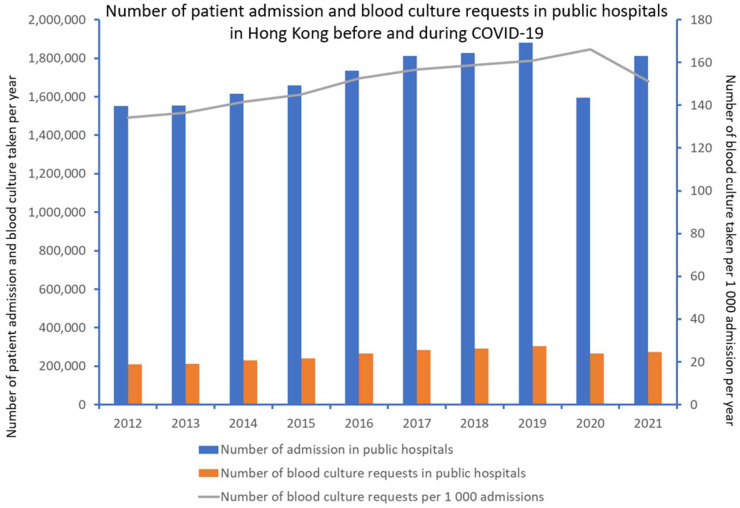
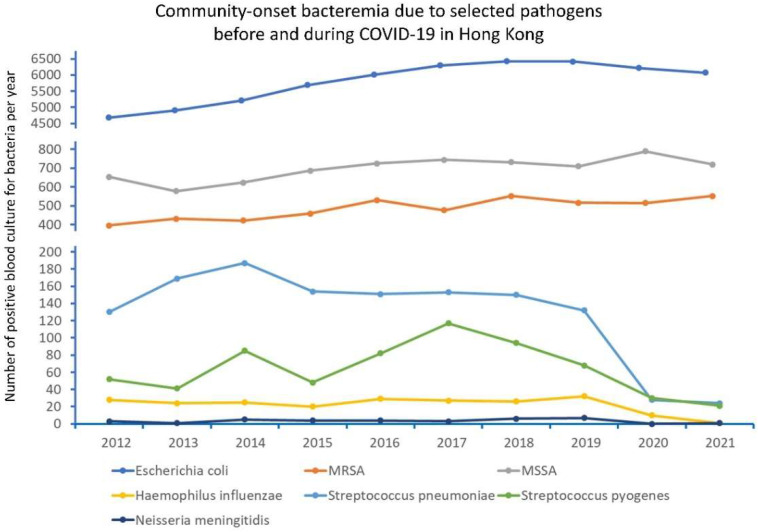
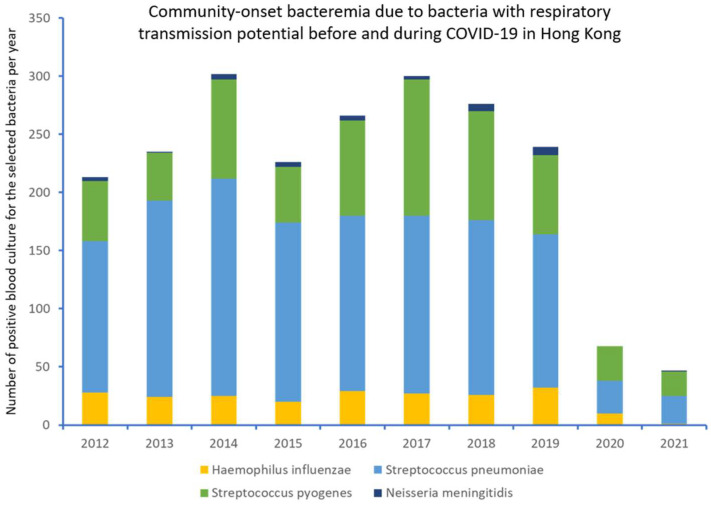
Nonpharmaceutical interventions implemented during the COVID-19 pandemic (2020−2021) have provided a unique opportunity to understand their impact on the wholesale supply of antibiotics and incidences of infections represented by bacteremia due to common bacterial species in Hong Kong. The wholesale antibiotic supply data (surrogate indicator of antibiotic consumption) and notifications of scarlet fever, chickenpox, and tuberculosis collected by the Centre for Health Protection, and the data of blood cultures of patients admitted to public hospitals in Hong Kong collected by the Hospital Authority for the last 10 years, were tabulated and analyzed. A reduction in the wholesale supply of antibiotics was observed. This decrease coincided with a significant reduction in the incidence of community-onset bacteremia due to Streptococcus pyogenes, Streptococcus pneumoniae, Haemophilus influenzae, and Neisseria meningitidis, which are encapsulated bacteria with respiratory transmission potential. This reduction was sustained during two pandemic years (period 2: 2020−2021), compared with eight pre-pandemic years (period 1: 2012−2019). Although the mean number of patient admissions per year (1,704,079 vs. 1,702,484, p = 0.985) and blood culture requests per 1000 patient admissions (149.0 vs. 158.3, p = 0.132) were not significantly different between periods 1 and 2, a significant reduction in community-onset bacteremia due to encapsulated bacteria was observed in terms of the mean number of episodes per year (257 vs. 58, p < 0.001), episodes per 100,000 admissions (15.1 vs. 3.4, p < 0.001), and per 10,000 blood culture requests (10.1 vs. 2.1, p < 0.001), out of 17,037,598 episodes of patient admissions with 2,570,164 blood culture requests. Consistent with the findings of bacteremia, a reduction in case notification of scarlet fever and airborne infections, including tuberculosis and chickenpox, was also observed; however, there was no reduction in the incidence of hospital-onset bacteremia due to Staphylococcus aureus or Escherichia coli. Sustained implementation of non-pharmaceutical interventions against respiratory microbes may reduce the overall consumption of antibiotics, which may have a consequential impact on antimicrobial resistance. Rebound of conventional respiratory microbial infections is likely with the relaxation of these interventions.
Keywords: COVID-19; antibiotic consumption; bacteremia; transmission.
Conflict of interest statement
All authors report no conflict of interest relevant to this article.
Figures
References
-
- Cheng V.C., Tai J.W., Li W., Chau P.H., So S.Y., Wong L.M., Ching R.H., Ng M.M., Ho S.K., Lee D.W., et al. Implementation of directly observed patient hand hygiene for hospitalized patients by hand hygiene ambassadors in Hong Kong. Am. J. Infect. Control. 2016;44:621–624. doi: 10.1016/j.ajic.2015.11.024. - DOI - PubMed
-
- Cheng V.C., Wong S.-C., Wong I.W., Chau P.H., So S.Y., Wong S.C., Chen J.H., Lee W.-M., Tai J.W., Chau C.-H., et al. The challenge of patient empowerment in hand hygiene promotion in health care facilities in Hong Kong. Am. J. Infect. Control. 2017;45:562–565. doi: 10.1016/j.ajic.2016.12.007. - DOI - PubMed
LinkOut - more resources
Full Text Sources
