


Antimicrobial Resistance Development Pathways in Surface Waters and Public Health Implications
- PMID: 35740227
- PMCID: PMC9219700
- DOI: 10.3390/antibiotics11060821
Antimicrobial Resistance Development Pathways in Surface Waters and Public Health Implications
Abstract
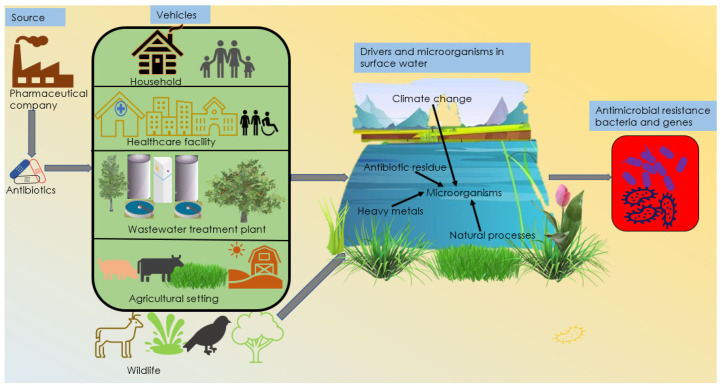
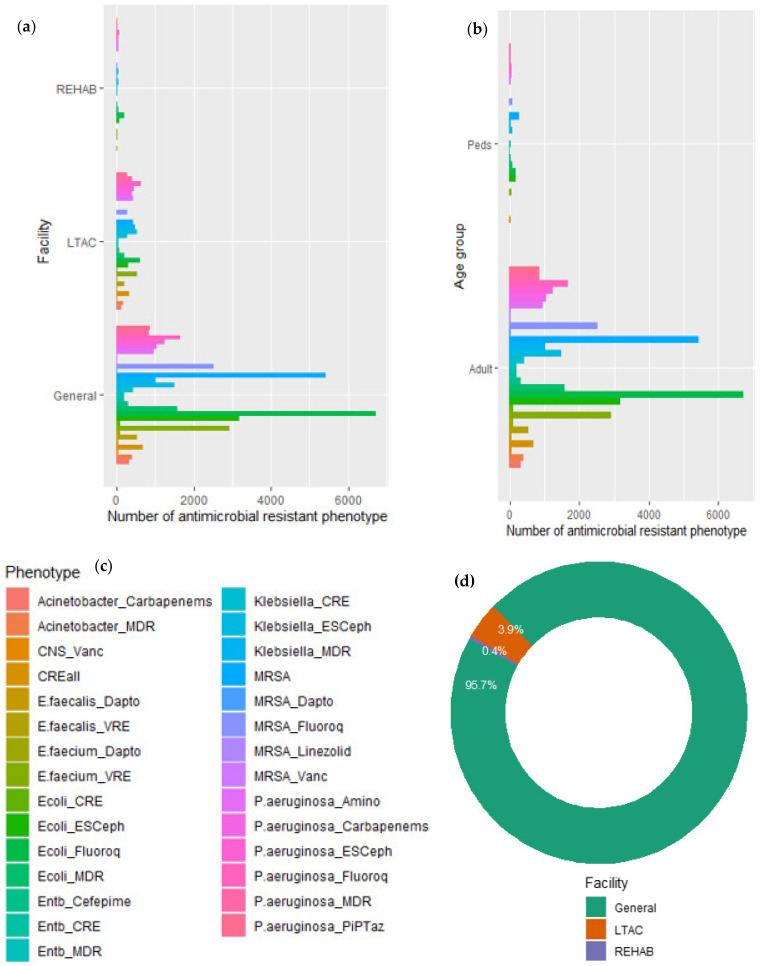
Human health is threatened by antibiotic-resistant bacteria and their related infections, which cause thousands of human deaths every year worldwide. Surface waters are vulnerable to human activities and natural processes that facilitate the emergence and spread of antibiotic-resistant bacteria in the environment. This study evaluated the pathways and drivers of antimicrobial resistance (AR) in surface waters. We analyzed antibiotic resistance healthcare-associated infection (HAI) data reported to the CDC's National Healthcare Safety Network to determine the number of antimicrobial-resistant pathogens and their isolates detected in healthcare facilities. Ten pathogens and their isolates associated with HAIs tested resistant to the selected antibiotics, indicating the role of healthcare facilities in antimicrobial resistance in the environment. The analyzed data and literature research revealed that healthcare facilities, wastewater, agricultural settings, food, and wildlife populations serve as the major vehicles for AR in surface waters. Antibiotic residues, heavy metals, natural processes, and climate change were identified as the drivers of antimicrobial resistance in the aquatic environment. Food and animal handlers have a higher risk of exposure to resistant pathogens through ingestion and direct contact compared with the general population. The AR threat to public health may grow as pathogens in aquatic systems adjust to antibiotic residues, contaminants, and climate change effects. The unnecessary use of antibiotics increases the risk of AR, and the public should be encouraged to practice antibiotic stewardship to decrease the risk.
Keywords: antibiotics; aquatic systems; bacteria; phenotypes; resistance genes; resistant pathogens.
Conflict of interest statement
The authors declare no conflict of interest.
Figures
References
-
- Murugaiyan J., Anand Kumar P., Rao G.S., Iskandar K., Hawser S., Hays J.P., Mohsen Y., Adukkadukkam S., Awuah W.A., Jose R.A.M., et al. Progress in Alternative Strategies to Combat Antimicrobial Resistance: Focus on Antibiotics. Antibiotics. 2022;11:200. doi: 10.3390/antibiotics11020200. - DOI - PMC - PubMed
-
- Center for Disease Control . Antibiotic Use in the United States, 2018: Progress and Opportunities. United States Department of Health and Human Services; Washington, DC, USA: 2018. pp. 1–37.
-
- Ge B., Domesle K.J., Yang Q., Young S.R., Rice-Trujillo C.L., Bodeis Jones S.M., Gaines S.A., Keller M.W., Li X., Piñeiro S.A., et al. Effects of Low Concentrations of Erythromycin, Penicillin, and Virginiamycin on Bacterial Resistance Development in Vitro. Sci. Rep. 2017;7:11017. doi: 10.1038/s41598-017-09593-4. - DOI - PMC - PubMed
-
- Frost I., Laxminarayan R., McKenna N., Chai S., Joshi J. Antimicrobial Resistance and Primary Health Care. World Health Organization; Geneva, Switzerland: 2018. pp. 3–6.
Publication types
LinkOut - more resources
Full Text Sources
Research Materials
