


Injury and Poisoning Mortality Trends in Urban and Rural China from 2006 to 2020 Based on Age-Period-Cohort Analysis
- PMID: 35742421
- PMCID: PMC9223563
- DOI: 10.3390/ijerph19127172
Injury and Poisoning Mortality Trends in Urban and Rural China from 2006 to 2020 Based on Age-Period-Cohort Analysis
Abstract
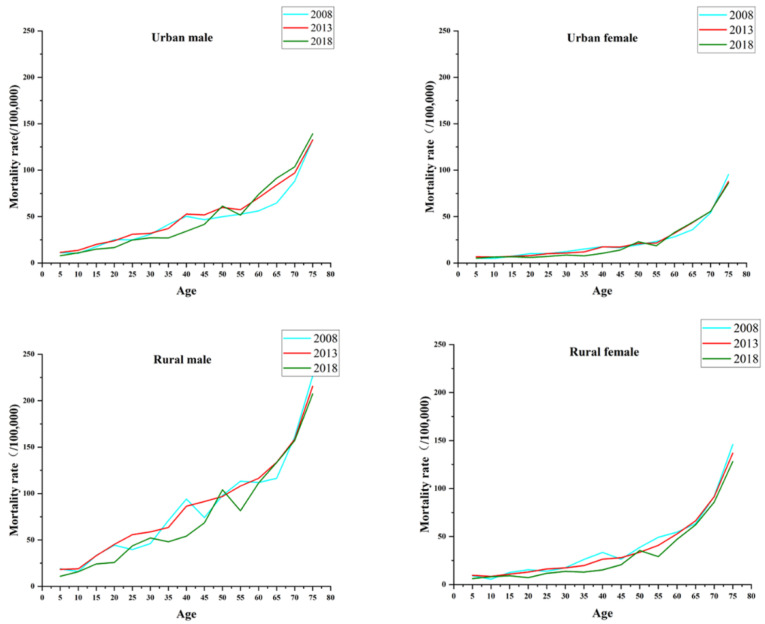
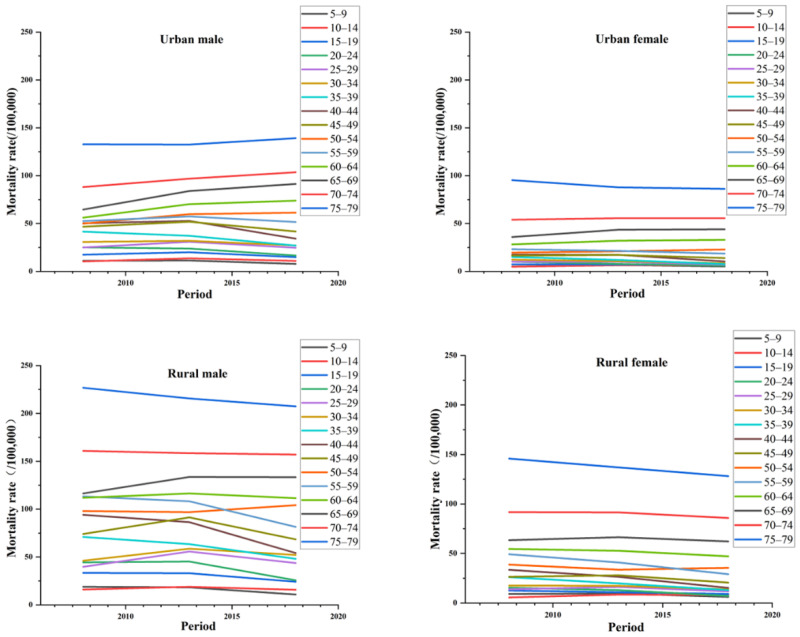
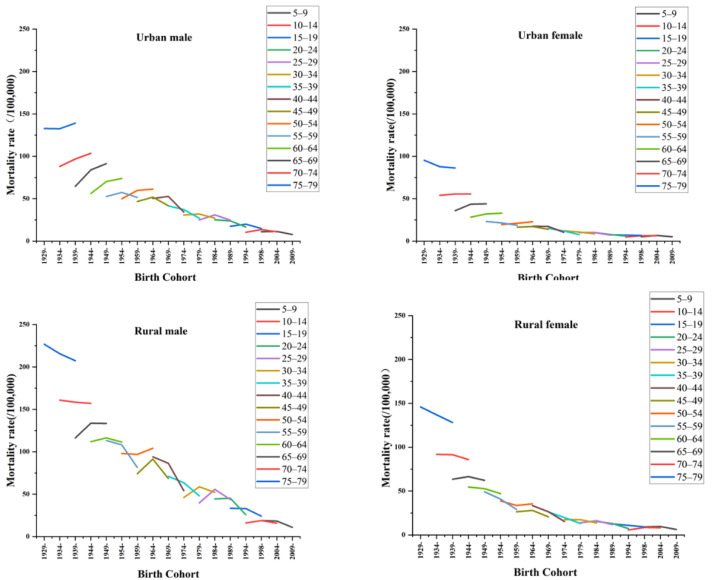
Injury and poisoning, common public health problems, currently rank fifth among the causes of death in China. In this study, we aimed to analyze the trends and influencing factors of injury and poisoning mortality in urban and rural China using an age-period-cohort model. Crude mortality data for injury and poisoning by sex, age group, and region were obtained from the China Health Statistical Yearbook (2006-2020). Age-standardized mortality rates for injury and poisoning in urban and rural areas were estimated using the Seventh Census of China 2020 population. The trends of injury and poisoning mortality were assessed using Joinpoint analysis. Age-period-cohort models were used to explore the age, period, and birth cohort effects affecting mortality risk. Over a 15-year period, age-standardized mortality rates decreased from 28.81/100,000 in 2006 to 24.78/100,000 in 2020 in urban areas and from 45.49/100,000 to 44.39/100,000 in rural areas. In the male population, the annual change in mortality was -0.4% (95% CI = -1.8%, 1.0%) in urban areas and -1.0% (95% CI = -1.9%, 0.0%) in rural areas. In the female population, the annual change in mortality was -1.2% (95% CI = -2.3%, -0.1%) in urban areas compared with -1.6% (95% CI = -3.1%, -0.1%) in rural areas. The age-period-cohort model showed a significant increase in urban and rural mortality rates starting at ages 49 and 39 years. Both showed a decline followed by an increase in the period. The cohort from 1929 to 2013 showed an overall trend of increasing and then decreasing. From 2006 to 2020, the overall injury and poisoning mortality rates in China showed a decreasing trend, and the mortality rates decreased faster in women than in men and in rural areas than in urban areas. Age effects were the most important risk factors for changes in injury and poisoning mortality. The results of this study will help researchers explore the possible causes of mortality changes in urban and rural areas and provide a scientific basis for injury and poisoning prevention and control priorities and policy formulation in China.
Keywords: China; Joinpoint regression; age–period–cohort model; injury and poisoning; mortality; urban and rural.
Conflict of interest statement
The authors declare no conflict of interest.
Figures
References
-
- Yuan H., Wang S. The main progress and outlook of injury prevention and control in China. Zhonghua Jibing Kongzhi Zazhi. 2017;21:971–978.
-
- National Health Commission . China Injury Status Report 2019. People’s Medical Publishing House; Beijing, China: 2020. pp. 1–53.
-
- Wang L., Liu Y., Liu S., Yin P., Liu J., Zeng X., Zhou M., Wang L. Analysis of the disease burden of injury in Chinese population in 1990 and 2010. Zhonghua Yufang Yixue Zazhi. 2015;49:321–326. - PubMed
-
- Statistical Information Center of the National Health and Planning Commission . China Cause of Death Surveillance Dataset (2015) China Science and Technology Press; Beijing, China: 2016. pp. 60–62.
MeSH terms
LinkOut - more resources
Full Text Sources
Medical
