


Platelet-Rich Plasma as an Alternative to Xenogeneic Sera in Cell-Based Therapies: A Need for Standardization
- PMID: 35742995
- PMCID: PMC9223511
- DOI: 10.3390/ijms23126552
Platelet-Rich Plasma as an Alternative to Xenogeneic Sera in Cell-Based Therapies: A Need for Standardization
Abstract
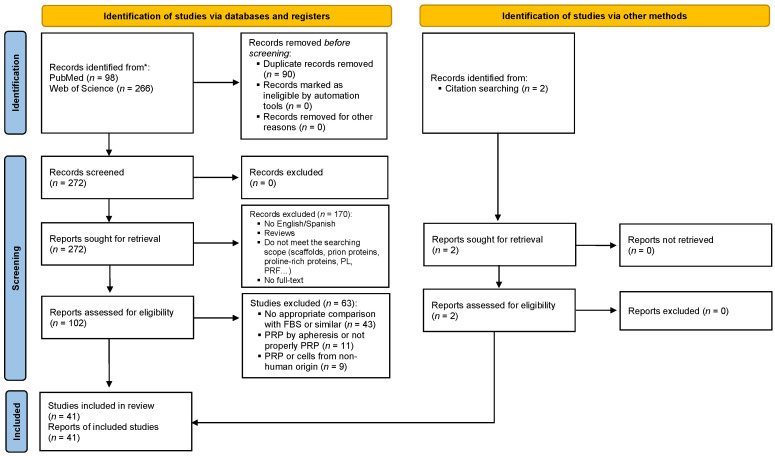
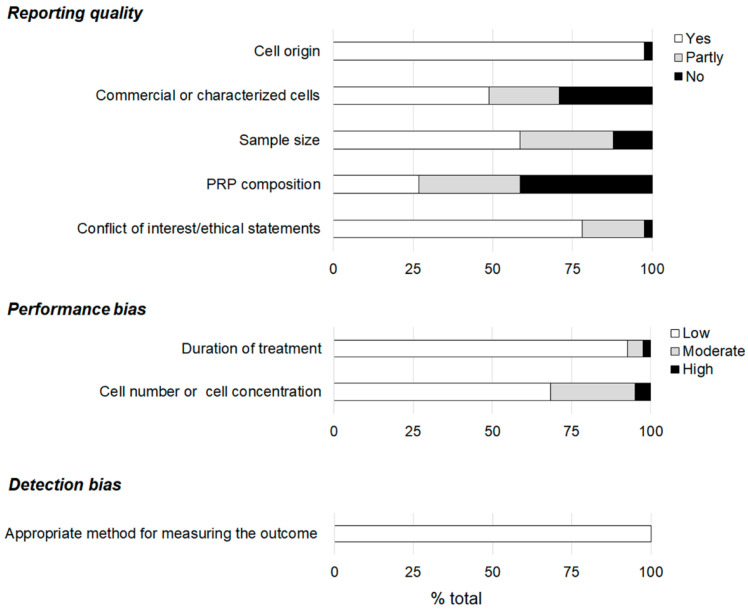
There has been an explosion in scientific interest in using human-platelet-rich plasma (PRP) as a substitute of xenogeneic sera in cell-based therapies. However, there is a need to create standardization in this field. This systematic review is based on literature searches in PubMed and Web of Science databases until June 2021. Forty-one studies completed the selection criteria. The composition of PRP was completely reported in less than 30% of the studies. PRP has been used as PRP-derived supernatant or non-activated PRP. Two ranges could be identified for platelet concentration, the first between 0.14 × 10⁶ and 0.80 × 10⁶ platelets/µL and the second between 1.086 × 10⁶ and 10 × 106 platelets/µL. Several studies have pooled PRP with a pool size varying from four to nine donors. The optimal dose for the PRP or PRP supernatant is 10%. PRP or PRP-derived supernatants a have positive effect on MSC colony number and size, cell proliferation, cell differentiation and genetic stability. The use of leukocyte-depleted PRP has been demonstrated to be a feasible alternative to xenogeneic sera. However, there is a need to improve the description of the PRP preparation methodology as well as its composition. Several items are identified and reported to create guidelines for future research.
Keywords: PRGF; cell culture; cell therapy; platelet-rich plasma; regenerative medicine; stem cells; xenogeneic supplements.
Conflict of interest statement
The authors declare the following potential conflicts of interest with respect to the research, authorship, and/or publication of this article: E.A. is the Scientific Director and M.Z., M.T. and M.H.A. are scientists at BTI Biotechnology Institute, a company that conducts investigations in the fields of regenerative medicine and PRGF-Endoret technology. L.A.B.A. has no conflict of interest.
Figures
References
-
- Bieback K., Fernandez-Munoz B., Pati S., Schafer R. Gaps in the knowledge of human platelet lysate as a cell culture supplement for cell therapy: A joint publication from the AABB and the International Society for Cell & Gene Therapy. Cytotherapy. 2019;21:911–924. - PubMed
Publication types
MeSH terms
Grants and funding
LinkOut - more resources
Full Text Sources
Research Materials
