


From Skin Barrier Dysfunction to Systemic Impact of Atopic Dermatitis: Implications for a Precision Approach in Dermocosmetics and Medicine
- PMID: 35743678
- PMCID: PMC9225544
- DOI: 10.3390/jpm12060893
From Skin Barrier Dysfunction to Systemic Impact of Atopic Dermatitis: Implications for a Precision Approach in Dermocosmetics and Medicine
Abstract
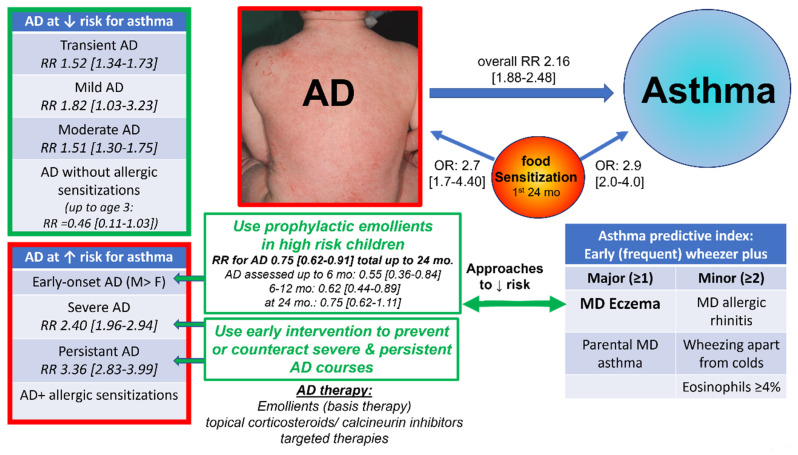
Atopic dermatitis (AD) affects up to 20% of children and is considered the starting point of the atopic march with the development of food allergy, asthma, and allergic rhinitis. The heterogeneous phenotype reflects distinct and/or overlapping pathogenetic mechanisms with varying degrees of epidermal barrier disruption, activation of different T cell subsets and dysbiosis of the skin microbiome. Here, we review current evidence suggesting a systemic impact of the cutaneous inflammation in AD together with a higher risk of asthma and other comorbidities, especially in severe and persistent AD. Thus, early therapy of AD to restore the impaired skin barrier, modified microbiome, and target type 2 inflammation, depending on the (endo)phenotype, in a tailored approach is crucial. We discuss what we can learn from the comorbidities and the implications for preventive and therapeutic interventions from precision dermocosmetics to precision medicine. The stratification of AD patients into biomarker-based endotypes for a precision medicine approach offers opportunities for better long-term control of AD with the potential to reduce the systemic impact of a chronic skin inflammation and even prevent or modify the course, not only of AD, but possibly also the comorbidities, depending on the patient's age and disease stage.
Keywords: asthma; atopic dermatitis; atopic march; biologic therapies; comorbidities; dermocosmetics; emollient; immunity; precision medicine; systemic disease.
Conflict of interest statement
Thomas Bieber is a speaker, and/or consultant and/or investigator for: AbbVie, Allmiral, AnaptysBio, Arena, Asana Biosciences, ASLAN pharma, Bayer Health, BioVerSys, Böehringer Ingelheim, Connect Pharma, Dermavant, Domain Therapeutics, Eli Lilly, Galderma, Glenmark, GSK, Incyte, Innovaderm, IQVIA, Janssen, Kirin, Kymab, LEO Pharma, LG Chem, L´Oréal, MSD, Novartis, Numab, OM-Pharma, Pfizer, Pierre Fabre, Q32bio, RAPT, Sanofi/Regeneron, UCB. Thomas Bieber is founder and chairman of the non-profit biotech company “Davos Biosciences”. Laura Maintz is supported by the Christine Kühne-Center for Allergy Research and Education (CK-CARE), investigator for AbbVie, Bristol Myers Squibb, Galderma, Eli Lilly, LEO Pharma, OM Pharma, Pfizer, Sanofi/Regeneron, and received speaker honoraria from Abbvie. Anne-Laure Demessant-Flavigny is a L’Oréal employee, and Helen Simpson received personal fees from La Roche-Posay (L´Oréal) for writing and editorial assistance.
Figures
References
Publication types
Grants and funding
LinkOut - more resources
Full Text Sources
Medical
