


COVID-19 Elderly Patients Treated for Proximal Femoral Fractures during the Second Wave of Pandemic in Italy and Iran: A Comparison between Two Countries
- PMID: 35744044
- PMCID: PMC9231012
- DOI: 10.3390/medicina58060781
COVID-19 Elderly Patients Treated for Proximal Femoral Fractures during the Second Wave of Pandemic in Italy and Iran: A Comparison between Two Countries
Abstract
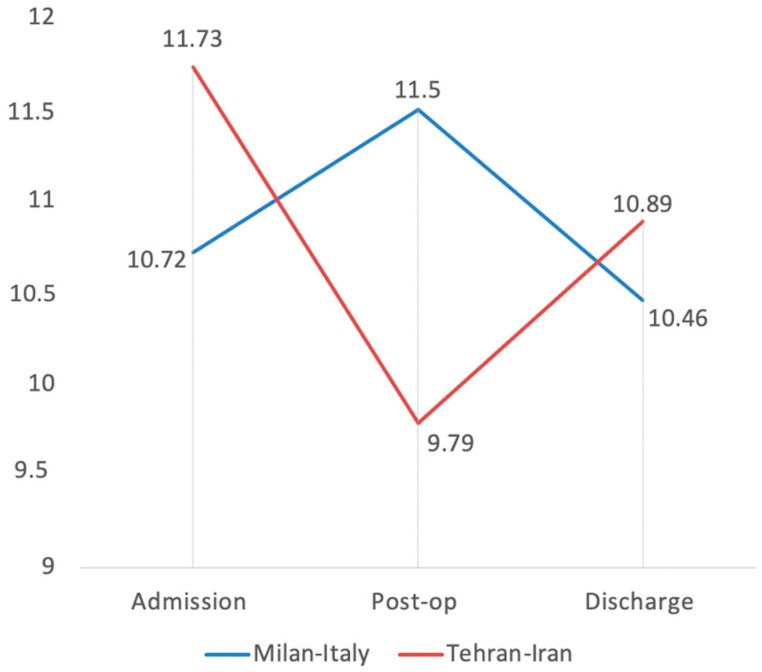
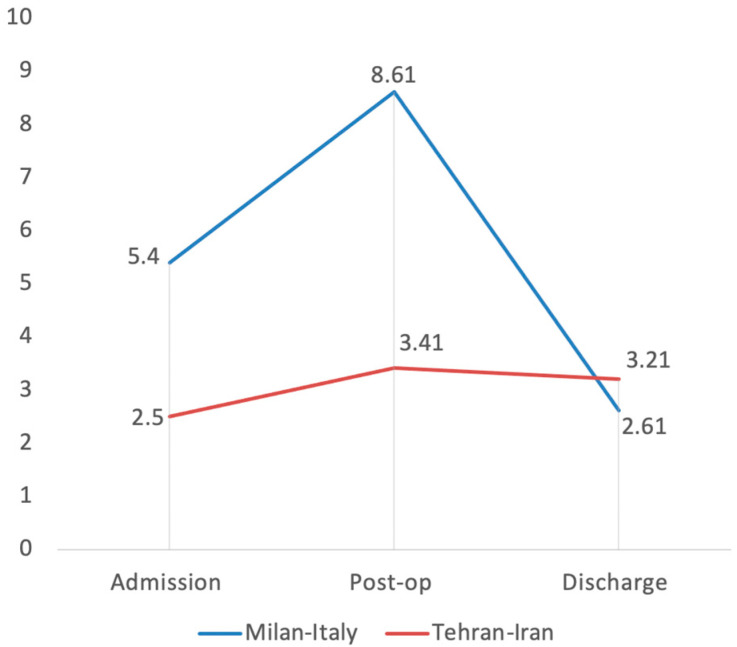
Background and objevtive: The worldwide spread of SARS-CoV-2 has affected the various regions of the world differently. Italy and Iran have experienced a different adaptation to coexistence with the pandemic. Above all, fractures of the femur represent a large part of the necessary care for elderly patients. The aim of this study was to compare the treatment in Italy and Iran of COVID-19-positive patients suffering from proximal femur fractures in terms of characteristics, comorbidities, outcomes and complications. Materials and Methods: Medical records of COVID-19-positive patients with proximal femoral fractures treated at IRCCS Istituto Ortopedico Galeazzi in Milan (Italy) and at Salamat Farda and Parsa hospitals in the province of Tehran (Iran), in the time frame from 1 October 2020 to 16 January 2021, were analyzed and compared. Results: Records from 37 Italian patients and 33 Iranian patients were analyzed. The Italian group (mean age: 83.89 ± 1.60 years) was statistically older than the Iranian group (mean age: 75.18 ± 1.62 years) (p value = 0.0003). The mean number of transfusions for each patient in Italy was higher than the Iranian mean number (p value = 0.0062). The length of hospital stay in Italy was longer than in Iran (p value < 0.0001). Furthermore, laboratory values were different in the post-operative value of WBC and admission and post-operative values of CRP. Conclusions: The present study shows that differences were found between COVID-19-positive patients with proximal femoral fractures in these two countries. Further studies are required to validate these results and to better explain the reasons behind these differences.
Keywords: Iran; Italy; SARS-CoV-2; clinical features; proximal femoral fractures; second wave; traumatology.
Conflict of interest statement
The authors declare no conflict of interest.
Figures
References
-
- Zagra L., Faraldi M., Pregliasco F., Vinci A., Lombardi G., Ottaiano I., Accetta R., Perazzo P., D’Apolito R. Changes of clinical activities in an orthopaedic institute in North Italy during the spread of COVID-19 pandemic: A seven-week observational analysis. Int. Orthop. 2020;44:1591–1598. doi: 10.1007/s00264-020-04590-1. - DOI - PMC - PubMed
-
- Perazzo P., Giorgino R., Briguglio M., Zuffada M., Accetta R., Mangiavini L., Peretti G.M. From Standard to Escalated Anticoagulant Prophylaxis in Fractured Older Adults With SARS-CoV-2 Undergoing Accelerated Orthopedic Surgery. Front. Med. 2020;7:566770. doi: 10.3389/fmed.2020.566770. - DOI - PMC - PubMed
MeSH terms
LinkOut - more resources
Full Text Sources
Medical
Research Materials
Miscellaneous
