


The Use of near Infra-Red Radiation Imaging after Injection of Indocyanine Green (NIR-ICG) during Laparoscopic Treatment of Benign Gynecologic Conditions: Towards Minimalized Surgery. A Systematic Review of Literature
- PMID: 35744056
- PMCID: PMC9231050
- DOI: 10.3390/medicina58060792
The Use of near Infra-Red Radiation Imaging after Injection of Indocyanine Green (NIR-ICG) during Laparoscopic Treatment of Benign Gynecologic Conditions: Towards Minimalized Surgery. A Systematic Review of Literature
Abstract
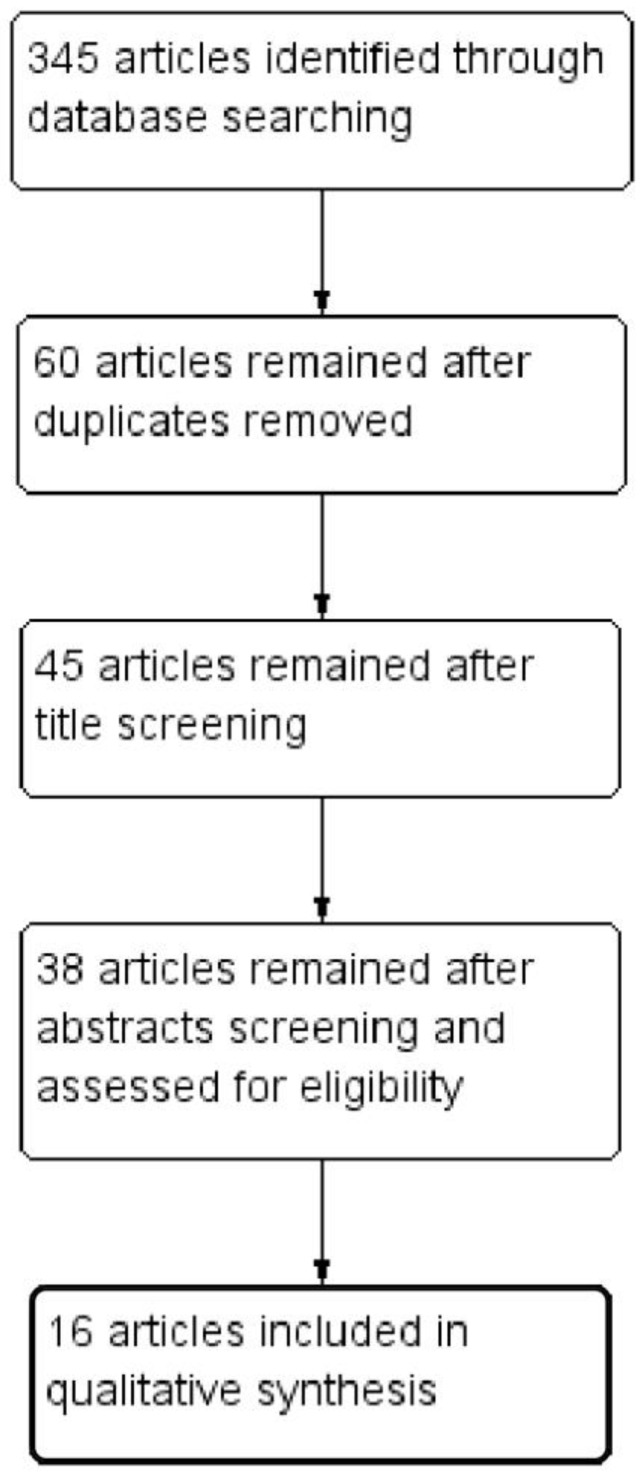
Background and Objectives: To assess the use of near infrared radiation imaging after injection of indocyanine green (NIR-ICG) during laparoscopic treatment of benign gynecologic conditions. Materials and Methods: A systematic review of the literature was performed searching 7 electronic databases from their inception to March 2022 for all studies which assessed the use of NIR-ICG during laparoscopic treatment of benign gynecological conditions. Results: 16 studies (1 randomized within subject clinical trial and 15 observational studies) with 416 women were included. Thirteen studies assessed patients with endometriosis, and 3 studies assessed non-endometriosis patients. In endometriosis patients, NIR-ICG use appeared to be a safe tool for improving the visualization of endometriotic lesions and ureters, the surgical decision-making process with the assessment of ureteral perfusion after conservative surgery and the intraoperative assessment of bowel perfusion during recto-sigmoid endometriosis nodule surgery. In non-endometriosis patients, NIR-ICG use appeared to be a safe tool for evaluating vascular perfusion of the vaginal cuff during total laparoscopic hysterectomy (TLH) and robotic-assisted total laparoscopic hysterectomy (RATLH), and intraoperative assessment of ovarian perfusion in adnexal torsion. Conclusions: NIR-ICG appeared to be a useful tool for enhancing laparoscopic treatment of some benign gynecologic conditions and for moving from minimally invasive surgery to minimalized surgery. In particular, it might improve treatment of endometriosis (with particular regard to deep infiltrating endometriosis), benign diseases requiring TLH and RATLH and adnexal torsion. However, although preliminary findings appear promising, further investigation with well-designed larger studies is needed.
Keywords: fluorescence; fluorescent dye; gynecology; innovation; laparoscopy; minimally-invasive; technology.
Conflict of interest statement
The authors declare no conflict of interest.
Figures
References
-
- Raimondo D., Borghese G., Mabrouk M., Arena A., Ambrosio M., Del Forno S., Degli Esposti E., Casadio P., Mattioli G., Mastronardi M., et al. Use of Indocyanine Green for Intraoperative Perfusion Assessment in Women with Ureteral Endometriosis: A Preliminary Study. J. Minim. Invasive Gynecol. 2021;28:42–49. doi: 10.1016/j.jmig.2020.04.004. - DOI - PubMed
-
- Raimondo D., Mastronardi M., Mabrouk M., Cafagna G., Salucci P., Arena A., Iodice R., Borghese G., Casadio P., Del Forno S., et al. Rectosigmoid Endometriosis Vascular Patterns at Intraoperative Indocyanine Green Angiography and their Correlation with Clinicopathological Data. Surg. Innov. 2020;27:474–480. doi: 10.1177/1553350620930147. - DOI - PubMed
-
- Tajima Y., Murakami M., Yamazaki K., Masuda Y., Kato M., Sato A., Goto S., Otsuka K., Kato T., Kusano M. Sentinel node mapping guided by indocyanine green fluorescence imaging during laparoscopic surgery in gastric cancer. Ann. Surg. Oncol. 2010;17:1787–1793. doi: 10.1245/s10434-010-0944-0. - DOI - PubMed
Publication types
MeSH terms
Substances
LinkOut - more resources
Full Text Sources
Medical
Miscellaneous
