


Variation in the Humoral Immune Response Induced by the Administration of the BNT162b2 Pfizer/BioNTech Vaccine: A Systematic Review
- PMID: 35746517
- PMCID: PMC9229764
- DOI: 10.3390/vaccines10060909
Variation in the Humoral Immune Response Induced by the Administration of the BNT162b2 Pfizer/BioNTech Vaccine: A Systematic Review
Abstract
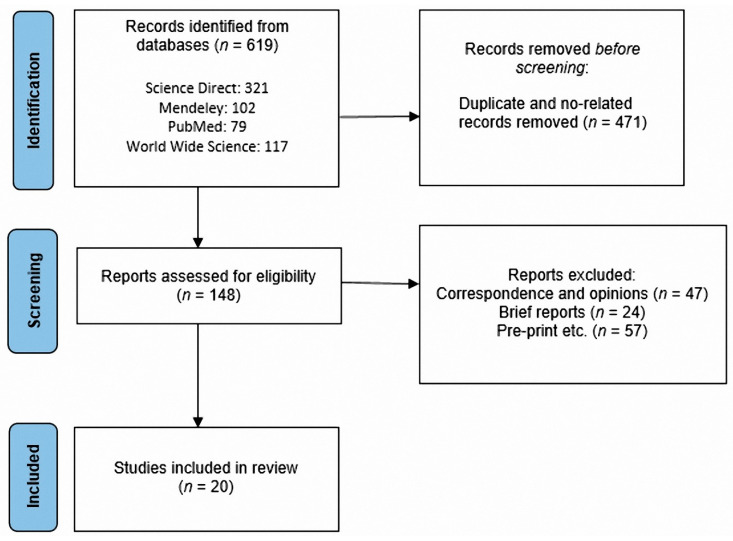
The BNT162b2 Pfizer/BioNTech vaccine was the first emergency approved vaccine during the COVID-19 pandemic. The aim of this systematic review was to examine the variations in the humoral immune response induced by the administration of the BNT162b2 vaccine in patients with previous SARS-CoV-2 infection, the elderly, and those with comorbidities and immunosuppression states. Additionally, we analyzed the effect of generated neutralizing antibodies against the new variants of concern of SARS-CoV-2. Pubmed, Science Direct, Mendeley, and WorldWide Science were searched between 1 January 2020 and October 2021 using the keywords "BNT162b2", "serology", "comorbidity", "immunosuppression", and "variants of concern"dA total of 20 peer-reviewed publications were selected. The analysis showed that those individuals with previous infections have a considerably higher antibody response after the administration of BNT162b2 vaccine in contrast with seronegative individuals. With regard to variation in immune responses, elderly individuals, patients with cancer, or patients who had undergone a kidney transplant, dialysis, or who were pregnant had a lower antibody response in comparison to healthy individuals. Finally, antibodies developed against the S protein produced by the BNT162b2 vaccine, possessed lower neutralizing activity against the alpha, beta, gamma, and delta variants of SARS-CoV-2. In conclusion, patients with immunodeficiencies and comorbidities have a lesser antibody response, about which further studies need to be performed in order to analyze the effectiveness and duration of the humoral immunity associated with vaccination in these specific populations.
Keywords: BNT162b2; COVID-19; SARS-CoV-2; comorbidities; humoral response; immunosuppression; vaccine.
Conflict of interest statement
The authors declare no conflict of interest.
Figures
Similar articles
-
BNT162b2 COVID-19 vaccine and correlates of humoral immune responses and dynamics: a prospective, single-centre, longitudinal cohort study in health-care workers.Lancet Respir Med. 2021 Sep;9(9):999-1009. doi: 10.1016/S2213-2600(21)00220-4. Epub 2021 Jul 2. Lancet Respir Med. 2021. PMID: 34224675 Free PMC article.
-
Humoral immune response after different SARS-CoV-2 vaccination regimens.BMC Med. 2022 Jan 21;20(1):31. doi: 10.1186/s12916-021-02231-x. BMC Med. 2022. PMID: 35057798 Free PMC article.
-
Persistence of Immune Response in Health Care Workers After Two Doses BNT162b2 in a Longitudinal Observational Study.Front Immunol. 2022 Mar 4;13:839922. doi: 10.3389/fimmu.2022.839922. eCollection 2022. Front Immunol. 2022. PMID: 35309303 Free PMC article.
-
COVID-19 vaccines: comparison of biological, pharmacological characteristics and adverse effects of Pfizer/BioNTech and Moderna Vaccines.Eur Rev Med Pharmacol Sci. 2021 Feb;25(3):1663-1669. doi: 10.26355/eurrev_202102_24877. Eur Rev Med Pharmacol Sci. 2021. PMID: 33629336 Review.
-
Rare Adverse Events Associated with BNT162b2 mRNA Vaccine (Pfizer-BioNTech): A Review of Large-Scale, Controlled Surveillance Studies.Vaccines (Basel). 2022 Jul 2;10(7):1067. doi: 10.3390/vaccines10071067. Vaccines (Basel). 2022. PMID: 35891231 Free PMC article. Review.
Cited by
-
Tip Lesion Most Frequent FSGS Variant Related to COVID-19 Vaccine: Two Case Reports and Literature Review.Vaccines (Basel). 2024 Jan 8;12(1):62. doi: 10.3390/vaccines12010062. Vaccines (Basel). 2024. PMID: 38250875 Free PMC article.
-
SARS-CoV-2 Vaccination: What Can We Expect Now?Vaccines (Basel). 2022 Jul 8;10(7):1093. doi: 10.3390/vaccines10071093. Vaccines (Basel). 2022. PMID: 35891257 Free PMC article.
-
Usefulness and Limitations of Anti-S IgG Assay in Detecting Previous SARS-CoV-2 Breakthrough Infection in Fully Vaccinated Healthcare Workers.Diagnostics (Basel). 2022 Sep 4;12(9):2152. doi: 10.3390/diagnostics12092152. Diagnostics (Basel). 2022. PMID: 36140553 Free PMC article.
-
Immunity after COVID-19 Recovery and Vaccination: Similarities and Differences.Vaccines (Basel). 2022 Jul 3;10(7):1068. doi: 10.3390/vaccines10071068. Vaccines (Basel). 2022. PMID: 35891232 Free PMC article. Review.
-
IgG antibody levels against the SARS-CoV-2 spike protein in mother-child dyads after COVID-19 vaccination.Infection. 2024 Jun;52(3):813-824. doi: 10.1007/s15010-023-02111-x. Epub 2023 Oct 28. Infection. 2024. PMID: 37898587
References
-
- Mathew D., Giles J.R., Baxter A.E., Oldridge D.A., Greenplate A.R., Wu J.E., Alanio C., Kuri-Cervantes L., Pampena M.B., D’Andrea K., et al. Deep immune profiling of COVID-19 patients reveals distinct immunotypes with therapeutic implications. Science. 2020;369:eabc8511. doi: 10.1126/science.abc8511. - DOI - PMC - PubMed
-
- Hoffmann M., Kleine-Weber H., Schroeder S., Krüger N., Herrler T., Erichsen S., Schiergens T.S., Herrler G., Wu N.H., Nitsche A., et al. SARS-CoV-2 Cell Entry Depends on ACE2 and TMPRSS2 and Is Blocked by a Clinically Proven Protease Inhibitor. Cell. 2020;181:271–280. doi: 10.1016/j.cell.2020.02.052. - DOI - PMC - PubMed
Publication types
LinkOut - more resources
Full Text Sources
Miscellaneous
