. 2023 Apr:46:101-112.
doi: 10.1016/j.jare.2022.06.008. Epub 2022 Jun 21.

Gut microbiota combined with metabolites reveals unique features of acute myocardial infarction patients different from stable coronary artery disease

Affiliations

Gut microbiota combined with metabolites reveals unique features of acute myocardial infarction patients different from stable coronary artery disease

Chaoran Dong et al. J Adv Res. 2023 Apr.

Abstract

Introduction: Acute myocardial infarction (AMI) accounts for the majority of deaths caused by coronary artery disease (CAD). Early warning of AMI, especially for patients with stable coronary artery disease (sCAD), is urgently needed. Our previous study showed that alterations in the gut microbiota were correlated with CAD severity.

Objectives: Herein, we tried to discover accurate and convenient biomarkers for AMI by combination of gut microbiota and fecal/blood/urinary metabolomics.

Methods: We recruited 190 volunteers including 93 sCAD patients, 49 AMI patients, and 48 subjects with normal coronary artery (NCA), and measured their blood biochemical parameters, 16S rRNA-based gut microbiota and NMR-based fecal/blood/urinary metabolites. We further selected 20 subjects from each group and analyzed their gut microbiota by whole-metagenome shotgun sequencing.

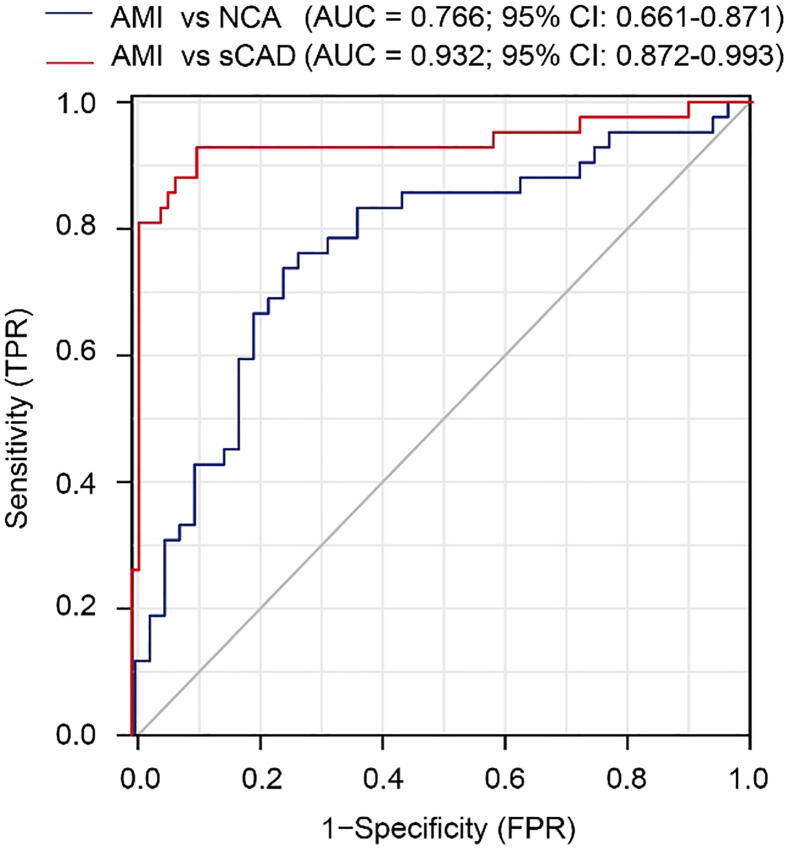
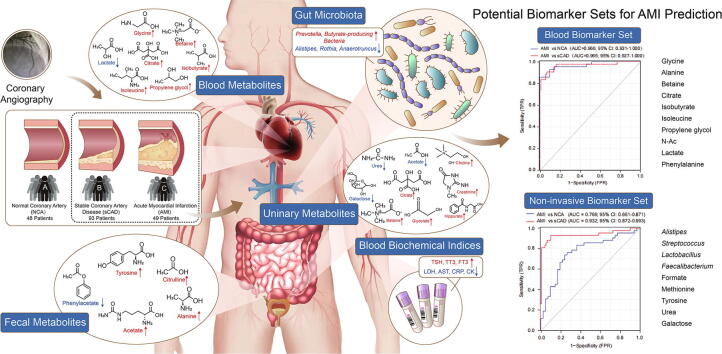
Results: Multi-omic analyses revealed that AMI patients exhibited specific changes in gut microbiota and serum/urinary/fecal metabolites as compared to subjects with sCAD or NCA. Fourteen bacterial genera and 30 metabolites (11 in feces, 10 in blood, 9 in urine) were closely related to AMI phenotypes and could accurately distinguish AMI patients from sCAD patients. Some species belonging to Alistipes, Streptococcus, Ruminococcus, Lactobacillus and Faecalibacterium were effective to distinguish AMI from sCAD and their predictive ability was confirmed in an independent cohort of CAD patients. We further selected nine indicators including 4 bacterial genera, 3 fecal and 2 urinary metabolites as a noninvasive biomarker set which can distinguish AMI from sCAD with an AUC of 0.932.

Conclusion: Combination of gut microbiota and fecal/urinary metabolites provided a set of potential useful and noninvasive predictive biomarker for AMI from sCAD.

Keywords: Acute myocardial infarction (AMI); Gut microbiota; Metabolite; Prediction model; Stable coronary artery disease (sCAD).


Conflict of interest statement

Declaration of Competing Interest The authors declare that they have no known competing financial interests or personal relationships that could have appeared to influence the work reported in this paper.

Figures
None
Graphical abstract
Fig. 1
Fig. 1
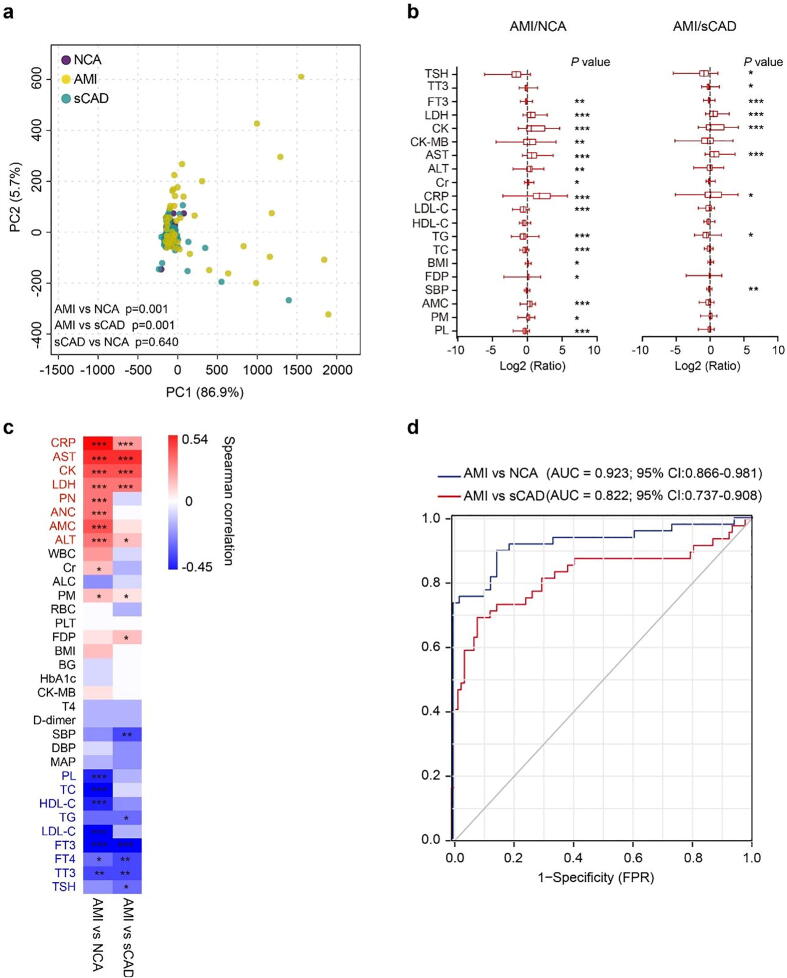
The difference of general blood biochemical indices among subjects with NCA, sCAD and AMI. (a) Principal component analysis (PCA) of general blood biochemical indices among three groups. (b) Boxplot of log fold change (AMI/NCA or AMI/sCAD) of 20 blood biochemical indices. (c) Heat map showing the correlation intensity between blood biochemical indices and AMI occurrence. (d) Seven important features (CRP, ALT, AST, LDH, CK, FDP, FT3) to build the prediction model yielded an area under the curve (AUC) based on ROC (receiver operating characteristic) analysis. FPR, false-positive rate; TPR, true positive rate. *p < 0.05, **p < 0.01, ***p < 0.001.
Fig. 2
Fig. 2
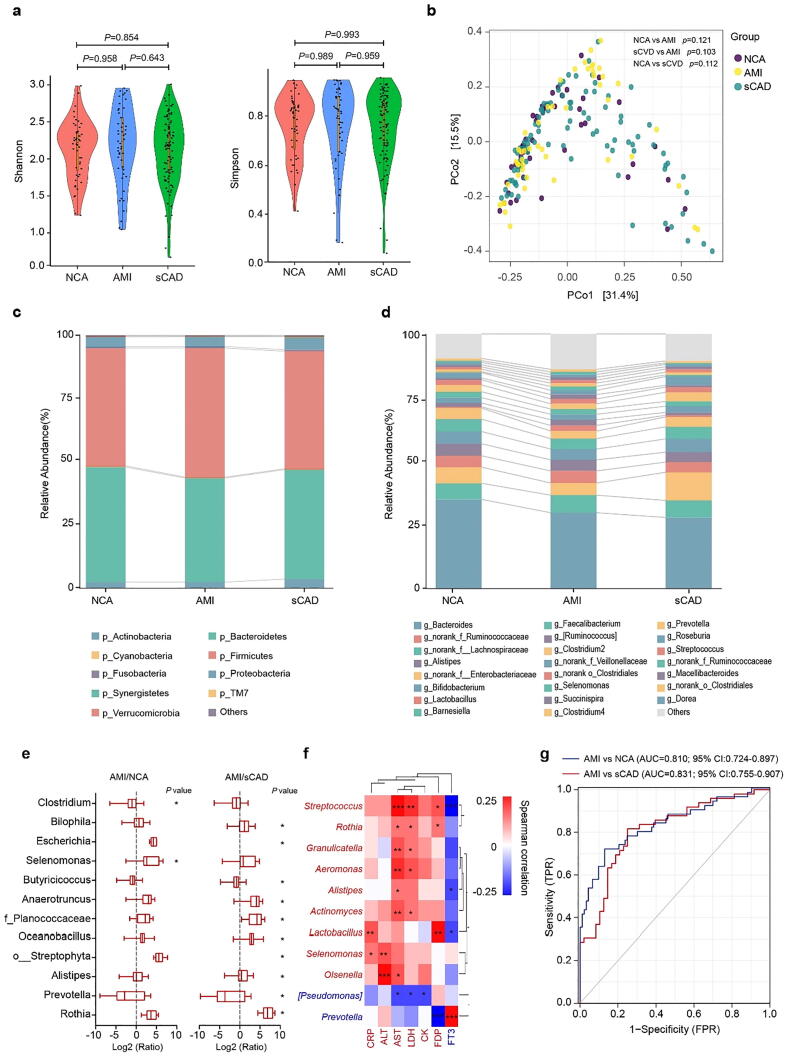
Gut microbiota helps to distinguish AMI patients from sCAD patients. (a) Alpha-diversity was assessed by Shannon index and Simpson index. (b) Beta-diversity was assessed by principal coordinate analysis (PCoA) based on bray-curtis distance. (c)Phyla and (d) genera profile of the gut microbiota among three groups. (e) Boxplot of log fold change (AMI/NCA or AMI/sCAD) of 11 genera. (f) Heat map showing the correlation intensity between 11 genera and 7 blood biochemical indices. (g) Fourteen specific genera to build the prediction model yielded an AUC based on ROC analysis. *p < 0.05.
Fig. 3
Fig. 3
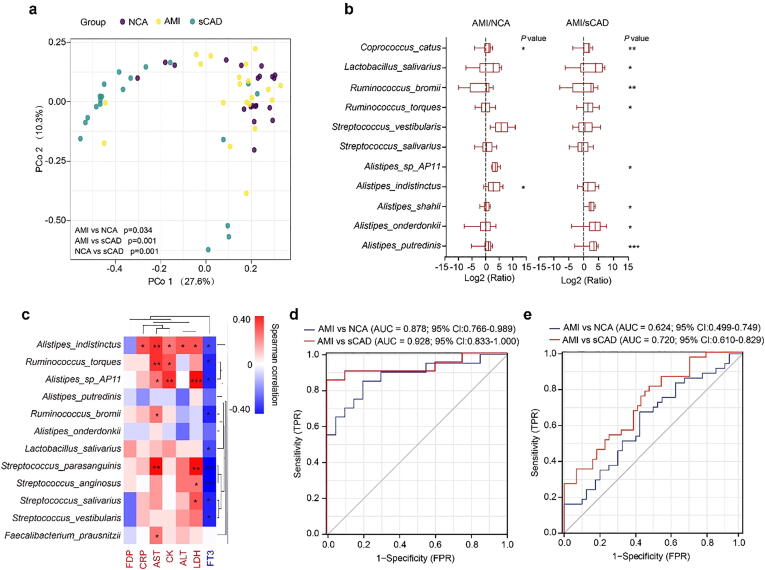
Specific species could effectively distinguish AMI and sCAD patients. (a) PCoA analysis of gut microbiota among three groups. (b) Boxplot of log fold change (AMI/NCA or AMI/sCAD) of 11 species. (c) Heat map showing the correlation intensity between 12 species and 7 blood biochemical indices. (d) Nine specific species to build the prediction model yielded an AUC based on ROC analysis. (e) Six specific species to build the prediction model yielded an AUC based on ROC analysis. *p < 0.05, **p < 0.01, ***p < 0.001.
Fig. 4
Fig. 4
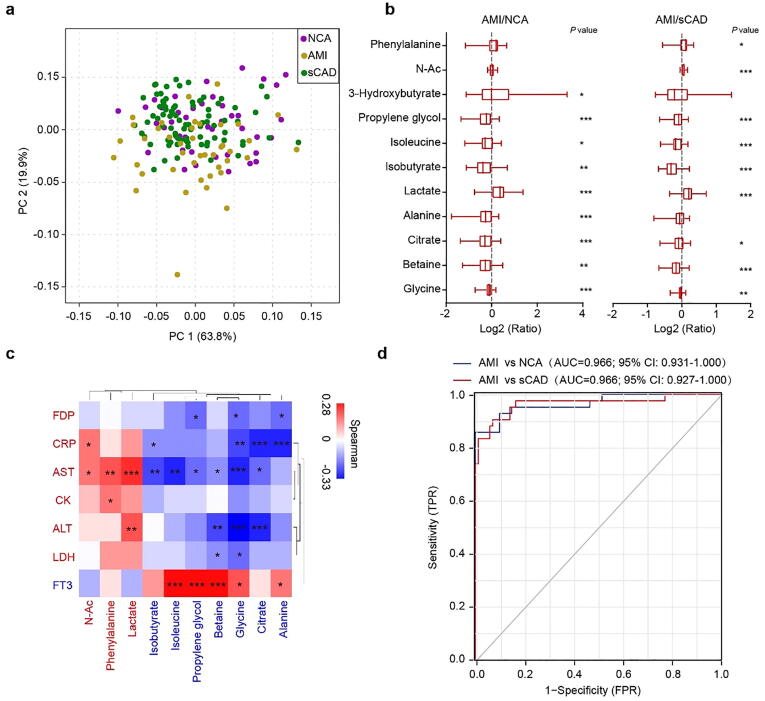
Blood metabolomics analysis of AMI and sCAD patients. (a) PCA analysis of blood metabolites among three groups. (b) Boxplot of log fold change (AMI/NCA or AMI/sCAD) of 8 blood metabolites. (c) Heat map showing the correlation intensity between 10 blood metabolites and 7 blood biochemical indices. (d) Ten specific blood metabolites to build the prediction model yielded an AUC based on ROC analysis. *p < 0.05, **p < 0.01, ***p < 0.001.
Fig. 5
Fig. 5
Combination of gut bacterial and fecal/urinary metabolites provides an effective and non-invasive biomarker set for AMI. A non-invasive biomarker set consisted of four gut bacterial genera (Alistipes, Streptococcus, Lactobacillus and Faecalibacterium), three fecal metabolites (formate, methionine and tyrosine) and two urine metabolites (urea and galactose) was established.
Fig. 6
Fig. 6
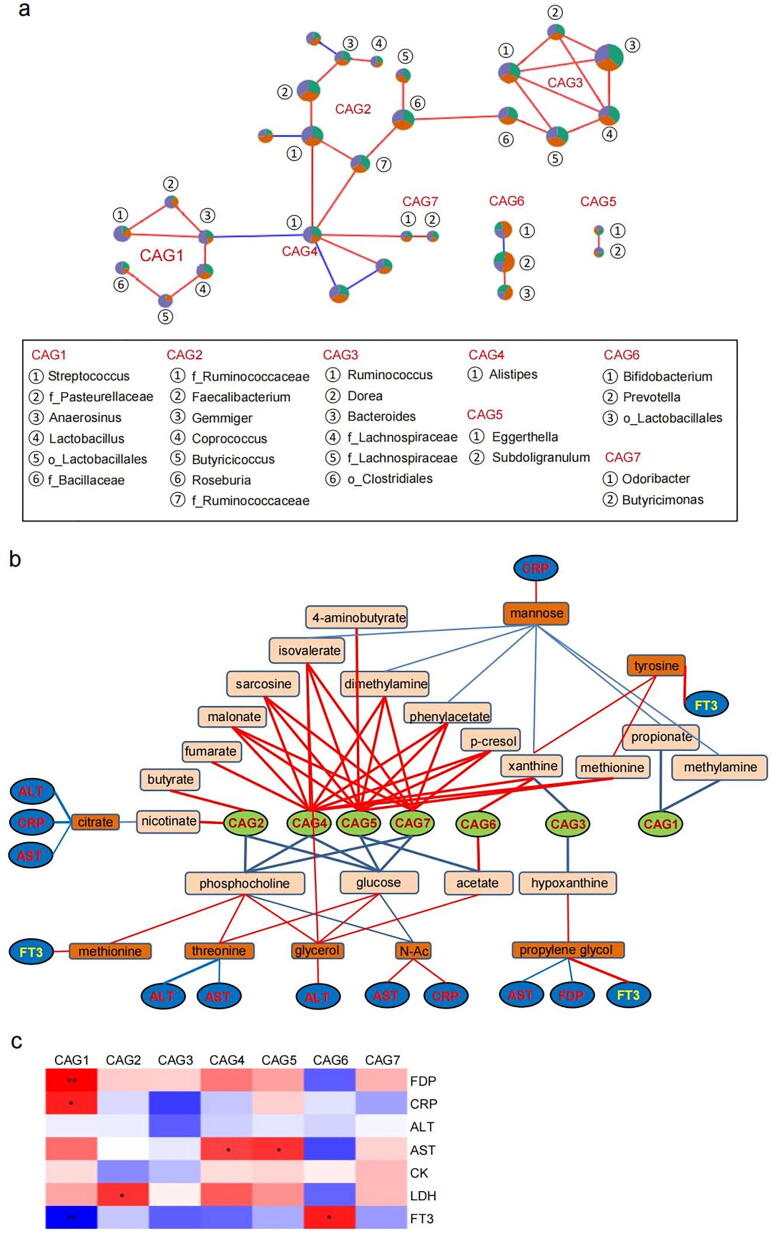
Relationship between the gut microbiota and serum/fecal metabolites in AMI. (a) The co-abundance network based on SparCC correlation coefficients. (b) The correlation between CAGs and serum/fecal metabolites. (c) Correlation between CAGs and key blood AMI indices.

References

    1. Libby P., Theroux P. Pathophysiology of coronary artery disease. Circulation. 2005;111(25):3481–3488. doi: 10.1161/CIRCULATIONAHA.105.537878. - DOI - PubMed
    1. McCaffrey T.A., Toma I., Yang Z., Katz R., Reiner J., Mazhari R., et al. Rna sequencing of blood in coronary artery disease: Involvement of regulatory t cell imbalance. BMC Med Genomics. 2021;14(1) doi: 10.1186/s12920-021-01062-2. - DOI - PMC - PubMed
    1. Piepoli M.F., Hoes A.W., Agewall S., Albus C., Brotons C., Catapano A.L., et al. 2016 European guidelines on cardiovascular disease prevention in clinical practice. Kardiol Pol. 2016;74(9):821–936. doi: 10.5603/KP.2016.0120. - DOI - PubMed
    1. Ahmadi A., Argulian E., Leipsic J., Newby D.E., Narula J. From subclinical atherosclerosis to plaque progression and acute coronary events: Jacc state-of-the-art review. J Am Coll Cardiol. 2019;74(12):1608–1617. doi: 10.1016/j.jacc.2019.08.012. - DOI - PubMed
    1. Virani S.S., Alonso A., Benjamin E.J., Bittencourt M.S., Callaway C.W., Carson A.P., et al. Heart disease and stroke statistics-2020 update: a report from the american heart association. Circulation. 2020;141(9) doi: 10.1161/CIR.0000000000000757. - DOI - PubMed

Publication types