


Profiles of facial soft tissue changes during and after orthodontic treatment in female adults
- PMID: 35754041
- PMCID: PMC9233845
- DOI: 10.1186/s12903-022-02280-5
Profiles of facial soft tissue changes during and after orthodontic treatment in female adults
Abstract
Background: Some female adults who received orthodontic treatment often complain about thinner faces, protruding cheekbones and sunken temples, even at the beginning of treatment. The present research aimed to explore facial soft tissue changes during and after orthodontic treatment, as well as the related factors affecting facial soft tissue changes.
Methods: This study used 3dMD stereo photography technology to compare facial soft tissue changes among adult females who received orthodontics. A total of 52 adult females (24 teeth extraction, 28 non-teeth extraction cases) were included and potential correlations between related factors (facial morphology features, the change of occlusal height and dental arch width) were evaluated during different treatment periods.
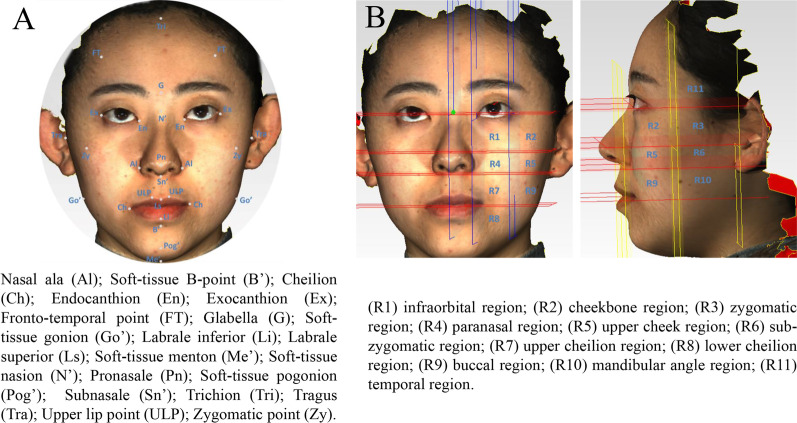
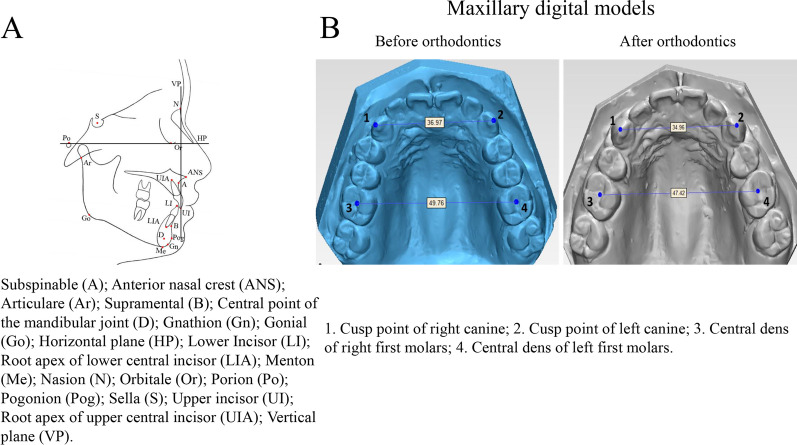
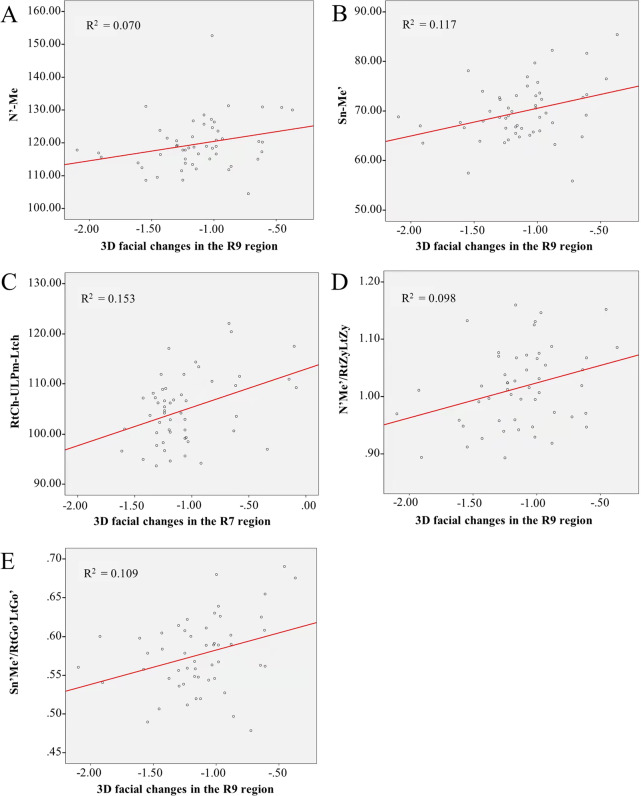
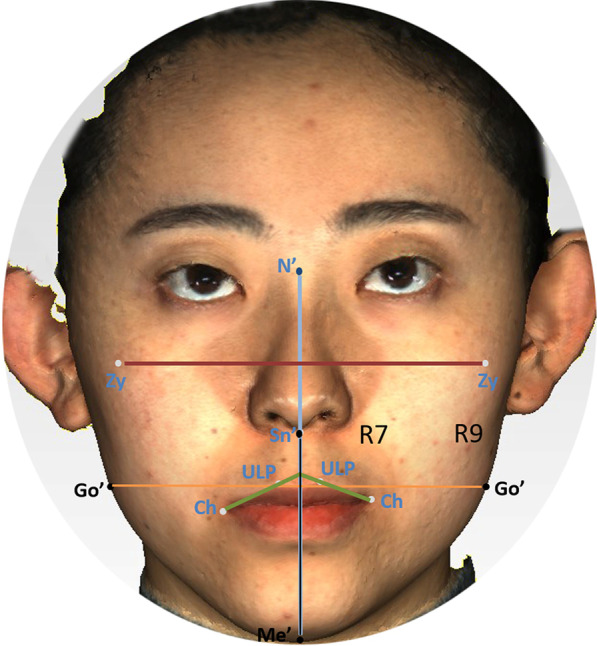
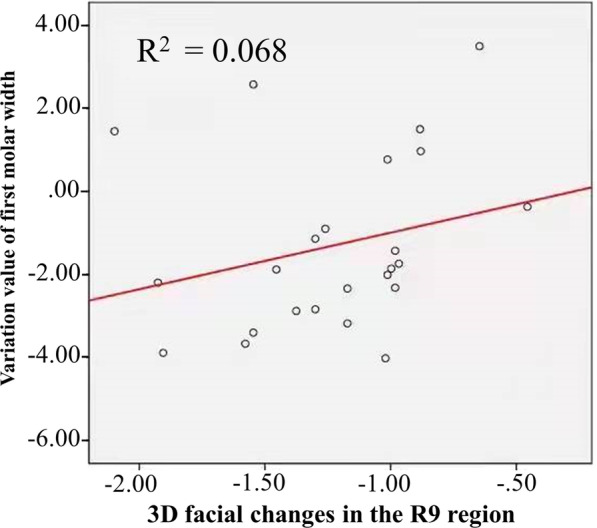
Results: Overall, 3D-negative soft tissue changes of the buccal region moderately correlated with distances of nasion-menton and subnasale-menton (both rs = 0.30, P < 0.05) as well as the ratio of subnasale-menton/right gonion-left gonion (rs = 0.33, P < 0.05) and nasion-menton/right zygomatic point-left zygomatic point (rs = 0.30, P < 0.05). Among the 3D angle measurements, the right chelion-median upper lip point-left chelion angle was found to have a moderate correlation with 3D negative changes of the upper cheilion region (rs = 0.31, P < 0.01). Analysis of occlusal height changes revealed that an increase in the posterior facial height (nasion-gonial distance) may be a risk factor for negative changes in the zygomatic arch area. In addition, a moderate positive correlation between the maxillary first molar width changes and 3D-negative changes of the lower cheek region was found (rs = 0.41, P < 0.05).
Conclusions: After orthodontic treatment, adult females with wide and short faces may be prone to negative soft tissue changes. Changes of posterior facial height and arch width between the first molars were also risk factors for negative changes of facial soft tissues. Extraction is not a major factor producing facial soft tissue changes.
Keywords: 3dMD stereo photography; Extraction; Facial aesthetics; Facial soft tissue; Non-extraction; Orthodontic treatment.
© 2022. The Author(s).
Conflict of interest statement
The authors have no competing interests to declare.
Figures
References
-
- Fu M, Zhang D, Wang B, Deng Y, Wang F, Ye X. The prevalence of malocclusion in China-an investigation of 25392 children. Chinese J Stomatol. 2002;37(5):51–53. - PubMed
-
- Linjun Yuan LM, Yunhui Xia, Bo Wang, Lingyong Jiang, Zhi Yang, Jiaqiang Liu, Bing Fang. Three-dimensional measurement of facial soft tissue changes after orthodontic treatment in adult without teeth extraction. Chinese J Orthod. 2015;1(22):10–4.
Publication types
MeSH terms
LinkOut - more resources
Full Text Sources
