


Iron Absorption: Factors, Limitations, and Improvement Methods
- PMID: 35755397
- PMCID: PMC9219084
- DOI: 10.1021/acsomega.2c01833
Iron Absorption: Factors, Limitations, and Improvement Methods
Abstract
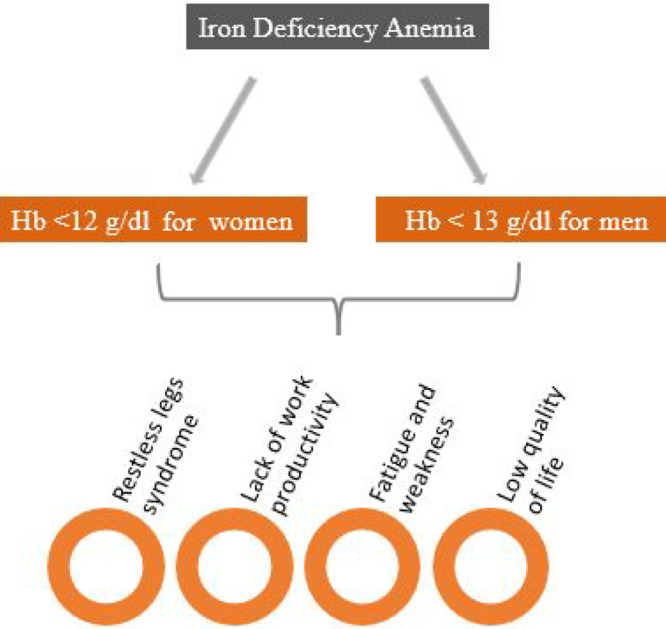
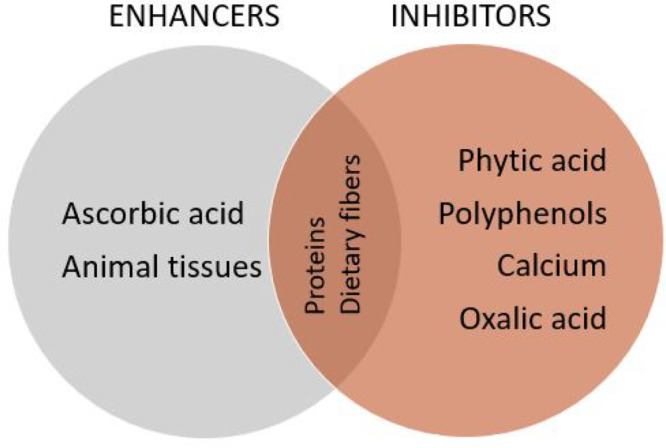
Iron is an essential element for human life since it participates in many functions in the human body, including oxygen transport, immunity, cell division and differentiation, and energy metabolism. Iron homeostasis is mainly controlled by intestinal absorption because iron does not have active excretory mechanisms for humans. Thus, efficient intestinal iron bioavailability is essential to reduce the risk of iron deficiency anemia. There are two forms of iron, heme and nonheme, found in foods. The average daily dietary iron intake is 10 to 15 mg in humans since only 1 to 2 mg is absorbed through the intestinal system. Nutrient-nutrient interactions may play a role in dietary intestinal iron absorption. Dietary inhibitors such as calcium, phytates, polyphenols and enhancers such as ascorbic acid and proteins mainly influence iron bioavailability. Numerous studies have been carried out for years to enhance iron bioavailability and combat iron deficiency. In addition to traditional methods, innovative techniques are being developed day by day to enhance iron bioavailability. This review will provide information about iron bioavailability, factors affecting absorption, iron deficiency, and recent studies on improving iron bioavailability.
© 2022 The Authors. Published by American Chemical Society.
Conflict of interest statement
The authors declare no competing financial interest.
Figures
References
-
- Gupta C. P. Role of Iron (Fe) in Body. IOSR J. Appl. Chem. (IOSR-JAC 2014, 7 (11), 38–46. 10.9790/5736-071123846. - DOI
Publication types
LinkOut - more resources
Full Text Sources
Other Literature Sources
