


Induction and maintenance immunosuppression in lung transplantation
- PMID: 35756950
- PMCID: PMC9226205
- DOI: 10.1007/s12055-021-01225-x
Induction and maintenance immunosuppression in lung transplantation
Abstract
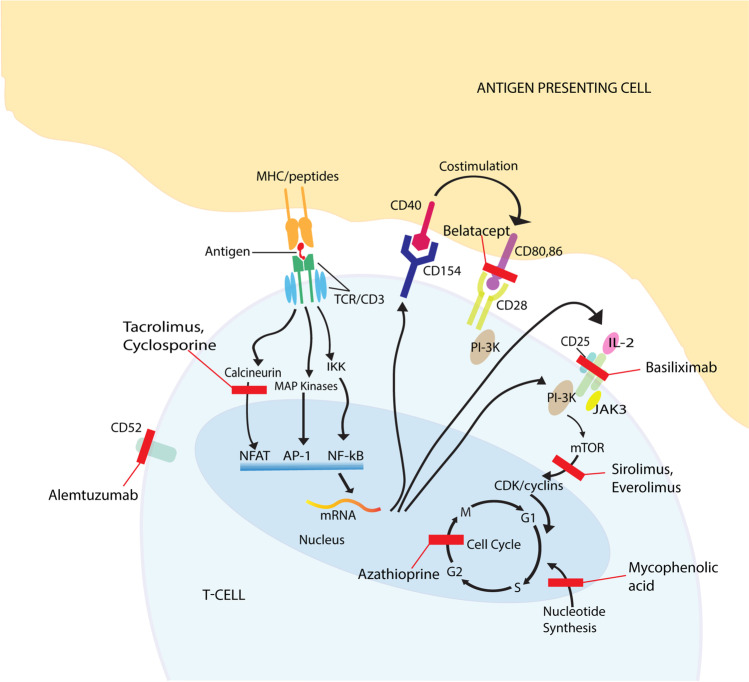
Immunosuppression for lung transplant recipients is a critical part of post-transplant care, to prevent acute and chronic rejection. Treatment protocols consist of induction and maintenance immunotherapy. Induction agents provide an immediate state of immunosuppression following transplantation and over time, and their use has become more commonplace. Several agents are available for clinical use, including anti-thymocyte globulin, alemtuzumab, and basiliximab, the latter being most commonly employed. Each induction agent has unique side effects and caveats to their use, of which we must be aware. Maintenance immunosuppression is initiated following transplant but requires multiple doses prior to reaching therapeutic levels. A calcineurin inhibitor, an anti-metabolite, and a corticosteroid are traditionally used, most commonly tacrolimus, mycophenolate mofetil, and prednisone. Dosing regimens and goal trough levels vary and are tailored to a patient's clinical status and duration post-transplant. Future clinical studies may be able to assist in determining the optimal induction and maintenance immunosuppression regimens. In the interim, we use cohort and registry data to guide our therapies.
Keywords: Immunosuppression; Induction; Lung transplant.
© Indian Association of Cardiovascular-Thoracic Surgeons 2021.
Conflict of interest statement
Competing interestsThe authors declare no competing interests.
Figures
References
-
- Chambers DC, Cherikh WS, Harhay MO, et al. The International Thoracic Organ Transplant Registry of the International Society for Heart and Lung Transplantation: thirty-sixth adult lung and heart-lung transplantation Report-2019; Focus theme: Donor and recipient size match. J Heart Lung Transplant. 2019;38:1042–55. doi: 10.1016/j.healun.2019.08.001. - DOI - PMC - PubMed
-
- Valapour M, Lehr CJ, Skeans MA, et al. OPTN/SRTR 2018 annual data report: lung. Am J Transplant. 2020. 10.1111/ajt.15677. - PubMed
Publication types
LinkOut - more resources
Full Text Sources