


Gene editing for corneal disease management
- PMID: 35757280
- PMCID: PMC9221704
- DOI: 10.5528/wjtm.v5.i1.1
Gene editing for corneal disease management
Abstract
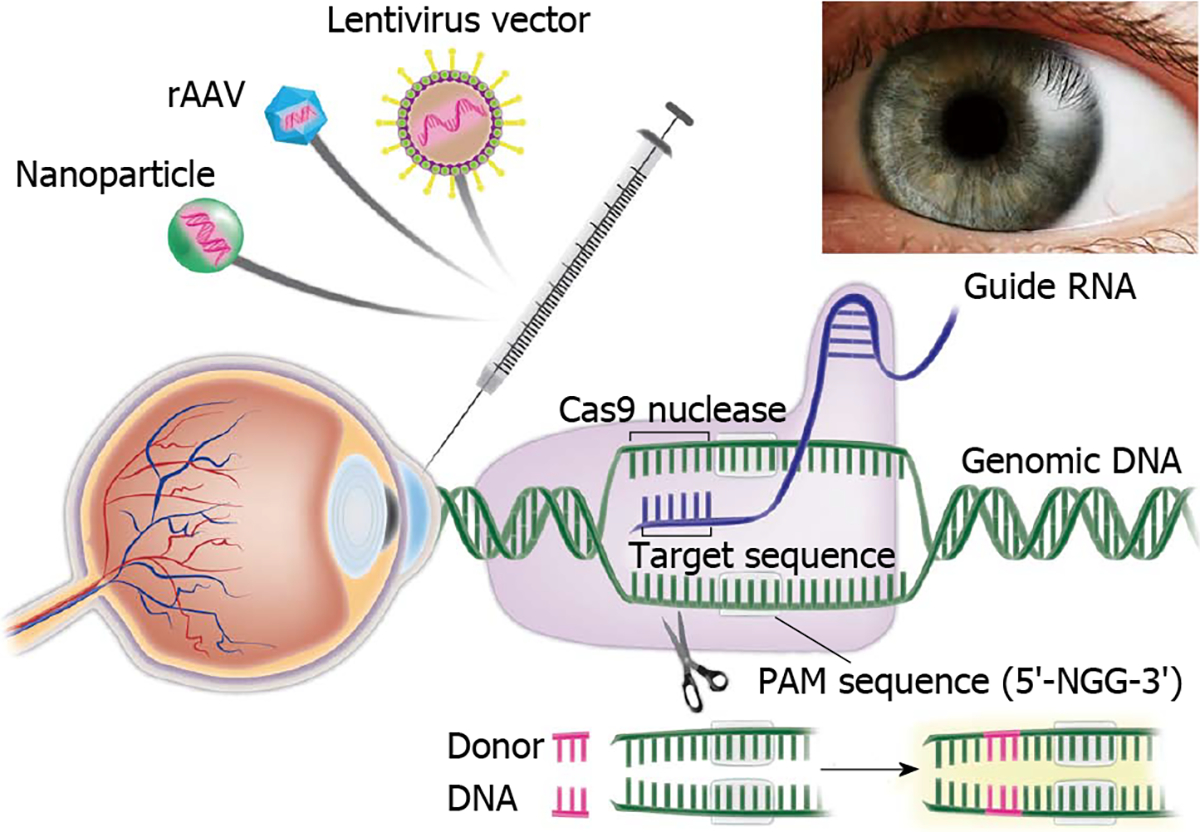
Gene editing has recently emerged as a promising technology to engineer genetic modifications precisely in the genome to achieve long-term relief from corneal disorders. Recent advances in the molecular biology leading to the development of Clustered Regularly Interspaced Short Palindromic Repeats (CRISPRs) and CRISPR-associated systems, zinc finger nucleases and transcription activator like effector nucleases have ushered in a new era for high throughput in vitro and in vivo genome engineering. Genome editing can be successfully used to decipher complex molecular mechanisms underlying disease pathophysiology, develop innovative next generation gene therapy, stem cell-based regenerative therapy, and personalized medicine for corneal and other ocular diseases. In this review we describe latest developments in the field of genome editing, current challenges, and future prospects for the development of personalized gene-based medicine for corneal diseases. The gene editing approach is expected to revolutionize current diagnostic and treatment practices for curing blindness.
Keywords: Adeno-associated virus; Clustered Regularly Interspaced Short Palindromic Repeat; Clustered Regularly Interspaced Short Palindromic Repeats associated protein 9; Cornea; Double strand breaks; Gene editing; Gene targeting; Homologous recombination; Homology directed repair; Indels; Lentiviral vector; Protospacer-adjacent motif; Transcription activator like effector nucleases; Zinc finger nucleases; sgRNA.
Conflict of interest statement
Conflict-of-interest statement: There is no conflict of interest.
Figures
References
-
- Mohan RR, Schultz GS, Hong JW, Mohan RR, Wilson SE. Gene transfer into rabbit keratocytes using AAV and lipid-mediated plasmid DNA vectors with a lamellar flap for stromal access. Exp Eye Res 2003; 76: 373–383 - PubMed
Grants and funding
LinkOut - more resources
Full Text Sources
Other Literature Sources