


Integrins in the Immunity of Insects: A Review
- PMID: 35757717
- PMCID: PMC9218073
- DOI: 10.3389/fimmu.2022.906294
Integrins in the Immunity of Insects: A Review
Abstract
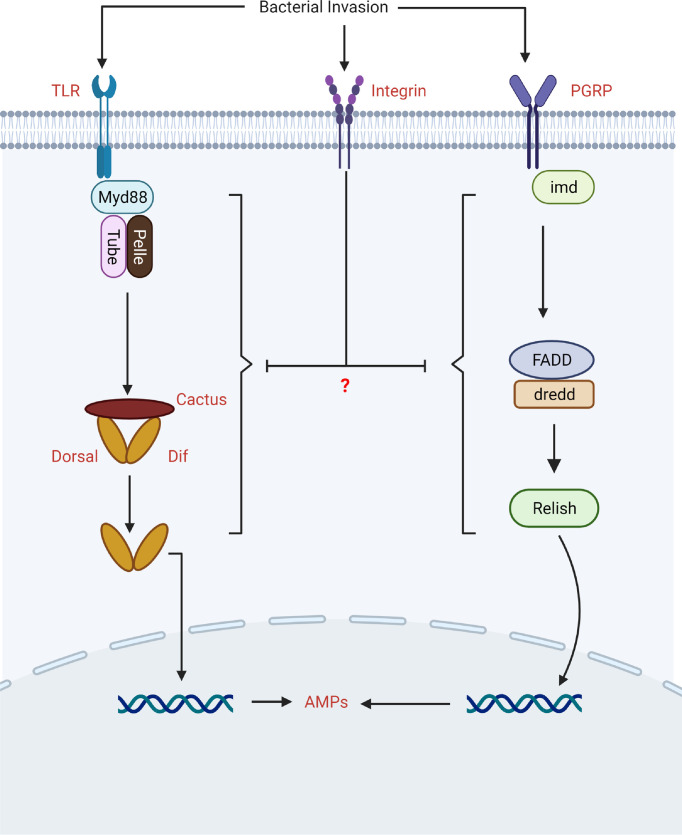
Integrins are a large group of cell-surface proteins that are classified as transmembrane proteins. Integrins are classified into different types based on sequence variations, leading to structural and functional diversity. They are broadly distributed in animals and have a wide range of biological functions such as cell-to-cell communication, intracellular cytoskeleton organization, cellular signaling, immune responses, etc. Integrins are among the most abundant cell surface proteins in insects, exhibiting their indispensability in insect physiology. Because of their critical biological involvement in physiological processes, they appear to be a novel target for designing effective pest control strategies. In the current literature review, we first discuss the discovery and expression responses of integrins against various types of pathogens. Secondly, we examine the specific biological roles of integrins in controlling microbial pathogens, such as phagocytosis, encapsulation, nodulation, immune signaling, and so on. Finally, we describe the possible uses of integrins to control agricultural insect pests.
Keywords: hemocytes; innate immunity; insects; integrins; target for pest control.
Copyright © 2022 Kausar, Abbas, Gul, Liu, Tang, Maqsood, Liu and Dai.
Conflict of interest statement
The authors declare that the research was conducted in the absence of any commercial or financial relationships that could be construed as a potential conflict of interest.
Figures



References
Publication types
MeSH terms
Substances
LinkOut - more resources
Full Text Sources
