


An online survey of perimenopausal women to determine their attitudes and knowledge of the menopause
- PMID: 35758176
- PMCID: PMC9244939
- DOI: 10.1177/17455057221106890
An online survey of perimenopausal women to determine their attitudes and knowledge of the menopause
Abstract
Introduction: Women are not usually taught about the menopause formally, and many general practitioners have relatively little training. The aim of this study was to explore perimenopausal women's attitudes and knowledge of the menopause.
Method: An online survey was designed to evaluate attitudes and knowledge of the menopause in women older than 40 years. The survey was generated with Qualtrics XM® and promoted via social media. In all, 3150 women started the survey. In this study, data from 947 perimenopausal women were analysed.
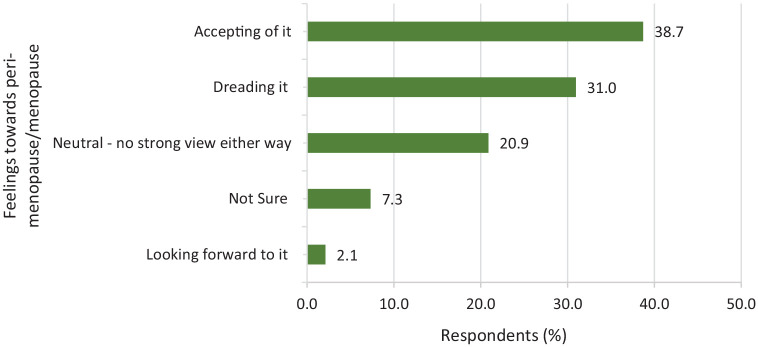
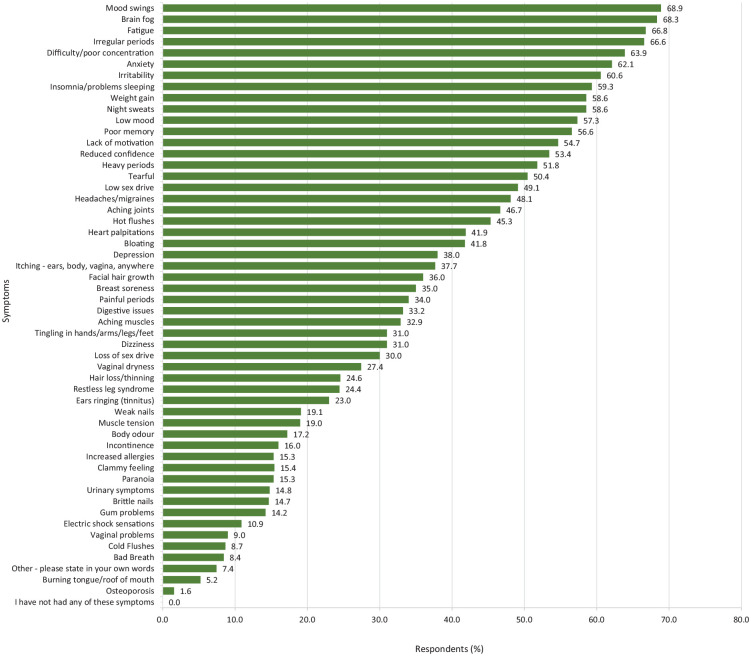
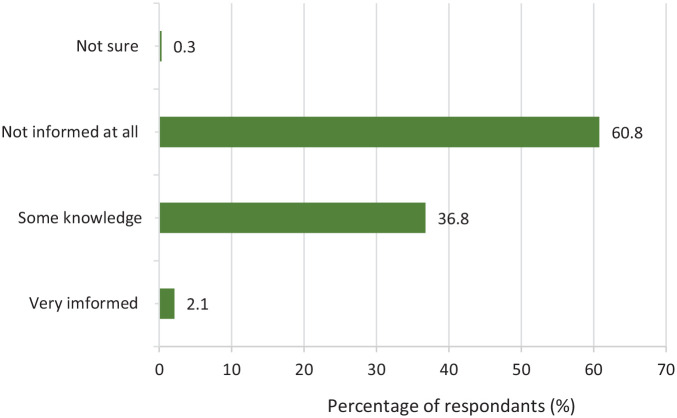
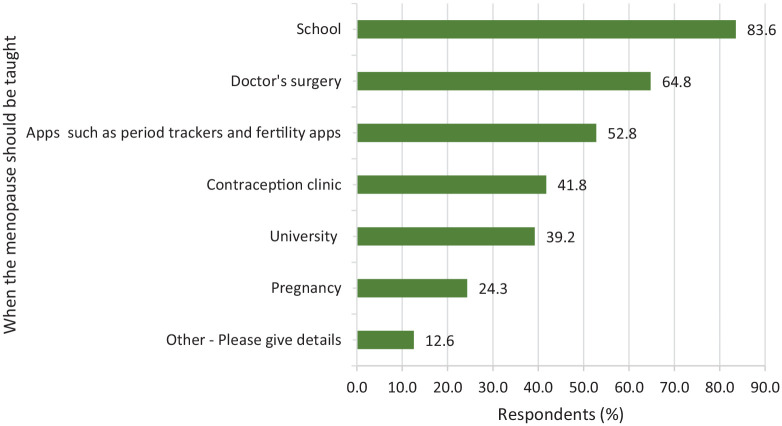
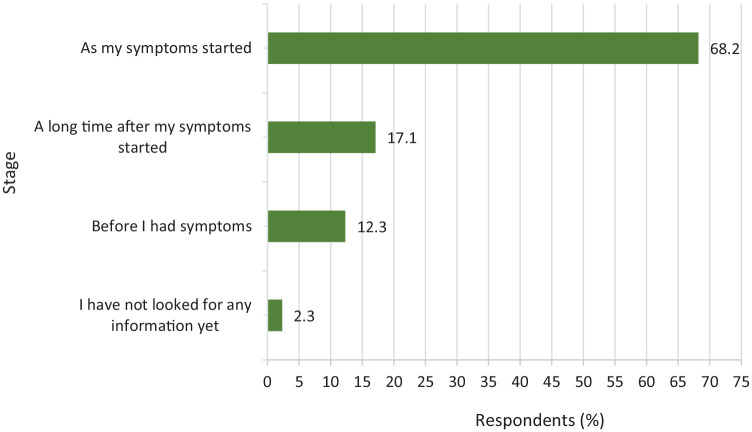
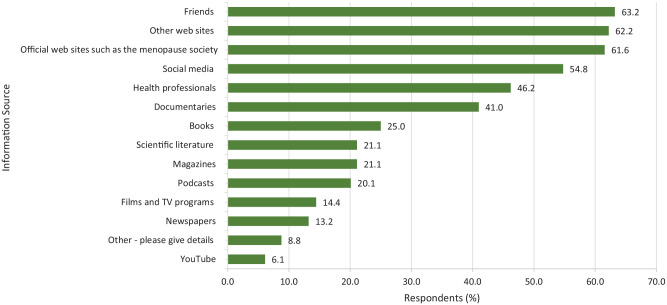
Results: Regarding women's attitudes to the menopause, 38.8% were accepting of it but more than 30% were dreading it. The women had experienced a number of menopause symptoms including mood swings (68.9%), brain fog (68.3%), and fatigue (66.8%). More than 90% of women had never been taught about the menopause at school, and more than 60% did not feel informed at all about the menopause. School was thought to be the best place for menopause education to start (83.6%). In all, 68.2% of women had only looked for information about the menopause as their symptoms started and they had talked to friends and used a variety of websites to look for information. When asked for their free-text views on the menopause, thematic analysis produced four themes: the overarching knowledge gap, the onset and impact of symptoms, perimenopause: the hidden phenomenon, and managing symptoms: differing schools of thought.
Conclusion: Lack of education for women and their general practitioners is causing perimenopausal women to go through this important stage in their lives with a lack of knowledge and appropriate medical care. It is essential that women are taught about the menopause, from school onwards and that we offer health professionals appropriate training starting from the medical school curriculum.
Keywords: education; menopause; menopause symptoms; perimenopause; women’s health.
Conflict of interest statement
Figures
References
-
- Hoga L, Rodolpho J, Gonçalves B, et al. Women’s experience of menopause: a systematic review of qualitative evidence. JBI Database System Rev Implement Rep 2015; 13(8): 250–337. - PubMed
-
- National Institute for Health Care Excellence (NICE). Menopause: diagnosis and management [Internet]. NICE, 2015, https://www.nice.org.uk/guidance/ng23 - PubMed
-
- Local Government Association. Menopause factfile, 2021, https://www.local.gov.uk/our-support/workforce-and-hr-support/wellbeing/...
-
- World Health Organization (WHO). Research on the menopause in the 1990s: report of a WHO scientific group. World Health Organ Tech Rep Ser 1996; 866: 1–107. - PubMed
MeSH terms
LinkOut - more resources
Full Text Sources
Medical
Miscellaneous
