


Therapeutic cancer vaccines: From biological mechanisms and engineering to ongoing clinical trials
- PMID: 35759856
- PMCID: PMC9217071
- DOI: 10.1016/j.ctrv.2022.102429
Therapeutic cancer vaccines: From biological mechanisms and engineering to ongoing clinical trials
Abstract
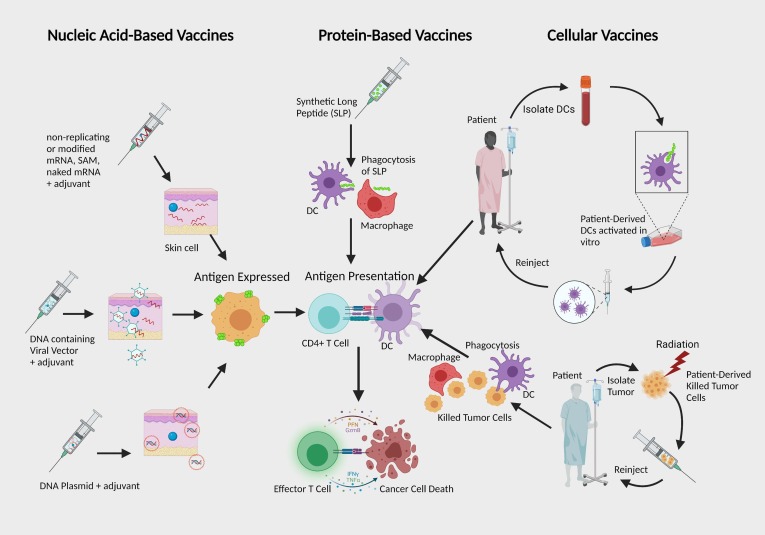
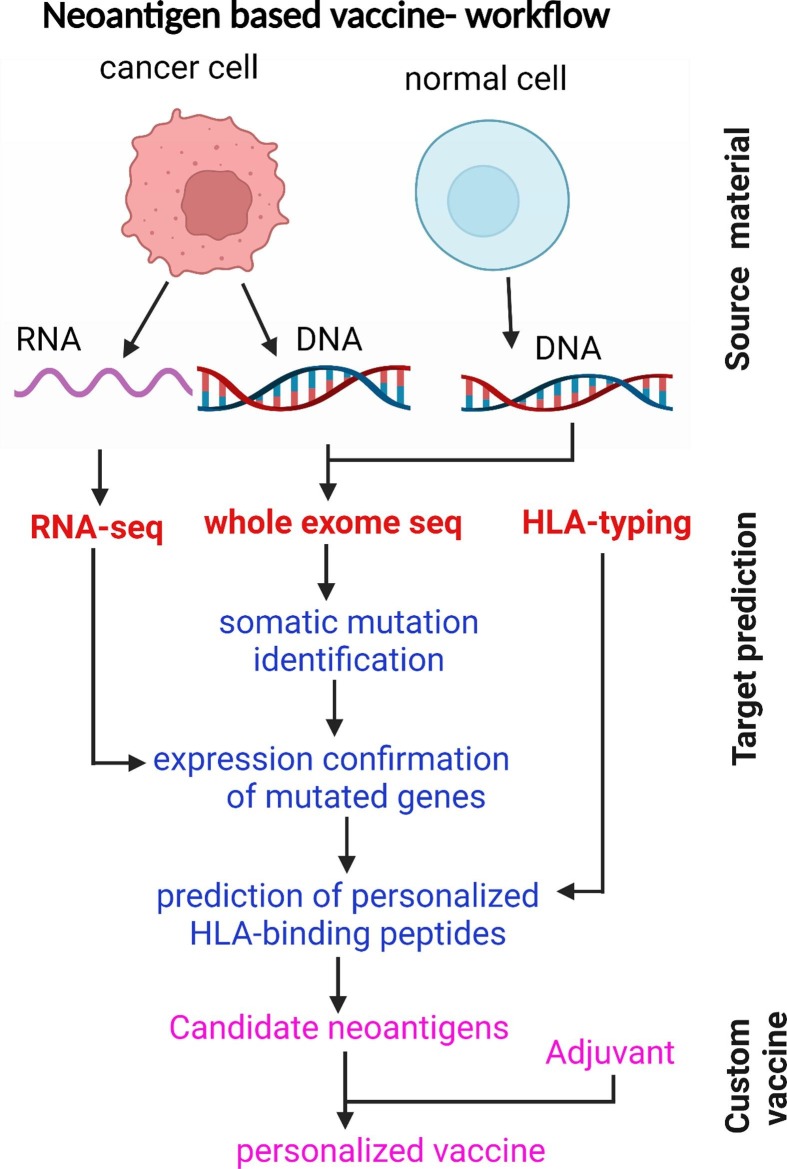
Therapeutic vaccines are currently at the forefront of medical innovation. Various endeavors have been made to develop more consolidated approaches to producing nucleic acid-based vaccines, both DNA and mRNA vaccines. These innovations have continued to propel therapeutic platforms forward, especially for mRNA vaccines, after the successes that drove emergency FDA approval of two mRNA vaccines against SARS-CoV-2. These vaccines use modified mRNAs and lipid nanoparticles to improve stability, antigen translation, and delivery by evading innate immune activation. Simple alterations of mRNA structure- such as non-replicating, modified, or self-amplifying mRNAs- can provide flexibility for future vaccine development. For protein vaccines, the use of long synthetic peptides of tumor antigens instead of short peptides has further enhanced antigen delivery success and peptide stability. Efforts to identify and target neoantigens instead of antigens shared between tumor cells and normal cells have also improved protein-based vaccines. Other approaches use inactivated patient-derived tumor cells to elicit immune responses, or purified tumor antigens are given to patient-derived dendritic cells that are activated in vitro prior to reinjection. This review will discuss recent developments in therapeutic cancer vaccines such as, mode of action and engineering new types of anticancer vaccines, in order to summarize the latest preclinical and clinical data for further discussion of ongoing clinical endeavors in the field.
Keywords: Cancer vaccines; Checkpoint inhibitors; Neoadjuvant; Neoantigens; SARS-CoV-2; Synthetic long peptides; mRNA vaccines.
Copyright © 2022 Elsevier Ltd. All rights reserved.
Conflict of interest statement
The authors declare that they have no known competing financial interests or personal relationships that could have appeared to influence the work reported in this paper.
Figures
References
-
- Sung H., Ferlay J., Siegel R.L., Laversanne M., Soerjomataram I., Jemal A., et al. Global Cancer Statistics 2020: GLOBOCAN Estimates of Incidence and Mortality Worldwide for 36 Cancers in 185 Countries. CA: A Cancer Journal for Clinicians. 2021;71(3):209–249. - PubMed
-
- Duarte J.H. Individualized neoantigen vaccines. Nat Res. 2021;2020
-
- Pedersen S.R., Sørensen M.R., Buus S., Christensen J.P., Thomsen A.R. Comparison of Vaccine-Induced Effector CD8 T Cell Responses Directed against Self- and Non–Self-Tumor Antigens: Implications for Cancer Immunotherapy. Journal of Immunology. 2013;191:3955–3967. doi: 10.4049/jimmunol.1300555. - DOI - PubMed
Publication types
MeSH terms
Substances
LinkOut - more resources
Full Text Sources
Medical
Miscellaneous
