


POU2F3 in SCLC: Clinicopathologic and Genomic Analysis With a Focus on Its Diagnostic Utility in Neuroendocrine-Low SCLC
- PMID: 35760287
- PMCID: PMC9427708
- DOI: 10.1016/j.jtho.2022.06.004
POU2F3 in SCLC: Clinicopathologic and Genomic Analysis With a Focus on Its Diagnostic Utility in Neuroendocrine-Low SCLC
Abstract
Introduction: POU2F3 is a recent marker of a small cell lung carcinoma (SCLC) subtype related to chemosensory tuft cells (SCLC-P). The characteristics of SCLC-P have not been fully defined, and the data on POU2F3 expression in other lung tumors are scarce.
Methods: We screened 254 SCLC for POU2F3 expression and comprehensively analyzed histopathologic, genomic, and clinical characteristics of POU2F3-positive tumors. We also explored POU2F3 expression in other major lung cancer types (n = 433) and a targeted set of potential diagnostic mimics of SCLC (n = 123).
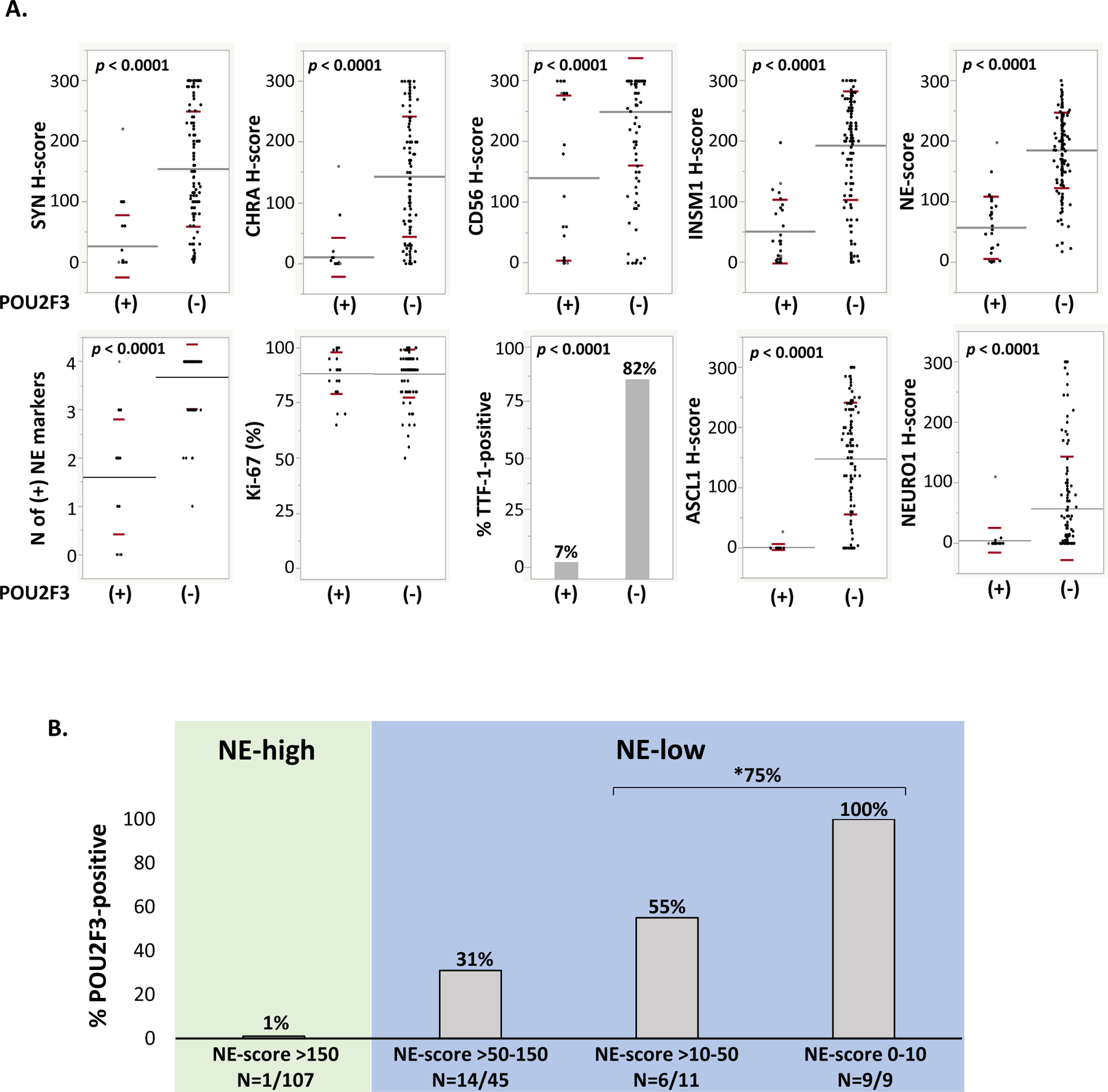
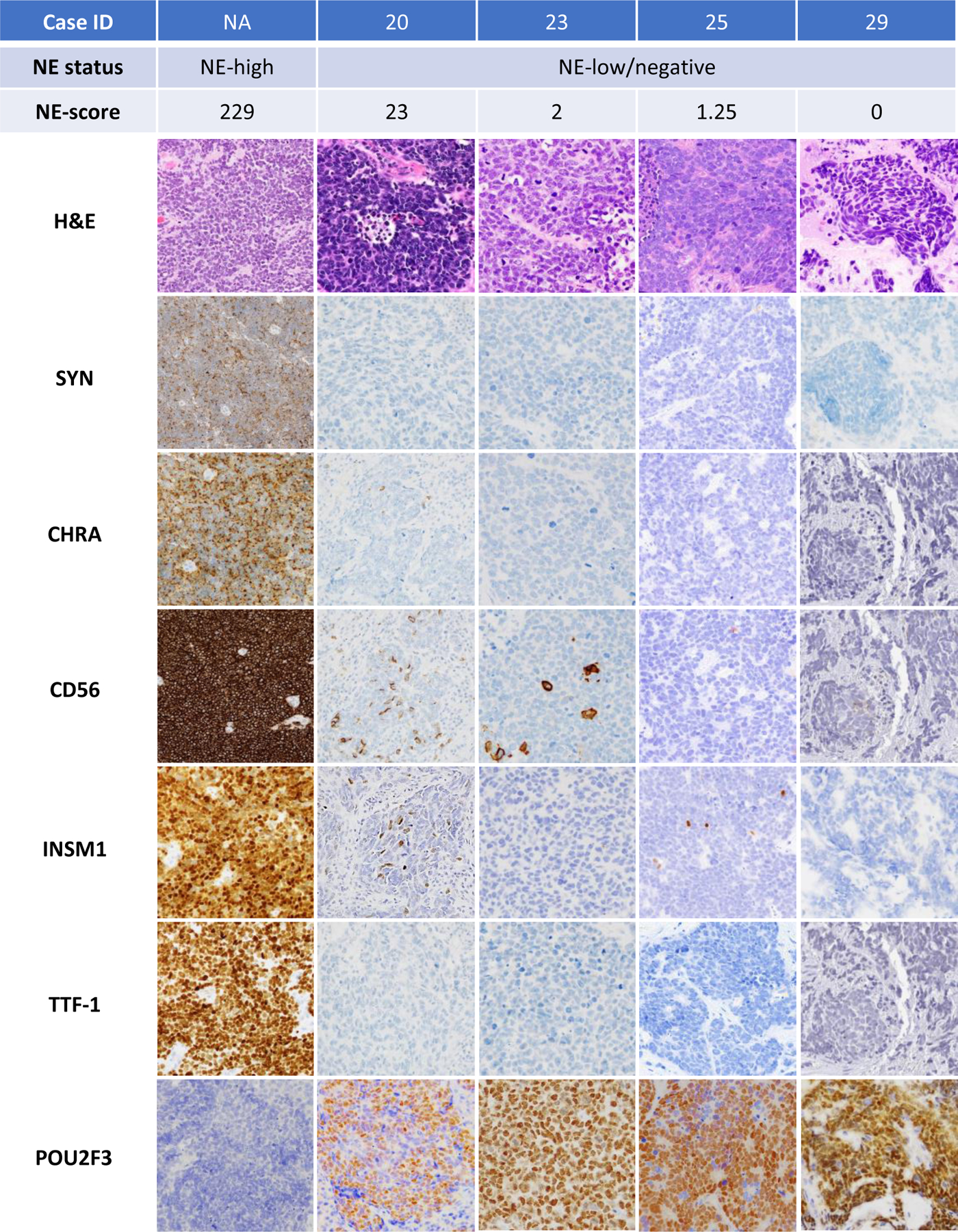
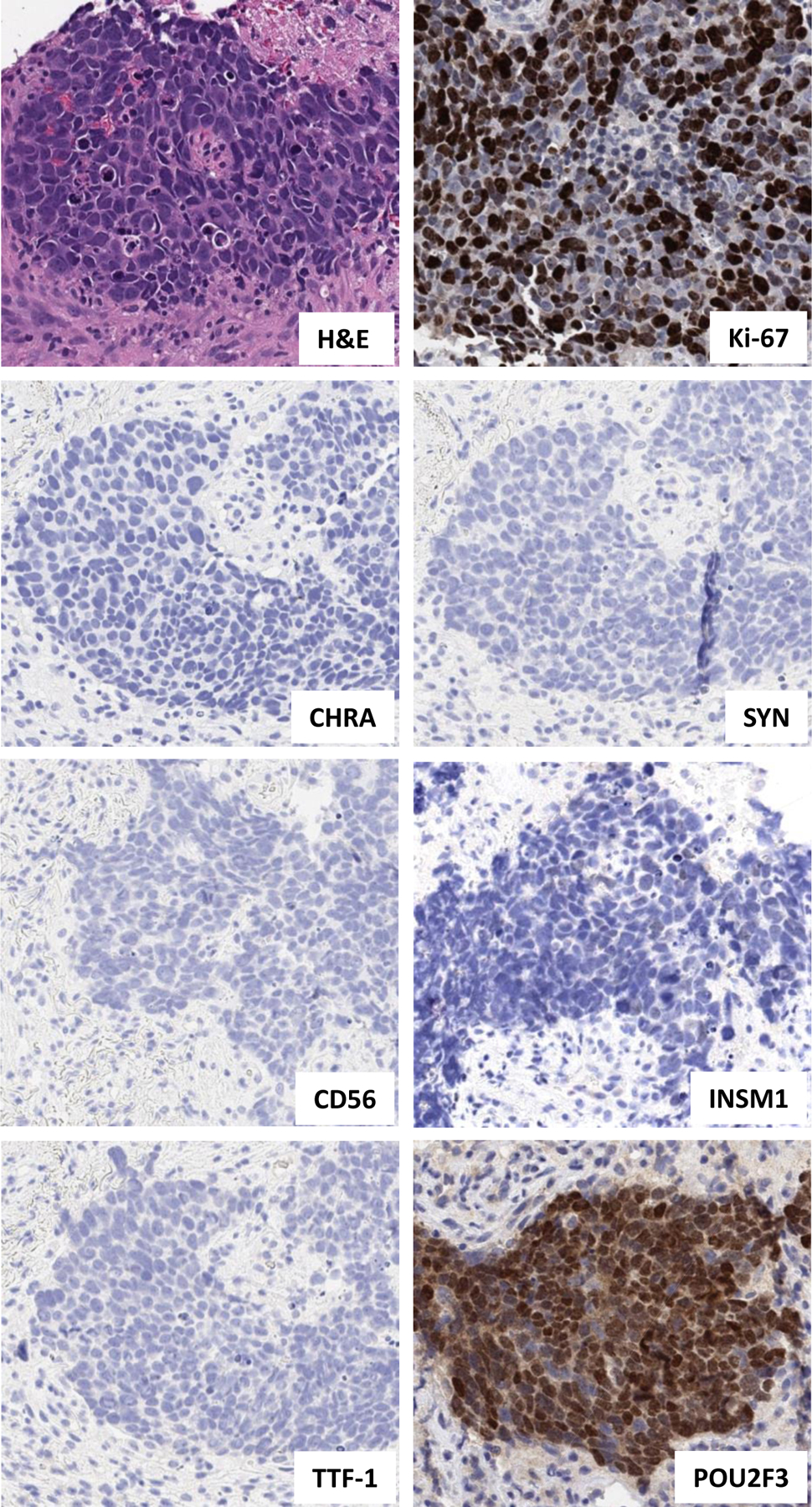
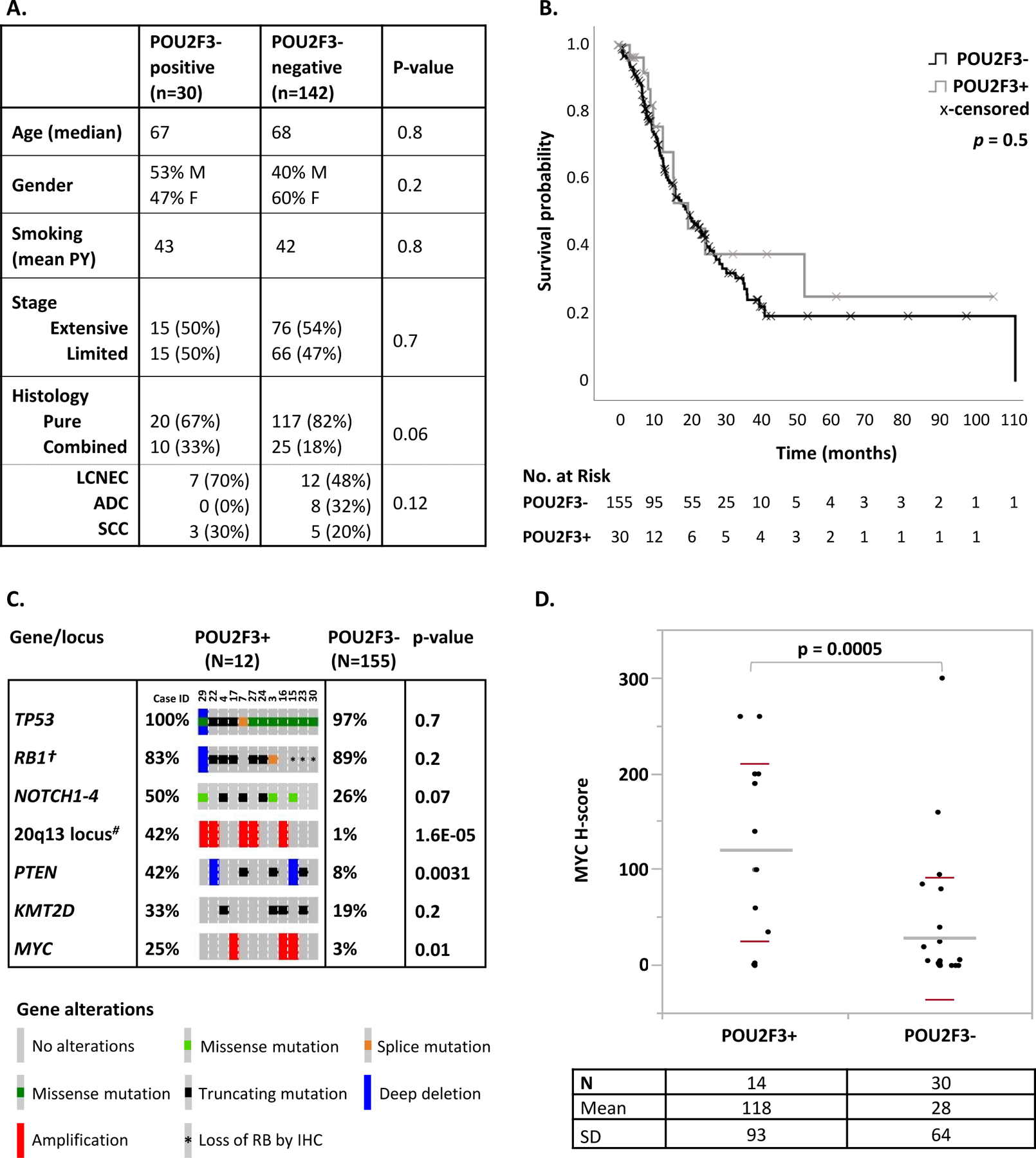
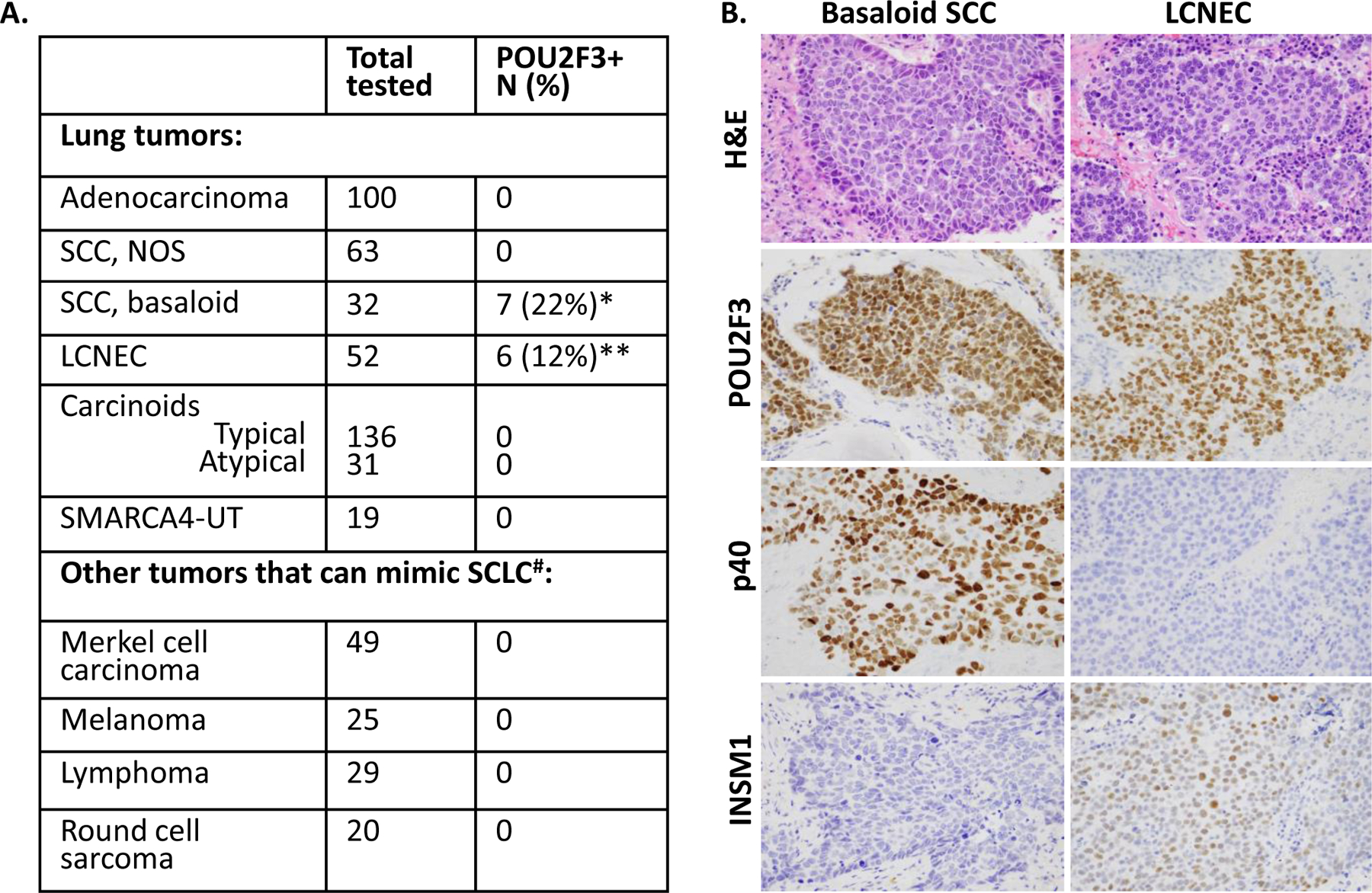
Results: POU2F3 was expressed in 30 of 254 (12%) SCLC and was strongly associated with low expression of standard neuroendocrine markers (synaptophysin, chromogranin A, CD56, INSM1). Notably, POU2F3 was expressed in 75% of SCLC with entirely negative or minimal neuroendocrine marker expression (15/20) and was helpful in supporting the diagnosis of SCLC in such cases. Broad targeted next-generation sequencing revealed that SCLC-P (n = 12) exhibited enrichment in several alterations, including PTEN inactivation, MYC amplifications, and 20q13 amplifications, but similar rates of RB1 and TP53 alterations as other SCLC (n = 155). Beyond SCLC, POU2F3 expression was exclusively limited to large cell neuroendocrine carcinoma (12%) and basaloid squamous cell carcinoma (22%).
Conclusions: This is the largest cohort of SCLC-P clinical samples to date, where we describe the diagnostic utility of POU2F3 in a challenging subset of SCLC with low or absent expression of standard neuroendocrine markers. The distinct genomic alterations in SCLC-P may offer a novel avenue for therapeutic targeting. The role of POU2F3 in a narrow subset of other lung cancer types warrants further study.
Keywords: Neuroendocrine-low; POU2F3; SCLC-P; Small cell lung carcinoma.
Copyright © 2022 International Association for the Study of Lung Cancer. Published by Elsevier Inc. All rights reserved.
Conflict of interest statement
The authors declare that there are no competing interests.
Figures
Comment in
-
EGFR Tyrosine Kinase Inhibitor Sequencing Revisited: From the Revival of Old Tools to the Integration of New Agents.J Thorac Oncol. 2022 Sep;17(9):1067-1069. doi: 10.1016/j.jtho.2022.07.005. J Thorac Oncol. 2022. PMID: 36031285 No abstract available.
-
Determining Whether YAP1 and POU2F3 Are Antineuroendocrine Factors.J Thorac Oncol. 2022 Sep;17(9):1070-1073. doi: 10.1016/j.jtho.2022.07.001. J Thorac Oncol. 2022. PMID: 36031286 No abstract available.
References
-
- Nevo S, Kadouri N, Abramson J. Tuft cells: From the mucosa to the thymus. Immunol Lett 2019;210:1–9. - PubMed
Publication types
MeSH terms
Substances
Grants and funding
LinkOut - more resources
Full Text Sources
Medical
Research Materials
Miscellaneous
