The impact of COVID-19 on screening for colorectal, gastric, breast, and cervical cancer in Korea
- PMID: 35760396
- PMCID: PMC9754922
- DOI: 10.4178/epih.e2022053
The impact of COVID-19 on screening for colorectal, gastric, breast, and cervical cancer in Korea
Abstract
Objectives: The coronavirus disease 2019 (COVID-19) pandemic has affected the utilization of healthcare services, including participation in cancer screening programs. We compared cancer screening participation rates for colorectal, gastric, breast, and cervical cancers among participants in the National Cancer Screening Program (NCSP) in 2019 and 2020 to address the potential distraction effect of COVID-19 on cancer screening.
Methods: Data from the NCSP for 4 cancer types (stomach, colorectal, breast, and cervical) in 2019 and 2020 were used to calculate cancer screening participation rates by calendar month, gender, age group, and geographical region. Monthly participation rates were analyzed per 1,000 eligible individuals.
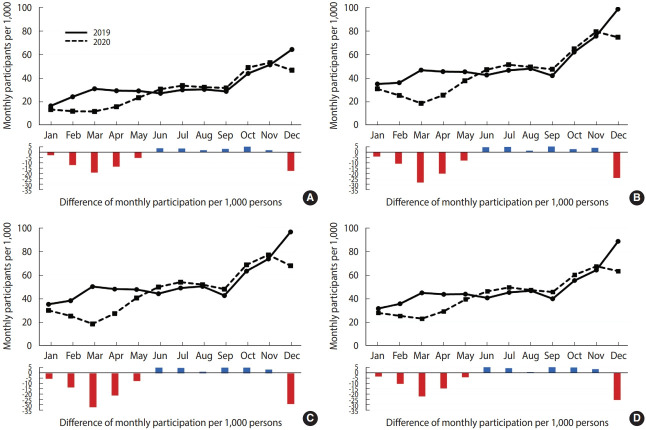
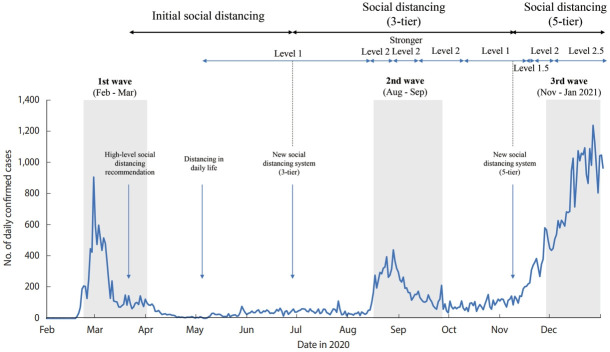
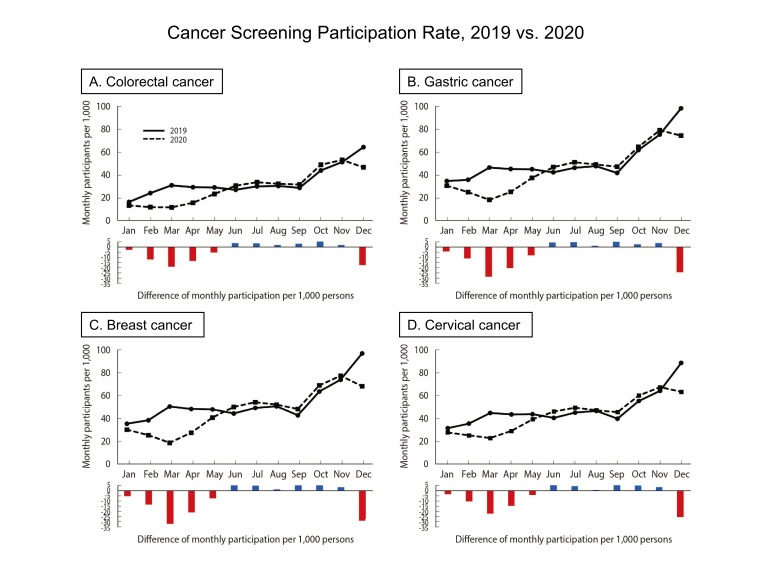
Results: The screening participation rate decreased in 2020 compared to 2019 for all 4 cancers: colorectal (40.5 vs. 35.3%), gastric (61.9 vs. 54.6%), breast (63.8 vs. 55.8%), and cervical (57.8 vs. 52.2%) cancers. Following 2 major COVID-19 waves in March and December 2020, the participation rates in the 4 types of cancer screening dropped compared with those in 2019. The highest decline was observed in the elderly population aged 80 years and older (percentage change: -21% for colorectal cancer; -20% for gastric cancer; -26% for breast cancer; -20% for cervical cancer).
Conclusions: After the 2 major COVID-19 waves, the screening participation rate for 4 types of cancer declined compared with 2019. Further studies are needed to identify the indirect effects of the COVID-19 pandemic on cancer patients, such as delayed diagnoses of cancer or excess cancer deaths.
Keywords: Breast neoplasms; COVID-19; Colorectal neoplasms; Gastric neoplasms; Mass screening; Uterine cervical neoplasms.
Conflict of interest statement
The authors have no conflicts of interest to declare for this study.
Figures