. 2022 Jun 27;12(1):10868.
doi: 10.1038/s41598-022-14624-w.

On-demand ferrofluid droplet formation with non-linear magnetic permeability in the presence of high non-uniform magnetic fields

Affiliations

On-demand ferrofluid droplet formation with non-linear magnetic permeability in the presence of high non-uniform magnetic fields

Mohamad Ali Bijarchi et al. Sci Rep. .

Abstract

The magnetic actuation of ferrofluid droplets offers an inspiring tool in widespread engineering and biological applications. In this study, the dynamics of ferrofluid droplet generation with a Drop-on-Demand feature under a non-uniform magnetic field is investigated by multiscale numerical modeling. Langevin equation is assumed for ferrofluid magnetic susceptibility due to the strong applied magnetic field. Large and small computational domains are considered. In the larger domain, the magnetic field is obtained by solving Maxwell equations. In the smaller domain, a coupling of continuity, Navier Stokes, two-phase flow, and Maxwell equations are solved by utilizing the magnetic field achieved by the larger domain for the boundary condition. The Finite volume method and coupling of level-set and Volume of Fluid methods are used for solving equations. The droplet formation is simulated in a two-dimensional axisymmetric domain. The method of solving fluid and magnetic equations is validated using a benchmark. Then, ferrofluid droplet formation is investigated experimentally, and the numerical results showed good agreement with the experimental data. The effect of 12 dimensionless parameters, including the ratio of magnetic, gravitational, and surface tension forces, the ratio of the nozzle and magnetic coil dimensions, and ferrofluid to continuous-phase properties ratios are studied. The results showed that by increasing the magnetic Bond number, gravitational Bond number, Ohnesorge number, dimensionless saturation magnetization, initial magnetic susceptibility of ferrofluid, the generated droplet diameter reduces, whereas the formation frequency increases. The same results were observed when decreasing the ferrite core diameter to outer nozzle diameter, density, and viscosity ratios.


Conflict of interest statement

The authors declare no competing interests.

Figures
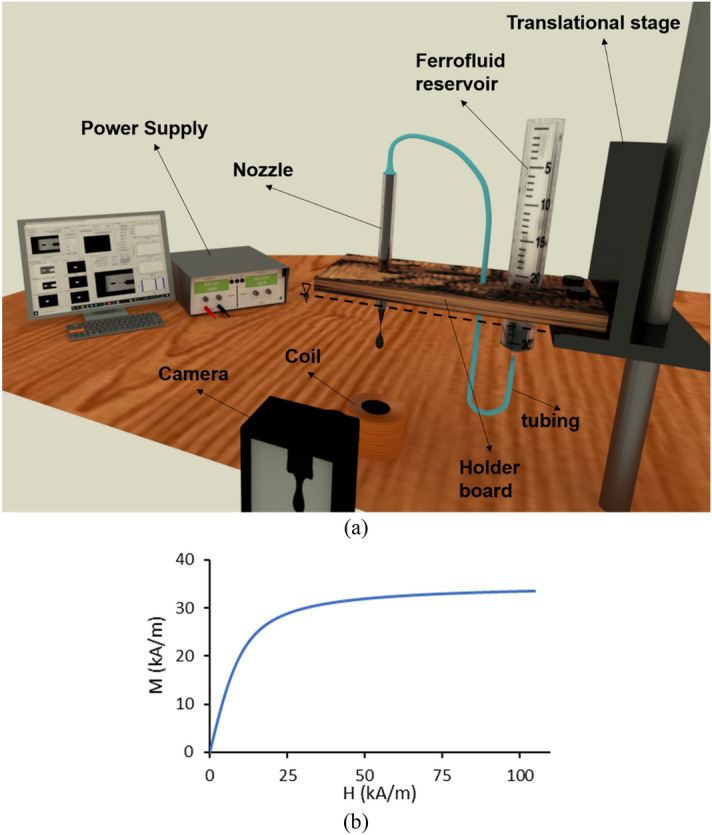
Figure 1
Figure 1
(a) Experimental setup, (b) magnetization versus magnetic field strength for ferrofluid.
Figure 2
Figure 2
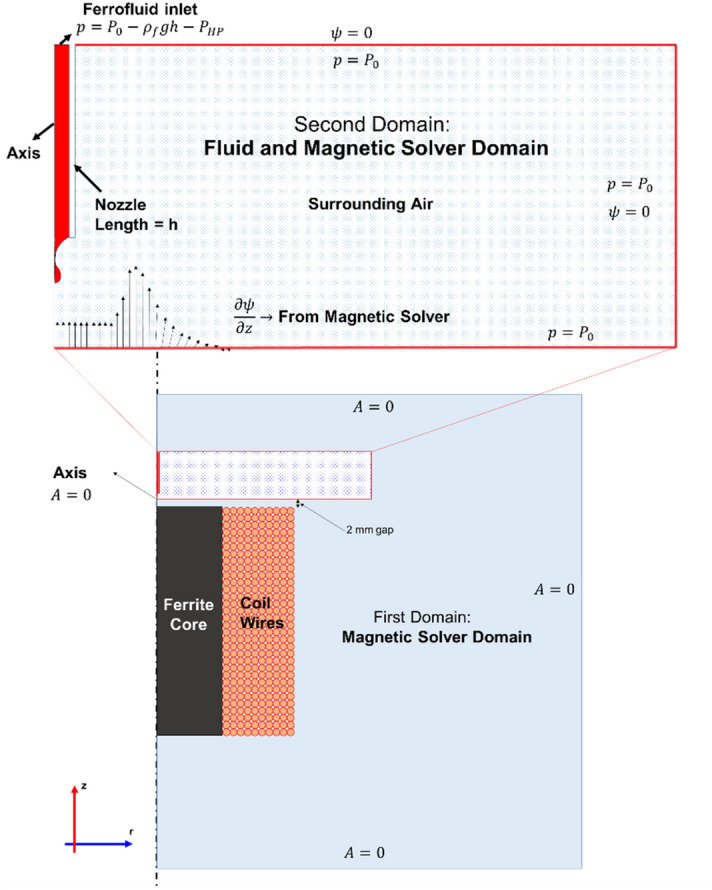
The magnetic and fluid boundary conditions assumed for the two assumed computational domains.
Figure 3
Figure 3
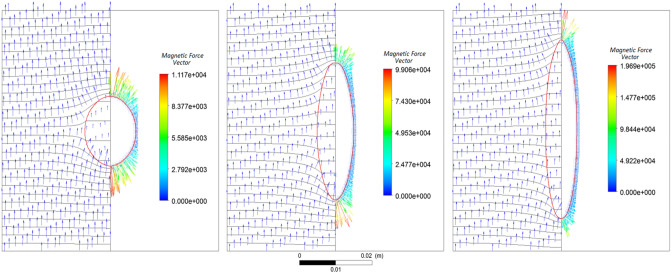
The final shape of the droplet in the steady-state from left to right for three magnetic field strengths of 837, 2043, and 2641 A/m, respectively. In each figure, on the right-hand side, the force vectors with a color map showing the magnetic force magnitude in N/m3, and on the left-hand side, the magnetic field vectors with constant magnetic potential lines are shown.
Figure 4
Figure 4
Variations of shape factor (the ratio of the major to the minor axis), e, in terms of the magnetic Bond number using the present numerical method and Lavrova results. The shapes of the droplet in the equilibrium state are shown using the present numerical solution for different magnetic Bond numbers.
Figure 5
Figure 5
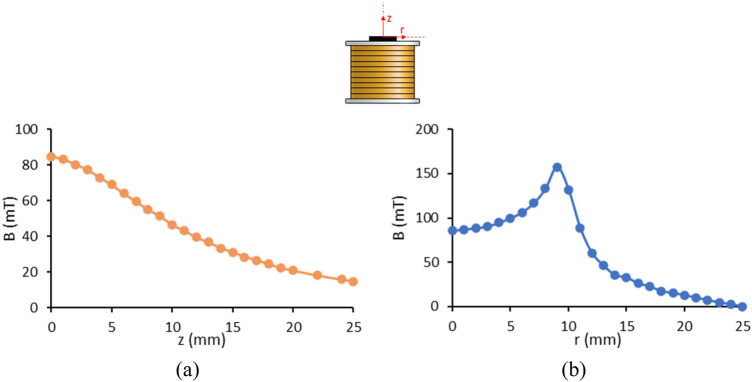
Magnetic flux density in terms of (a) the vertical distance on the axis of the magnetic coil and (b) the radial distance on the top surface of the magnetic coil.
Figure 6
Figure 6
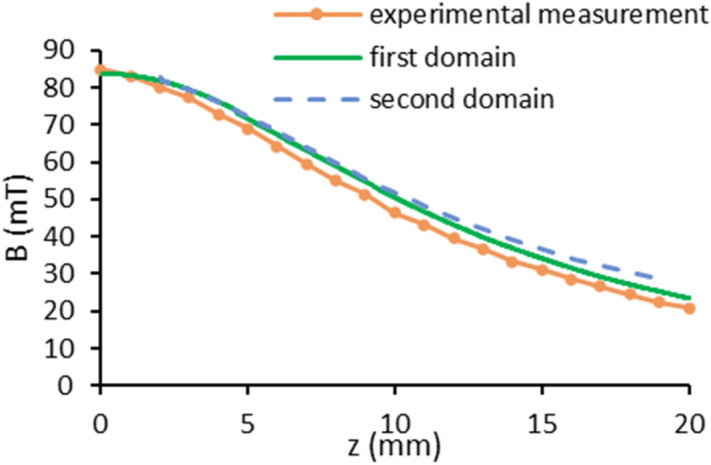
The comparison between the magnetic flux densities of the experimental measurement and the first and second computational domains on the coil axis in terms of vertical distance from the top surface of the magnetic coil.
Figure 7
Figure 7
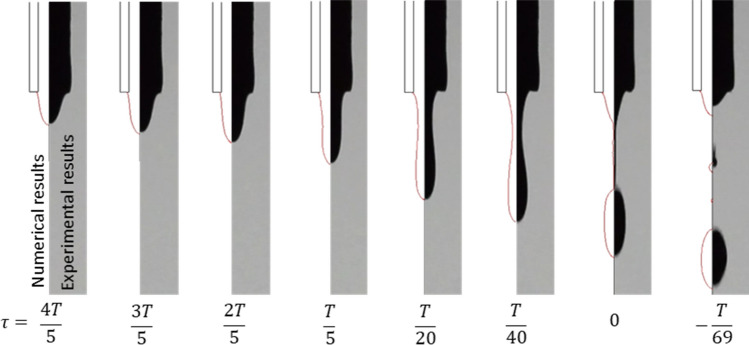
The process of ferrofluid droplet formation under a magnetic field obtained by numerical (left side) and experimental (right side) methods with Bom = 380.9 and L = 8 mm. τ=tbreakup-t represents the remaining time until the droplet formation, which is expressed in terms of the time period (T) of droplet formation.
Figure 8
Figure 8
Variations of (a) the dimensionless droplet diameter and (b) the dimensionless formation frequency in terms of the magnetic Bond number.
Figure 9
Figure 9
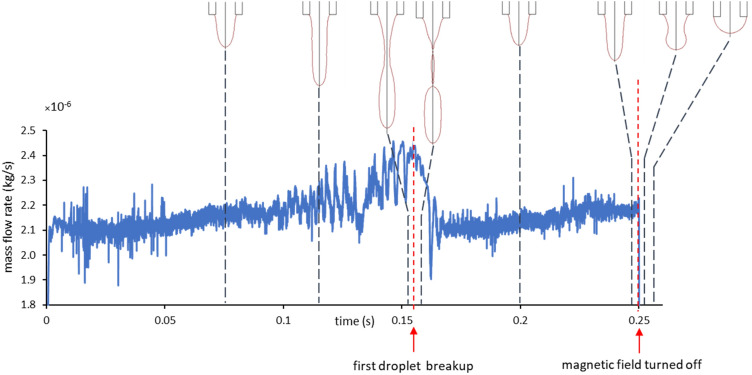
Mass flow rate of ferrofluid from the nozzle versus time showing DoD feature when the magnetic field is turned off at 0.25 s.
Figure 10
Figure 10
Changes of (a) the dimensionless droplet diameter and (b) the dimensionless drop formation frequency in terms of contact angle for different magnetic Bond numbers.
Figure 11
Figure 11
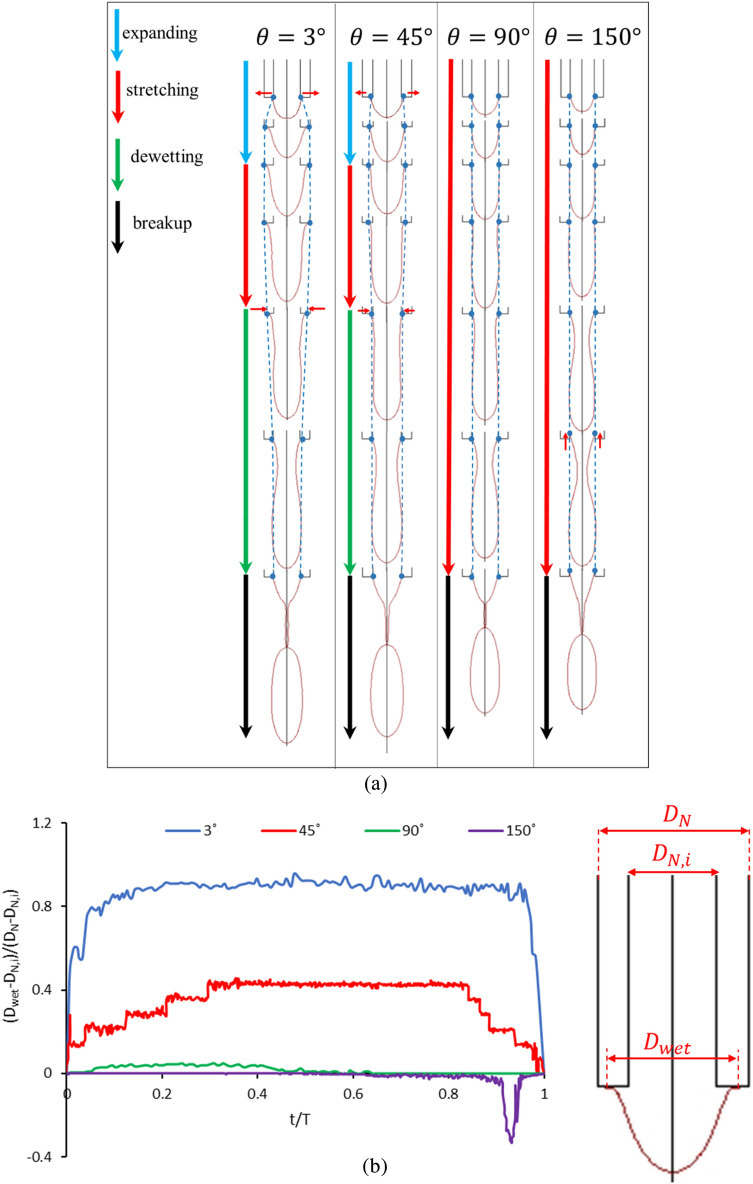
(a) Comparison of the droplet formation process and wetted diameter of the nozzle for various contact angles of 3°, 45°, 90°, and 150°. The four mentioned stages are only valid for the contact angles of 3° and 45°. Ferrofluid contact points with the nozzle’s surface are depicted by blue points, and the blue dashed lines show the process of expanding and dewetting. (b) Instantaneous dimensionless wetted diameter for contact angles of 3°, 45°, 90°, and 150°.
Figure 12
Figure 12
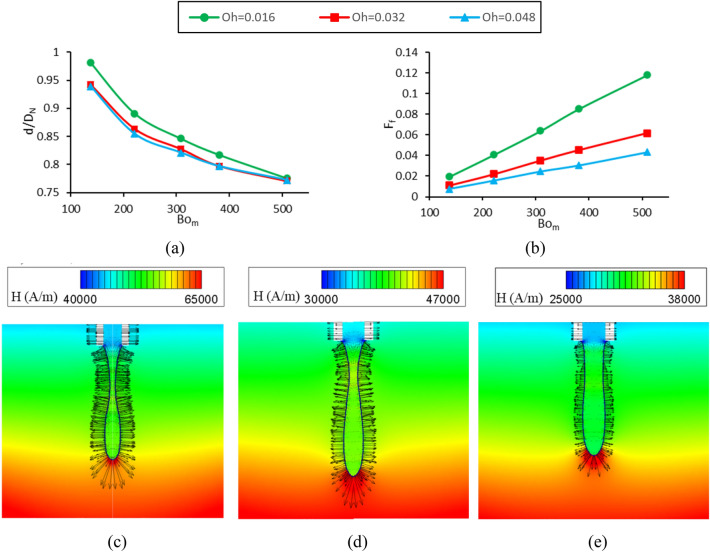
Changes in (a) the dimensionless diameter of the drop and (b) the dimensionless drop formation frequency in terms of the magnetic Bond number and various Ohnesorge numbers. Magnetic field contours (rainbow color) and vectors of magnetic force (black) for (c) Bom = 380.9, (d) Bom = 220.9, (e) Bom = 138. By decreasing Bom, larger droplets are generated. Note that the maximum values in the color map of magnetic field contours are (c) 65,000 A/m, (d) 47,000 A/m, (e) 38,000 A/m.
Figure 13
Figure 13
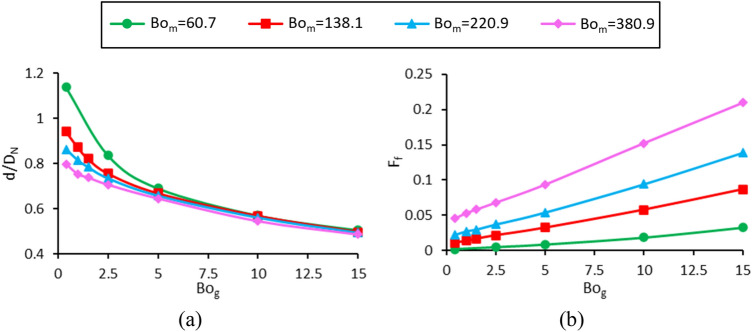
Variations in (a) the dimensionless droplet diameter and (b) the dimensionless formation frequency in terms of the gravitational Bond number and different magnetic Bond numbers.
Figure 14
Figure 14
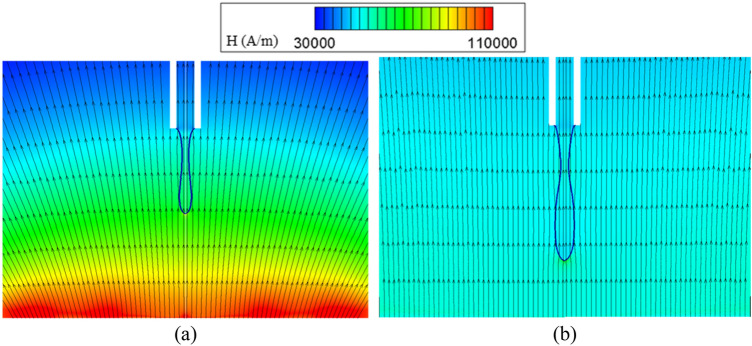
Magnetic field strength contours and magnetic lines for (a) DcoreDN=11 and (b) DcoreDN=44 for constant tcoreDN=17.75. As the ferrite core diameter increases, the magnetic field around the nozzle tip is more uniform, and the magnetic field lines become parallel.
Figure 15
Figure 15
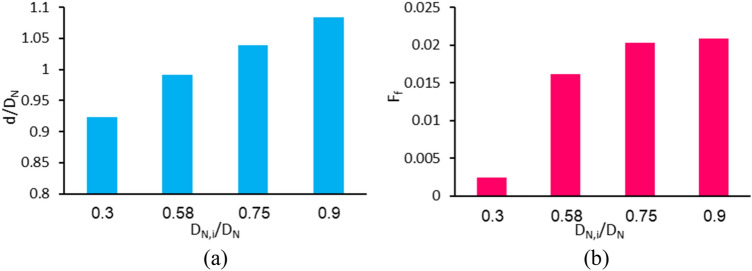
Variations of (a) the dimensionless diameter and (b) the dimensionless formation frequency in terms of the nozzle’s inner to the outer diameter ratio.
Figure 16
Figure 16
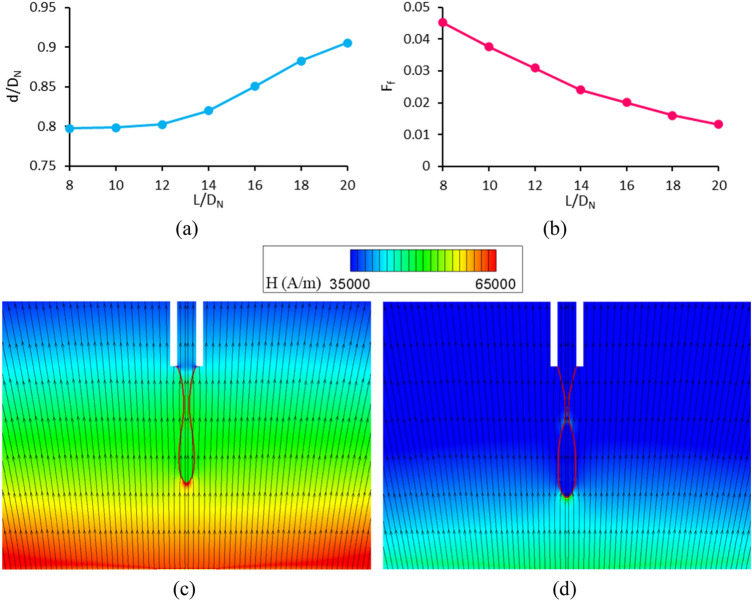
Effect of the ratio of the distance between the nozzle and the center of the top surface of the coil to the outer nozzle diameter on the (a) the dimensionless diameter and (b) the dimensionless formation frequency. (c) Magnetic field strength contours and magnetic lines for (a) LDN=10 and (b) LDN=20.
Figure 17
Figure 17
Variation of (a) the dimensionless drop diameter and (b) dimensionless formation frequency in terms of the initial magnetic susceptibility and various dimensionless saturation magnetizations.
Figure 18
Figure 18
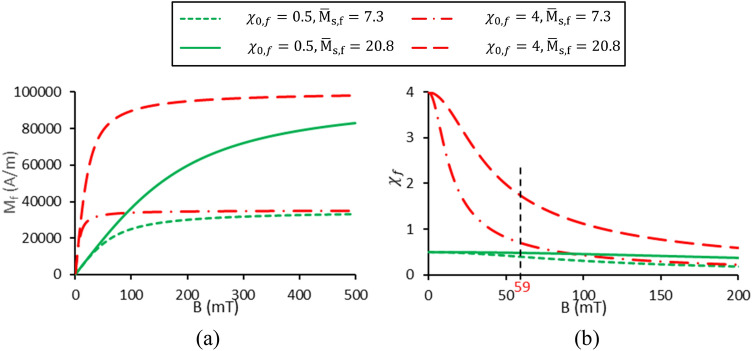
Variations of (a) ferrofluid magnetization and (b) its magnetic susceptibility in terms of magnetic flux density for various initial magnetic susceptibilities and dimensionless saturation magnetization equal to 7.3. The contours of magnetic field strength and magnetic field lines are obtained numerically for initial magnetic susceptibilities of (a) 0.5 and (b) 2.
Figure 19
Figure 19
Variations of (a) ferrofluid magnetization and (b) magnetic susceptibility in terms of magnetic flux density for different initial magnetic sensitivities and dimensionless saturation magnetizations.
Figure 20
Figure 20
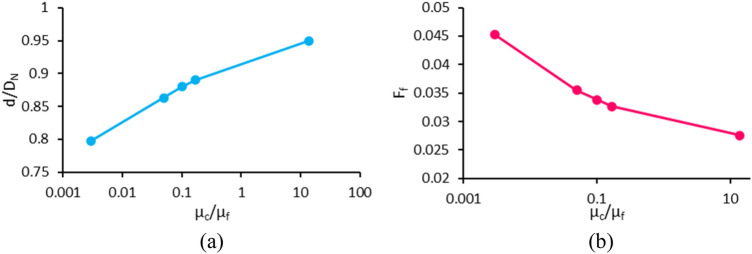
Variation of (a) the dimensionless droplet diameter and (b) the formation frequency in terms of the continuous phase to ferrofluid viscosity ratio (the x-axis is plotted in a logarithmic scale).
Figure 21
Figure 21
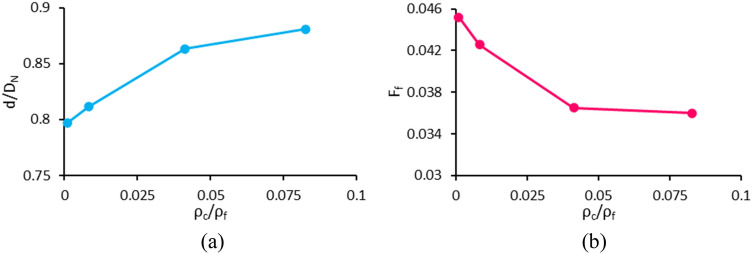
Variation of (a) the dimensionless droplet diameter and (b) formation frequency versus the continuous phase to ferrofluid density ratio.

References

    1. Bijarchi MA, Favakeh A, Mohammadi K, Akbari A, Shafii MB. Ferrofluid droplet breakup process and neck evolution under steady and pulse-width modulated magnetic fields. J. Mol. Liq. 2021;343:117536.
    1. Yaghoobi M, Saidi MS, Ghadami S, Kashaninejad N. An interface–particle interaction approach for evaluation of the co-encapsulation efficiency of cells in a flow-focusing droplet generator. Sensors. 2020;20(13):3774. - PMC - PubMed
    1. Graham AD, Olof SN, Burke MJ, Armstrong JP, Mikhailova EA, Nicholson JG, Box SJ, Szele FG, Perriman AW, Bayley H. High-resolution patterned cellular constructs by droplet-based 3D printing. Sci. Rep. 2017;7(1):1–11. - PMC - PubMed
    1. Song JY, Oh JH, Choi D, Park SM. Highly efficient patterning technique for silver nanowire electrodes by electrospray deposition and its application to self-powered triboelectric tactile sensor. Sci. Rep. 2021;11(1):1–12. - PMC - PubMed
    1. Deiana M, Mori A, Piubelli C, Scarso S, Favarato M, Pomari E. Assessment of the direct quantitation of SARS-CoV-2 by droplet digital PCR. Sci. Rep. 2020;10(1):1–7. - PMC - PubMed