Review
. 2022 Jun 27;8(1):83.
doi: 10.1038/s41531-022-00345-4.

Empirical evidence for biometal dysregulation in Parkinson's disease from a systematic review and Bradford Hill analysis

Affiliations
Review

Empirical evidence for biometal dysregulation in Parkinson's disease from a systematic review and Bradford Hill analysis

Amr H Abdeen et al. NPJ Parkinsons Dis. .

Abstract

The Bradford Hill model evaluates the causal inference of one variable on another by assessing whether evidence of the suspected causal variable aligns with a set of nine criteria proposed by Bradford Hill, each representing fundamental tenets of a causal relationship. The aim of this study was to use the Bradford Hill model of causation to assess the level of empirical evidence supporting our hypotheses that alterations to iron and copper levels, and iron- and copper-associated proteins and genes, contribute to Parkinson's disease etiology. We conducted a systematic review of all available articles published to September 2019 in four online databases. 8437 articles matching search criteria were screened for pre-defined inclusion and exclusion criteria. 181 studies met study criteria and were subsequently evaluated for study quality using established quality assessment tools. Studies meeting criteria for moderate to high quality of study design (n = 155) were analyzed according to the Bradford Hill model of causation. Evidence from studies considered of high quality (n = 73) supported a causal role for iron dysregulation in Parkinson's disease. A causal role for copper dysregulation in Parkinson's disease was also supported by high quality studies, although substantially fewer studies investigated copper in this disorder (n = 25) compared with iron. The available evidence supports an etiological role for iron and copper dysregulation in Parkinson's disease, substantiating current clinical trials of therapeutic interventions targeting alterations in brain levels of these metals in Parkinson's disease.


Conflict of interest statement

The authors declare no competing interests.

Figures
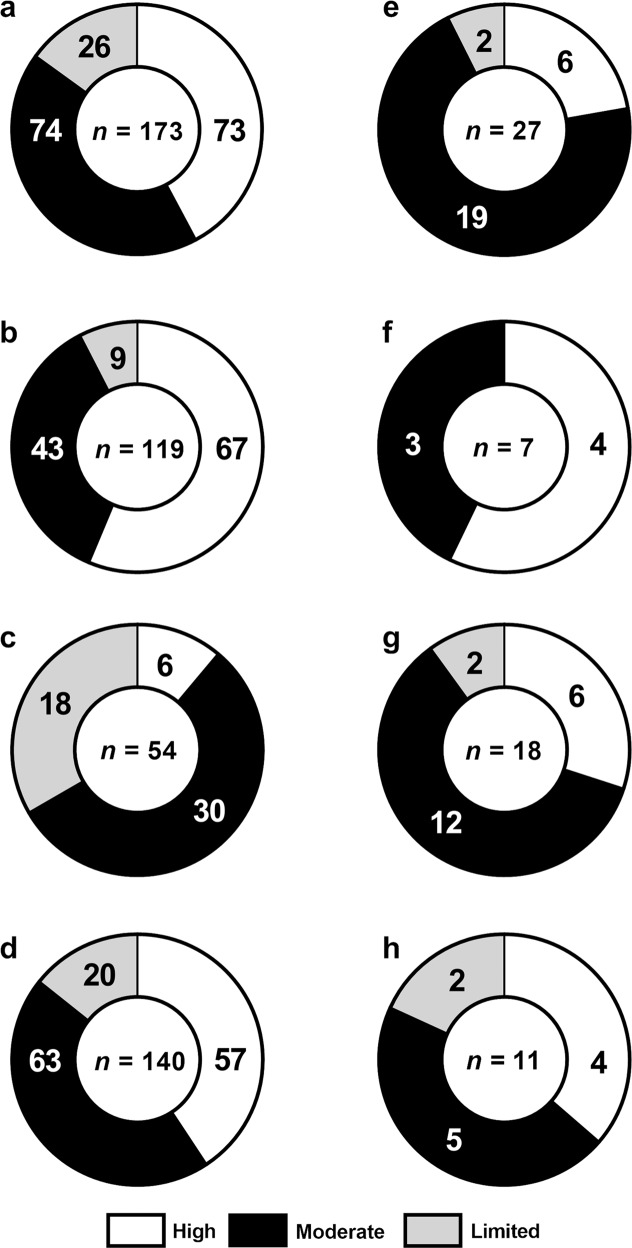
Fig. 1
Fig. 1. Distribution of the quality of included studies investigating the role of iron and copper pathways in Parkinson’s disease etiology.
Study quality for articles investigating the role of iron (ad) and copper (eh) pathways in the pathogenesis of Parkinson’s disease quantified using the revised Genoud Scale, and NIH Quality Assessment Tools. Distribution of quality of all eligible articles (a, e), clinical studies (b, f), post-mortem investigations (c, g), and studies investigating the role of iron and copper metal only (d, h). Studies considered limited quality were excluded from further analyses.
Fig. 2
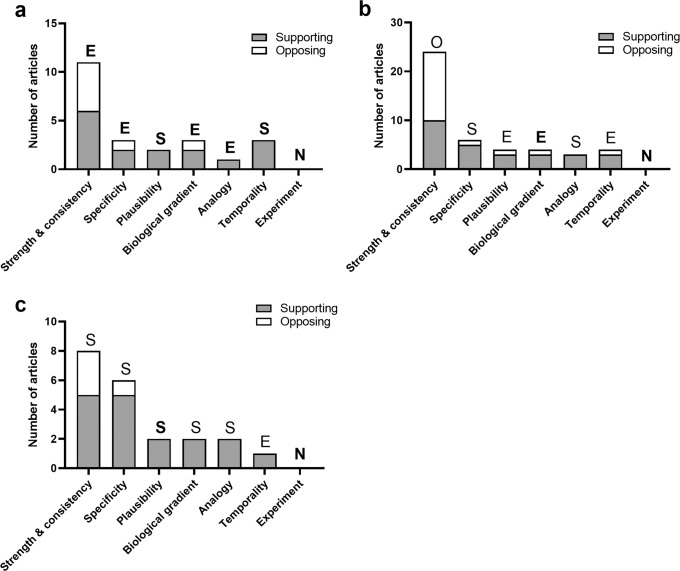
Fig. 2. Bradford Hill criteria data and outcomes of all included studies investigating alterations in SN iron levels, or levels of ferroproteins or iron-associated genes in Parkinson’s disease.
a Portrays results obtained from high quality articles alone, whereas b depicts the combined results from high and moderate quality articles. c, d Data obtained from clinical or post-mortem studies respectively. e Data obtained from all articles reporting alterations in iron metal levels in the Parkinson’s disease SN or SNc, that is, excluding articles reporting protein and/or genetic changes. Data for the Bradford Hill criterion, coherence, is considerably higher than other criteria and was therefore presented in Supplementary Table 2. Letters S (supporting), O (opposing), and E (equivocal) indicate overall criteria outcomes determined by analyses of all included studies. Non-bolded letters highlight discrepant criteria outcomes between each panel and (a). N, no data.
Fig. 3
Fig. 3. Bradford Hill criteria data and outcomes of all included articles investigating alterations in SN copper levels, or levels of cuproproteins or copper-associated genes in Parkinson’s disease.
a Portrays results obtained from high quality articles alone, whereas b depicts the combined results from high and moderate quality articles. c All articles reporting alterations in copper metal levels in the Parkinson’s disease SN or SNc, that is, excluding articles reporting protein and/or genetic changes. Data for the Bradford Hill criterion, coherence, is considerably higher than other criteria and was therefore presented in Supplementary Table 3. Letters S (supporting), O (opposing), and E (equivocal) indicate overall criteria outcomes determined by analyses of all included studies. Non-bolded letters highlight discrepant criteria outcomes between each panel and (a). N, no data.
Fig. 4
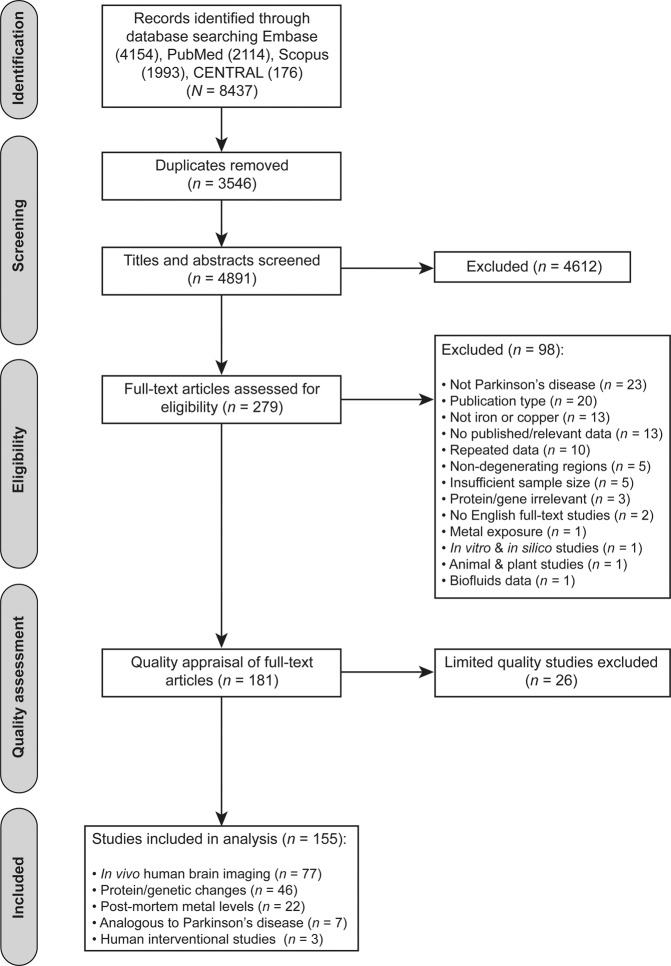
Fig. 4. PRISMA flowchart of literature search, screening, eligibility, and quality assessment.
CENTRAL The Cochrane Controlled Register of Controlled Trials.

References

    1. Bloem BR, Okun MS, Klein C. Parkinson’s disease. Lancet. 2021;397:2284–2303. doi: 10.1016/S0140-6736(21)00218-X. - DOI - PubMed
    1. Barnham KJ, Bush AI. Biological metals and metal-targeting compounds in major neurodegenerative diseases. Chem. Soc. Rev. 2014;43:6727–6749. doi: 10.1039/C4CS00138A. - DOI - PubMed
    1. Genoud S, Senior AM, Hare DJ, Double KL. Meta-analysis of copper and iron in Parkinson’s disease brain and biofluids. Mov. Disord. 2020;35:662–671. doi: 10.1002/mds.27947. - DOI - PubMed
    1. Hill AB. The environment and disease: Association or causation? J. R. Soc. Med. 2015;108:32–37. doi: 10.1177/0141076814562718. - DOI - PMC - PubMed
    1. Doll R, Hill AB. Smoking and carcinoma of the lung: Preliminary report. Br. Med. J. 1950;2:739–748. doi: 10.1136/bmj.2.4682.739. - DOI - PMC - PubMed