


Performance of Mini Parasep® SF stool concentrator kit, Kato-Katz, and formalin-ethyl acetate concentration methods for diagnosis of opisthorchiasis in Northeast Thailand
- PMID: 35761311
- PMCID: PMC9235228
- DOI: 10.1186/s13071-022-05338-z
Performance of Mini Parasep® SF stool concentrator kit, Kato-Katz, and formalin-ethyl acetate concentration methods for diagnosis of opisthorchiasis in Northeast Thailand
Abstract
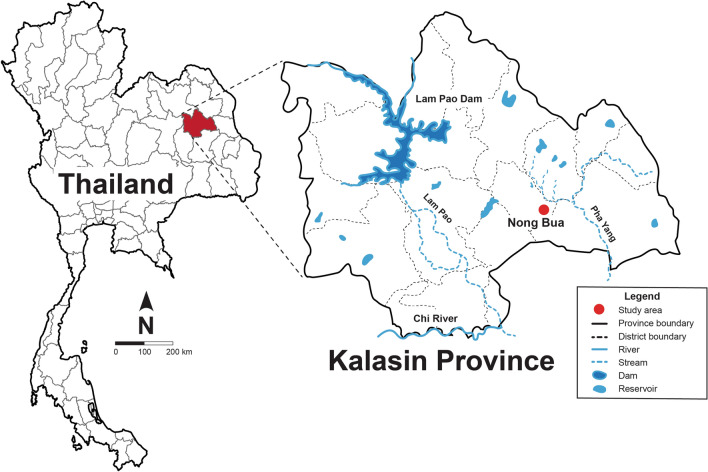
Background: Control and elimination of the liver fluke (Opisthorchis viverrini) is a primary preventive strategy against cholangiocarcinoma in Southeast Asia. A sensitive parasitological diagnostic method is required to facilitate a surveillance and control program. In this study, we evaluated the performance of Mini Parasep® SF stool concentrator kit (stool kit) compared with Kato-Katz (KK) and the quantitative formalin-ethyl acetate concentration technique (FECT) for detection of O. viverrini and co-endemic parasitic infections.
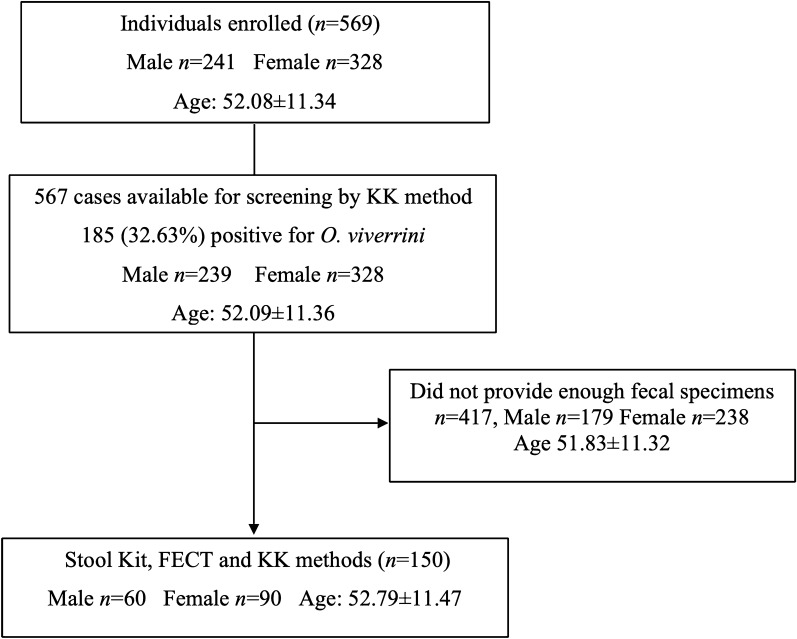
Methods: A cross-sectional survey for parasitic infection in residents aged > 15 years in a community in Kalasin province, Northeast Thailand, was conducted in 2018. Fecal samples were collected and screened by KK method, and a subset of samples was further examined by the stool kit and FECT methods. The results were analyzed for prevalence of parasitic infections in addition to the diagnostic performance of the methods for qualitative and quantitative detection of helminthiases.
Results: The initial survey of parasitic infection determined by the KK method (n = 567) showed the prevalence of O. viverrini was 32.63%, followed by Taenia 2.65%, echinostomes 1.76%, hookworms 1.41%, Trichuris trichiura 0.53% and Strongyloides stercoralis 0.53%. Within a subset of samples tested with multiple diagnostics (n = 150), the detection rates of O. viverrini by the stool kit, FECT and KK methods were 27.3%, 30.7% and 28.7%, respectively. The diagnostic sensitivity for opisthorchiasis was similar for FECT (75.5%), KK(66.0%) and the stool kit (67.3%). For other parasitic infections, FECT and stool kit methods performed better than KK, particularly in detecting minute intestinal flukes (MIF), S. stercoralis and coinfections. When measuring the intensity of O. viverrini infection (fecal egg counts), the stool kit results showed a significant positive correlation with KK and FECT (P < 0.05).
Conclusions: As the stool kit is simple to use and shows a comparable performance to FECT, it may serve as an alternative method of fecal examination for screening of helminthiasis including opisthorchiasis.
Keywords: Diagnostic performance; Formalin-ethyl acetate concentration technique; Helminthiasis; Kato-Katz; Mini Parasep® SF stool concentrator kit; Opisthorchiasis; Opisthorchis viverrini.
© 2022. The Author(s).
Conflict of interest statement
The authors declare that they have no competing interests.
Figures

References
-
- Chamadol N, Khuntikeo N, Thinkhamrop B, Thinkhamrop K, Suwannatrai AT, Kelly M, et al. Association between periductal fibrosis and bile duct dilatation among a population at high risk of cholangiocarcinoma: a cross-sectional study of cholangiocarcinoma screening in Northeast Thailand. BMJ Open. 2019;9:e023217. - PMC - PubMed
-
- Khuntikeo N, Thinkhamrop B, Bundhamcharoen K, Andrews RH, Grundy-Warr C, Yongvanit P, et al. The Socioeconomic burden of cholangiocarcinoma associated with Opisthorchis viverrini sensu lato infection in Northeast Thailand: a preliminary analysis. Adv Parasitol. 2018;102:141–163. - PubMed
-
- IARC . A review of human carcinogens Monographs on the evaluation of carcinogenic risks to humans. Geneva: World Health Organization International Agency Research on Cancer; 2011.
MeSH terms
Substances
Grants and funding
LinkOut - more resources
Full Text Sources
Research Materials
Miscellaneous
