


Genetic and epigenetic factors associated with depression: An updated overview
- PMID: 35762011
- PMCID: PMC9232544
- DOI: 10.1016/j.sjbs.2022.103311
Genetic and epigenetic factors associated with depression: An updated overview
Abstract
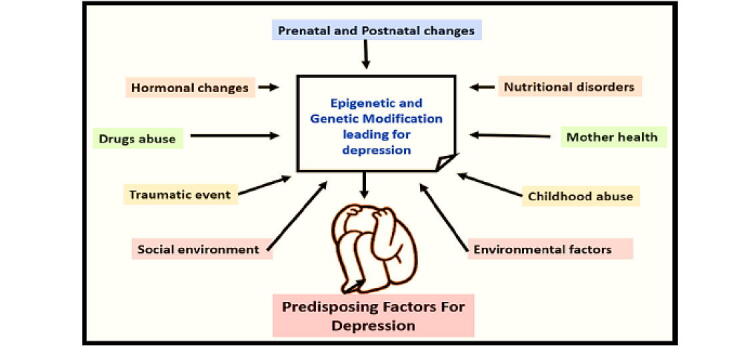
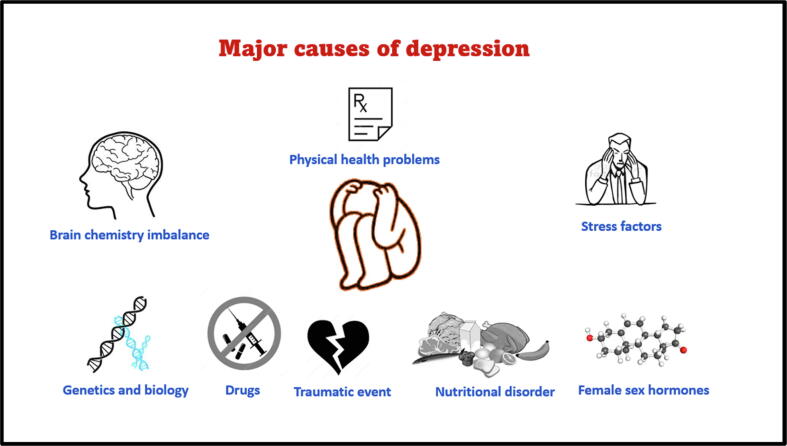
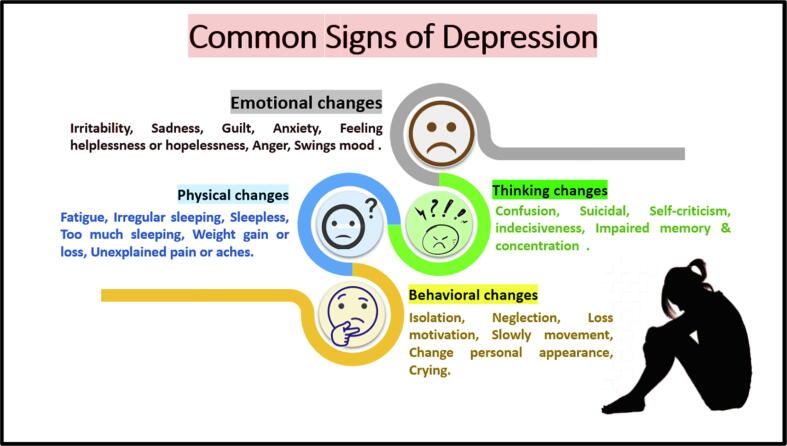
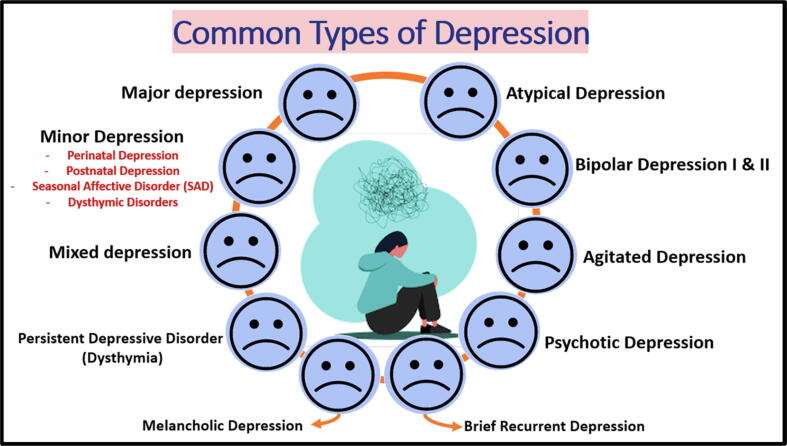
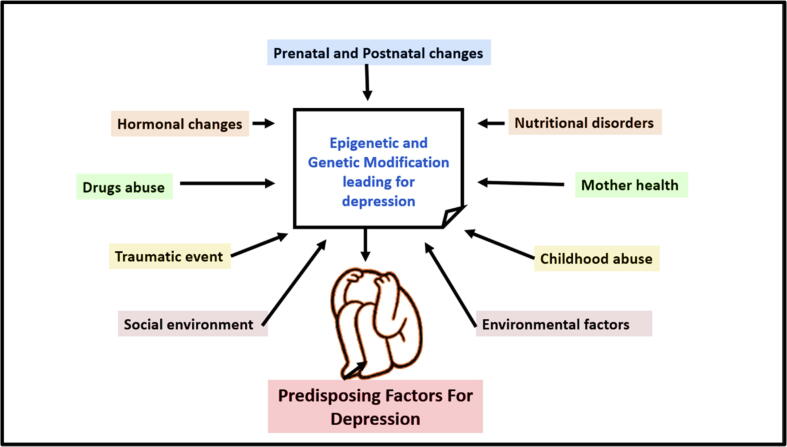
Depression is a complex psychiatric disturbance involving many environmental, genetic, and epigenetic factors. Until now, genetic, and non-genetic studies are still on the way to understanding the complex mechanism of this disease, and there are still many questions that have not yet been answered. Depression includes a large spectrum of heterogeneous symptoms correlated to the deficit of a range of psychological, cognitive, and emotional processes, and it affects various age groups. It is classified into several types according to the severity of symptoms, time of occurrence, and time. Following the World Health Organization (WHO), depression attacks near 350 million persons globally. Several factors overlap in causing depression, including genetic and epigenetic factors, environmental conditions, various stresses, lack of some nutrients to which people are exposed, and excessive stress and abuse in childhood. This study included conducting surveys on depression and new treatment trends based on epigenetic factors associated with the occurrence of the disease. Epigenetic factors provide a completely novel dimension to therapeutic approaches as most diseases are not monogenic, and it is likely that the environment has a significant contribution. Epigenetic inheritance is included in many mental and psychiatric disorders such as depression. In general, epigenetic modifications could be summarized in 3 major points: DNA methylation, histone modification, and non-mediated regulation of RNA (ncRNA). This study also describes some genes associated with one of the depressive disorders using bioinformatics tools and gene bank and had the genes: SLC6A4, COMT, TPH2, FKBP5, MDD1, HTR2A, and MDD2. As in this study, the awareness of Saudi society about depression and its genetic and non-genetic causes was estimated. The results showed that an encouraging percentage of more than half of the research sample possessed correct information about this disorder.
Keywords: COMT, Catechol-O-methyltransferase; Depression; Epigenetic factors; FKBP5, FKBP Prolyl Isomerase 5; Genetic factors; HTR2A, hydroxy tryptamine receptor 2A; MBCT, Mindfulness-based cognitive therapy; MDD1, Major Depressive Disorder 1; MDD2, Major Depressive Disorder 2; NICE, National Institute for Health and Care Excellence; NIMH, National Institute of Mental Health; SAD, Seasonal Affective Disorder; SLC6A4, Solute Carrier Family 6 Member 4; Symptoms; TPH2, Tryptophan hydroxylase 2; Treatment.
© 2022 The Author(s).
Figures
References
-
- Abd El-Hack M.E., Alaidaroos B.A., Farsi R.M., Abou-Kassem D.E., El-Saadony M.T., Saad A.M., Shafi M.E., Albaqami N.M., Taha A.E., Ashour E.A. Impacts of supplementing broiler diets with biological curcumin, zinc nanoparticles and Bacillus licheniformis on growth, carcass traits, blood indices, meat quality and cecal microbial load. Animals. 2021;11(7):1878. - PMC - PubMed
-
- Abd El-Hack M.E., El-Saadony M.T., Shafi M.E., Alshahrani O.A., Saghir S.A., Al-Wajeeh A.S., Abdel-Moneim A.M.E. Prebiotics can restrict Salmonella populations in poultry: a review. Anim. Biotechnol. 2021:1–10. - PubMed
-
- Abd El‐Hack M.E., El‐Saadony M.T., Swelum A.A., Arif M., Abo Ghanima M.M., Shukry M., Noreldin A., Taha A.E., El‐Tarabily K.A. Curcumin, the active substance of turmeric: its effects on health and ways to improve its bioavailability. J. Sci. Food Agric. 2021;101(14):5747–5762. - PubMed
-
- Abdel-Moneim A.M.E., El-Saadony M.T., Shehata A.M., Saad A.M., Aldhumri S.A., Ouda S.M., Mesalam N.M. Antioxidant and antimicrobial activities of Spirulina platensis extracts and biogenic selenium nanoparticles against selected pathogenic bacteria and fungi. Saudi J. Biol. Sci. 2022;29(2):1197–1209. - PMC - PubMed
-
- Abdelnour S.A., El-Saadony M.T., Saghir S.A.M., Abd El-Hack M.E., Al-shargi O.Y.A., Al-Gabri N., Salama A. Mitigating negative impacts of heat stress in growing rabbits via dietary prodigiosin supplementation. Livest. Sci. 2020;240:104220.
Publication types
LinkOut - more resources
Full Text Sources
Research Materials
Miscellaneous
