


Differences in obstetric practices and outcomes of postpartum hemorrhage across Nigerian health facilities
- PMID: 35762807
- PMCID: PMC9542178
- DOI: 10.1002/ijgo.14198
Differences in obstetric practices and outcomes of postpartum hemorrhage across Nigerian health facilities
Abstract
Objective: To explore differences in obstetric practices and clinical outcomes of postpartum hemorrhage (PPH) in Nigerian facilities.
Methods: A descriptive cross-sectional study of public health facilities providing maternal healthcare services in Nigeria. Surveys were conducted across 38 purposively sampled facilities (January 2020-March 2021) to collect information on obstetric practices related to the management of the third stage of labor, treatment of postpartum hemorrhage, and clinical outcomes related to postpartum hemorrhage in the preceding 12 months.
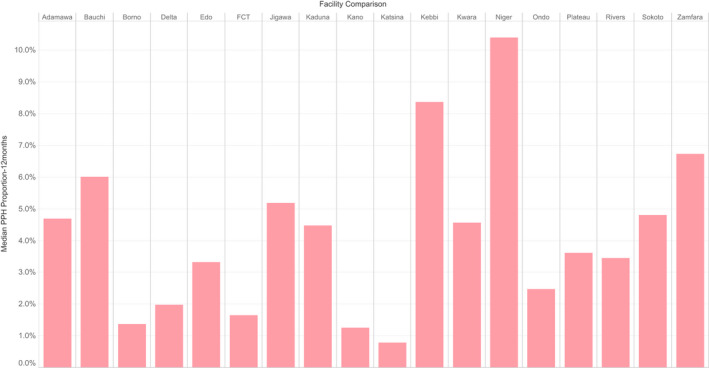
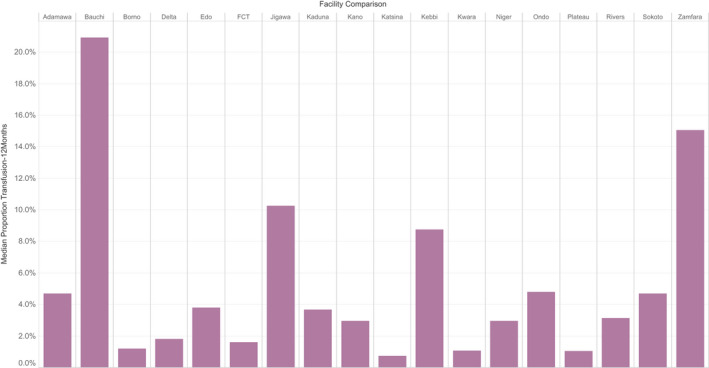
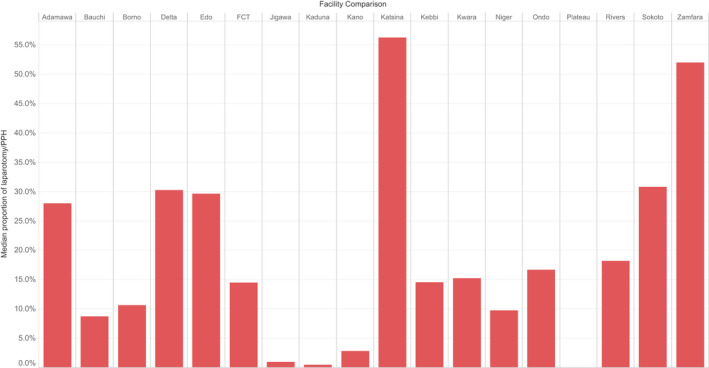
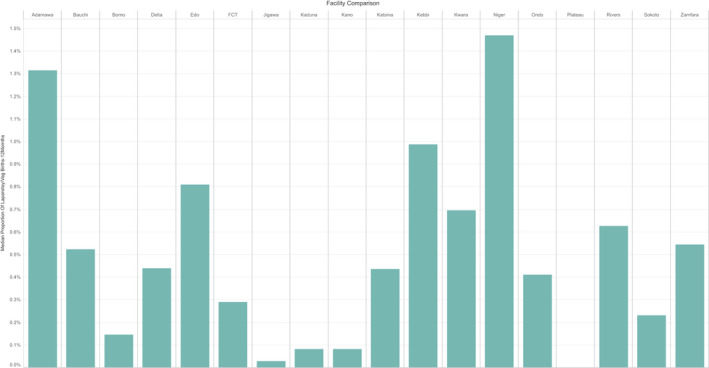
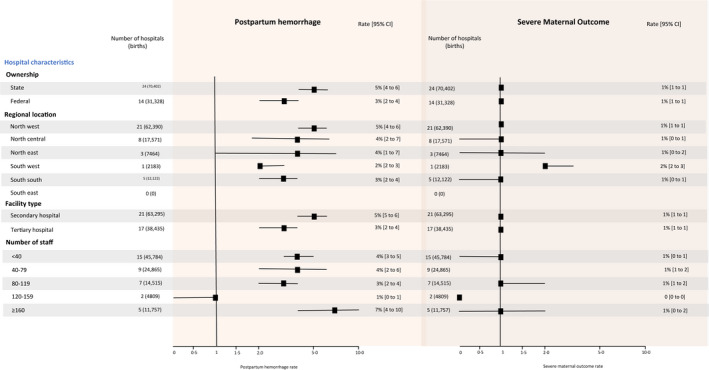
Results: The median number of annual births per facility was 2230 (IQR, 1952-3283). The cesarean section rate was 21.6% (range 2.1%-52.6%). There was large variability in PPH rate (median 3%, range 0.4%-16.8%) and blood transfusions for PPH (median 2.8%, range 0.4%-48.6%) after vaginal birth. There was less variability for laparotomies (median 0.25%, range 0%-2.8%) and maternal deaths (median 0.11%, range 0%-0.64%) due to PPH after vaginal birth. The number of maternal deaths from all causes varied (median 0.27%, range 0%-3.5%). The rates of PPH and adverse maternal outcomes did not vary substantially between state or federal facilities, region, type of facility, and the number of clinical staff.
Conclusion: Across the Nigerian facilities surveyed there was large variation in PPH rates and adverse maternal outcomes due to PPH. This variability remains largely unexplained and requires further insights and detailed data to gain a deeper understanding of the root causes and challenges to implement customized solutions to improve maternal outcomes.
Keywords: Nigeria; bleeding after pregnancy; clinical practice; maternal death; obstetric hemorrhage; postpartum hemorrhage; pregnancy outcomes.
© 2022 The Authors. International Journal of Gynecology & Obstetrics published by John Wiley & Sons Ltd on behalf of International Federation of Gynecology and Obstetrics.
Conflict of interest statement
K‐MM, AA, RT, LB, AD, AC, and ID report BMGF funding for the E‐MOTIVE trial paid to the University of Birmingham. Other authors have no conflicts of interest to declare.
Figures

References
-
- Say L, Chou D, Gemmill A, et al. Global causes of maternal death: a WHO systematic analysis. Lancet Glob Health. 2014;2:323‐333. - PubMed
-
- World Health Organization, UNICEF, UNFPA, World Bank, UNPD . Trends in Maternal Mortality 2000 to 2017: Estimates by WHO, UNICEF, UNFPA, World Bank Group and the United Nations Population Division. WHO; 2019.
-
- National Population Commission (NPC) [Nigeria] and ICF. Nigeria Demographic and Health Survey 2018 Key Indicators Report. NPC and ICF; 2019.
MeSH terms
Grants and funding
LinkOut - more resources
Full Text Sources
