


Understanding patients' and significant others' preferences on starting a diagnostic trajectory for dementia: An integrative review
- PMID: 35763442
- PMCID: PMC10166060
- DOI: 10.1080/13607863.2022.2084505
Understanding patients' and significant others' preferences on starting a diagnostic trajectory for dementia: An integrative review
Abstract
Objective: To explore the preferences of people with memory complaints (PwMC) and their significant others regarding starting a diagnostic trajectory for dementia.
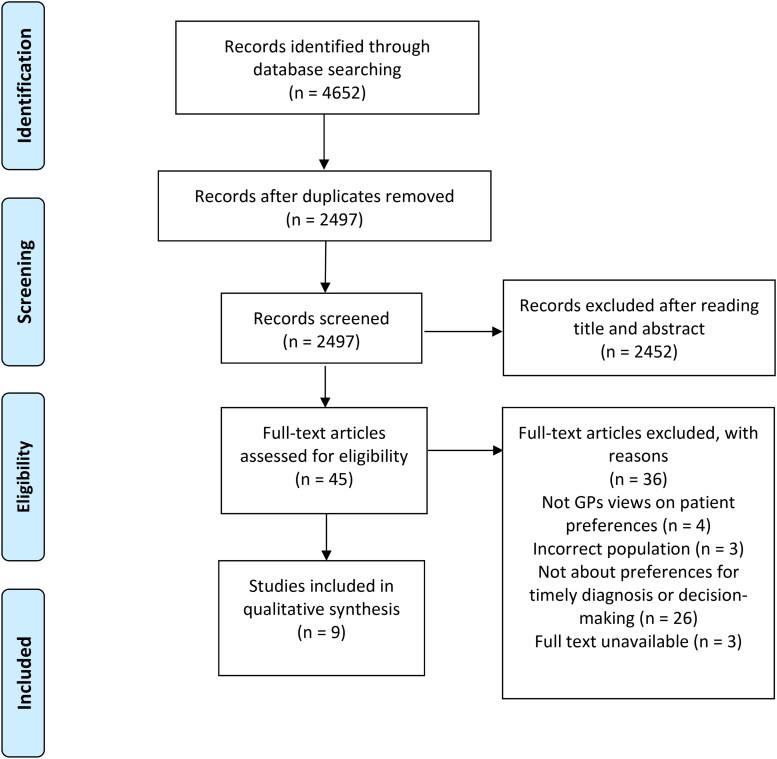
Methods: A systematic literature search was conducted in PubMed, PsycINFO, CINAHL, Web of Science, and Embase. Selection of abstracts and papers was performed independently by two researchers. Methodological quality was assessed with the Mixed Method Appraisal Tool. Result sections of the selected papers were thematically synthesized.
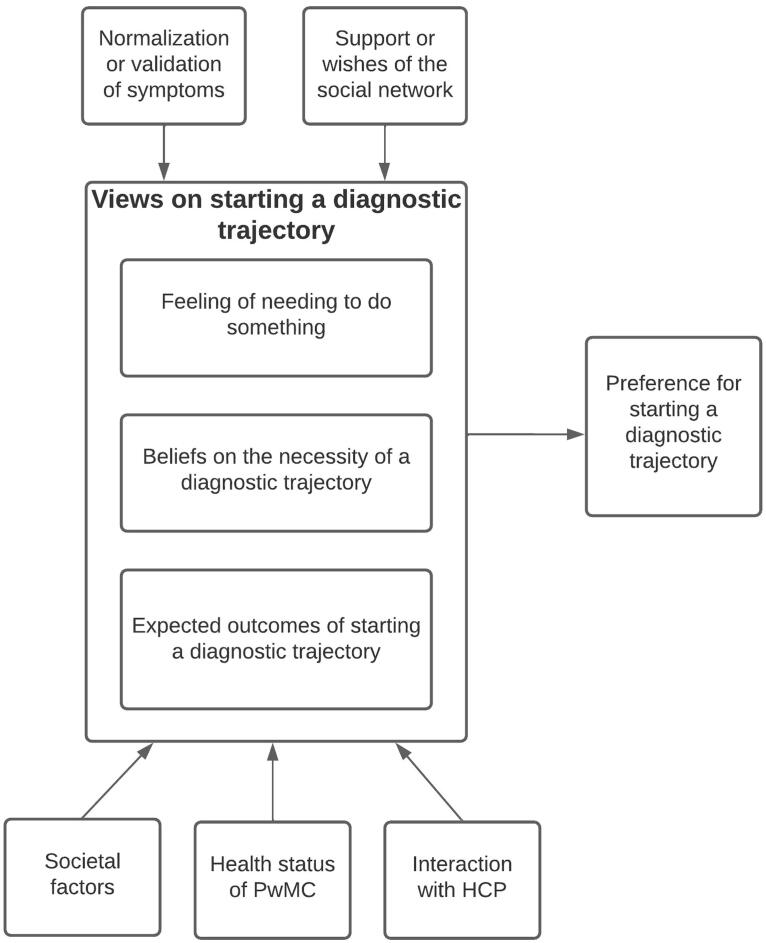
Results: From 2497 citations, seven qualitative studies and two mixed methods studies published between 2010 and 2020 were included. Overall quality of the studies was high to moderate. A thematic synthesis showed that preferences for starting a diagnostic trajectory arose from the feeling of needing to do something about the symptoms, beliefs on the necessity and expected outcomes of starting a diagnostic trajectory. These views were influenced by normalization or validation of symptoms, the support or wishes of the social network, interactions with health care professionals, the health status of the PwMC, and societal factors such as stigma and socioeconomic status.
Conclusion: A variety of considerations with regard to decision-making on starting a diagnostic trajectory for dementia were identified. This emphasizes the need to explore individual preferences to facilitate a timely dementia diagnosis.
Keywords: Dementia; dementia and cognitive disorders; patient; preferences; significant other; timely diagnosis.
Conflict of interest statement
No potential conflict of interest was reported by the authors.
Figures
References
-
- Brunet, M. D., McCartney, M., Heath, I., Tomlinson, J., Gordon, P., Cosgrove, J., Deveson, P., Gordon, S., Marciano, S. A., Colvin, D., Sayer, M., Silverman, R., & Bhattia, N. (2012). There is no evidence base for proposed dementia screening. BMJ (Clinical Research ed.), 345, e8588. 10.1136/bmj.e8588 - DOI - PubMed
Publication types
MeSH terms
LinkOut - more resources
Full Text Sources
Medical
