


Charting the proteome landscape in major psychiatric disorders: From biomarkers to biological pathways towards drug discovery
- PMID: 35763977
- PMCID: PMC9378550
- DOI: 10.1016/j.euroneuro.2022.06.001
Charting the proteome landscape in major psychiatric disorders: From biomarkers to biological pathways towards drug discovery
Abstract
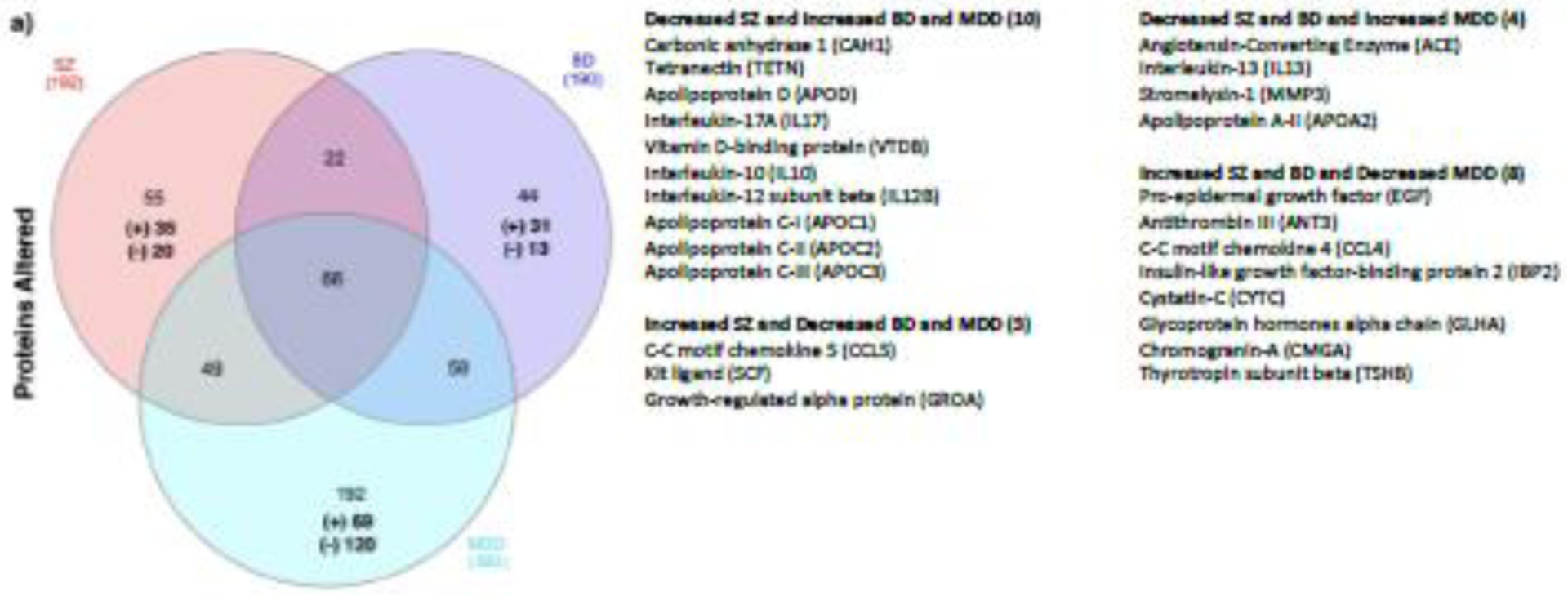
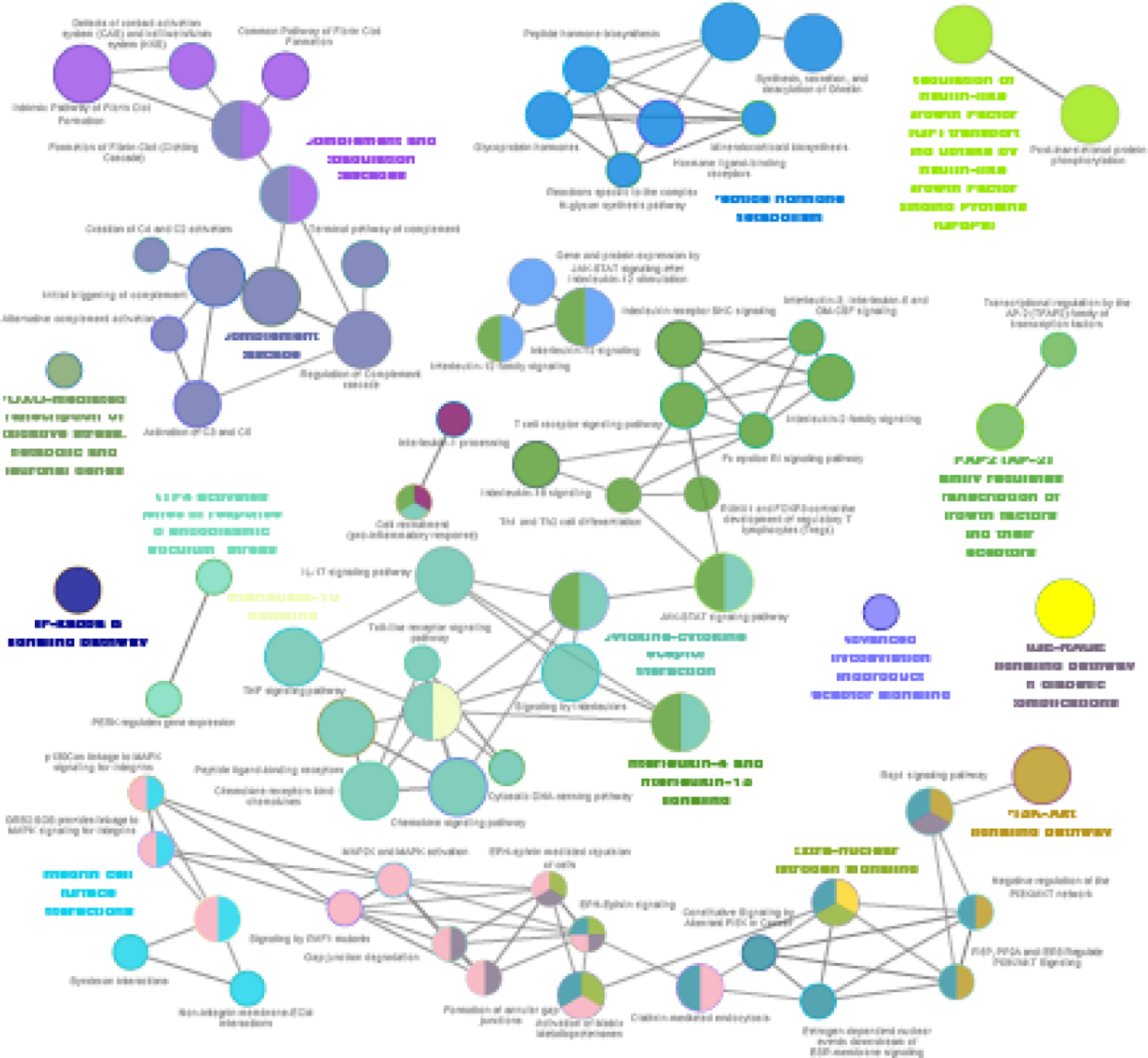
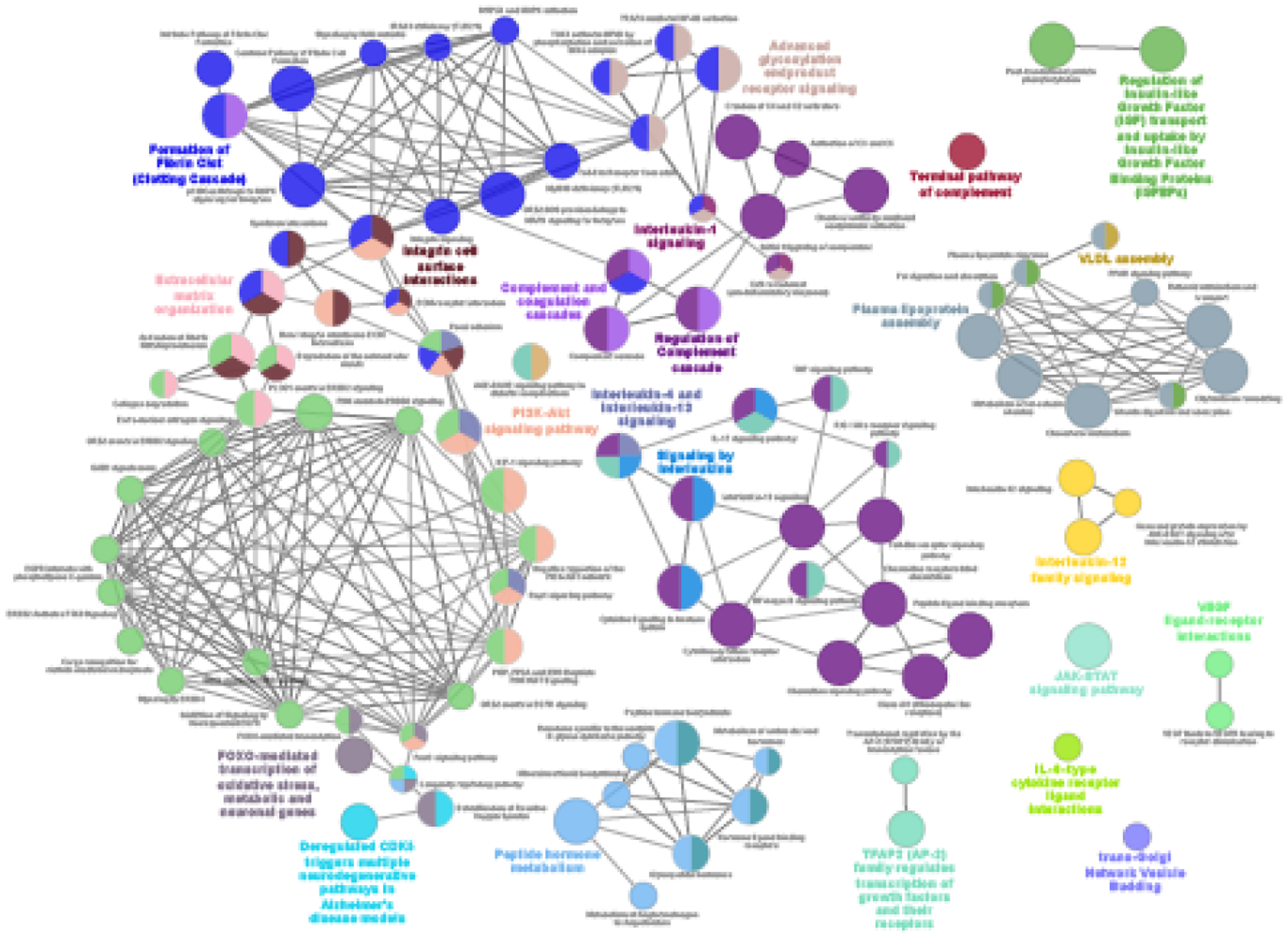
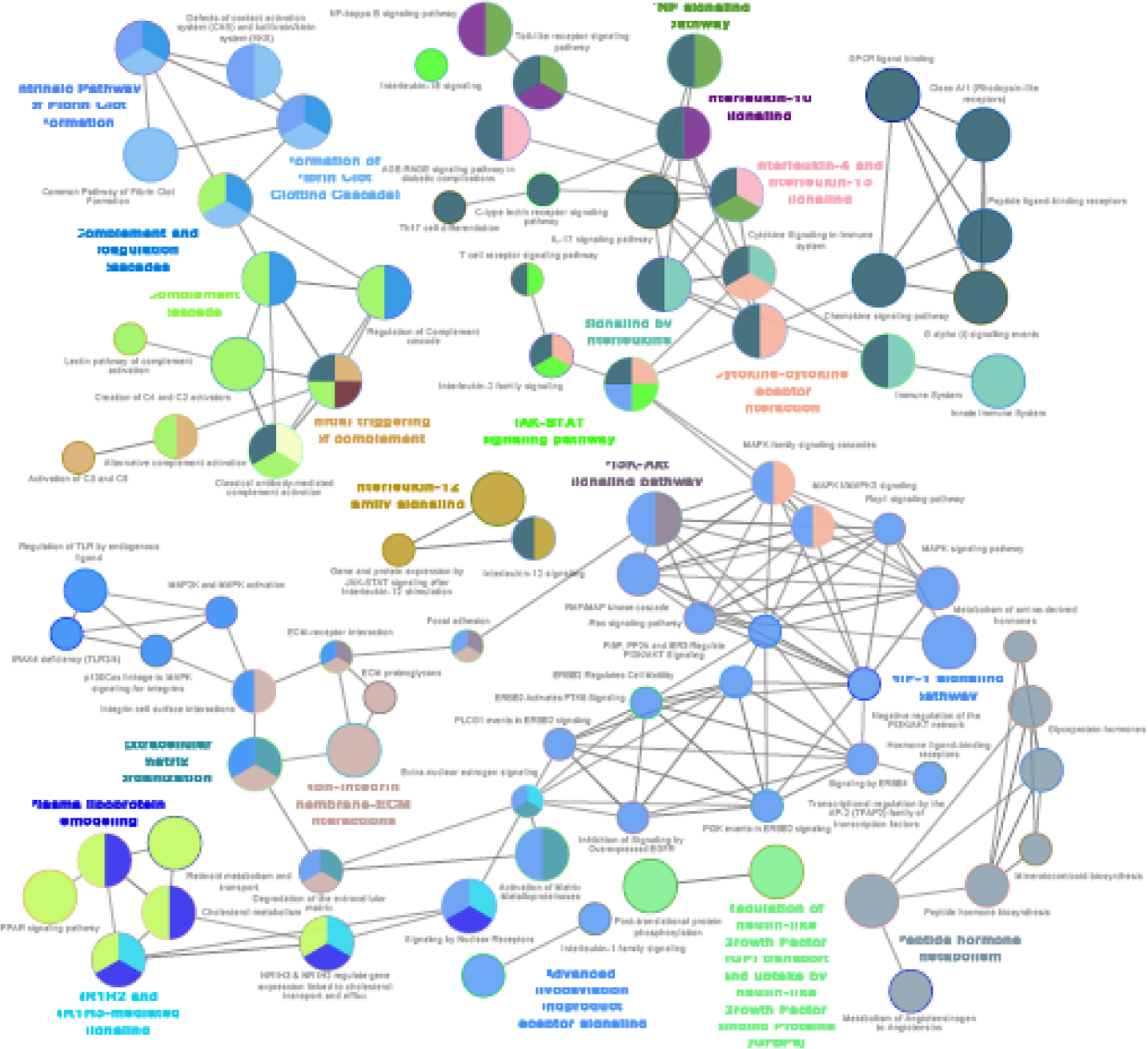
Schizophrenia (SZ), bipolar disorder (BD), and major depressive disorder (MDD) are major mental disorders that affect a significant proportion of the global population. Advancing our knowledge of the pathophysiology of these disorders and identifying biomarkers are urgent needs for developing objective diagnostic tests and new therapeutics. In this study, we performed a systematic review and then extracted, curated, and analyzed proteomics data from published studies, aiming to assess the proteome in peripheral blood of individuals with SZ, BD, or MDD. Then, we performed pathway and network analyses to illuminate the biological themes concatenated by the differentially expressed proteins by systematically interrogating the literature to uncover biological pathways with more robust biological meaning. We identified 486 differentially expressed proteins from 51 studies across the three disorders with 9,423 participants. The great majority of pathways were common to SZ, BD, and MDD. They were related to the immune system, including signaling by interleukins, Toll-like receptor signaling pathway, and complement cascade, and to signal transduction, notably MAPK1/MAPK3 signaling, PI3K-Akt Signaling Pathway, Focal Adhesion-PI3K-Akt-mTOR-signaling, rhodopsin-like receptors, GPCR signaling, and the JAK-STAT signaling pathway. Other shared pathways included advanced glycosylation end-product receptor signaling, Regulation of Insulin-like Growth Factor, cholesterol metabolism, and IL-17 signaling pathway. Pathways shared between SZ and BD were integrin cell-surface interactions, GRB2:SOS provides linkage to MAPK signaling for integrins, and syndecan interactions. Shared between BD and MDD were the NRF2 pathway and signaling by EGFR pathways. Our findings advance our understanding of the protein variations and associations with these disorders, which are useful for accelerating biomarker development and drug discovery.
Keywords: Biological pathways; Bipolar disorder; Drug development; Major depressive disorder; Proteomics; Schizophrenia.
Copyright © 2022 Elsevier B.V. and ECNP. All rights reserved.
Conflict of interest statement
Declaration of Competing Interest The authors have no competing interests to declare that are relevant to the content of this article.
Figures
References
-
- Akcan U, Karabulut S, Ismail Kucukali C, Cakir S, Tuzun E, 2018. Bipolar disorder patients display reduced serum complement levels and elevated peripheral blood complement expression levels. Acta Neuropsychiatr 30, 70–78. - PubMed
-
- Bossuyt PM, Reitsma JB, Bruns DE, Gatsonis CA, Glasziou PP, Irwig L, Lijmer JG, Moher D, Rennie D, de Vet HC, Kressel HY, Rifai N, Golub RM, Altman DG, Hooft L, Korevaar DA, Cohen JF, Group S, 2015. STARD 2015: an updated list of essential items for reporting diagnostic accuracy studies. BMJ 351, h5527. - PMC - PubMed
-
- Boyajyan A, Khoyetsyan A, Chavushyan A, 2010. Alternative complement pathway in schizophrenia. Neurochem Res 35, 894–898. - PubMed
-
- Carvalho AF, Solmi M, Sanches M, Machado MO, Stubbs B, Ajnakina O, Sherman C, Sun YR, Liu CS, Brunoni AR, Pigato G, Fernandes BS, Bortolato B, Husain MI, Dragioti E, Firth J, Cosco TD, Maes M, Berk M, Lanctot KL, Vieta E, Pizzagalli DA, Smith L, Fusar-Poli P, Kurdyak PA, Fornaro M, Rehm J, Herrmann N, 2020. Evidence-based umbrella review of 162 peripheral biomarkers for major mental disorders. Transl Psychiatry 10, 152. - PMC - PubMed
Publication types
MeSH terms
Substances
Grants and funding
LinkOut - more resources
Full Text Sources
Medical
Research Materials
Miscellaneous
