This is a preprint.
Epidemiological characteristics and transmission dynamics of the outbreak caused by the SARS-CoV-2 Omicron variant in Shanghai, China: a descriptive study
- PMID: 35765564
- PMCID: PMC9238184
- DOI: 10.1101/2022.06.11.22276273
Epidemiological characteristics and transmission dynamics of the outbreak caused by the SARS-CoV-2 Omicron variant in Shanghai, China: a descriptive study
Update in
-
Epidemiological characteristics and transmission dynamics of the outbreak caused by the SARS-CoV-2 Omicron variant in Shanghai, China: A descriptive study.Lancet Reg Health West Pac. 2022 Dec;29:100592. doi: 10.1016/j.lanwpc.2022.100592. Epub 2022 Sep 7. Lancet Reg Health West Pac. 2022. PMID: 36090701 Free PMC article.
Abstract
Background: In early March 2022, a major outbreak of the severe acute respiratory syndrome coronavirus 2 (SARS-CoV-2) Omicron variant spread rapidly throughout Shanghai, China. Here we aimed to provide a description of the epidemiological characteristics and spatiotemporal transmission dynamics of the Omicron outbreak under the population-based screening and lockdown policies implemented in Shanghai.
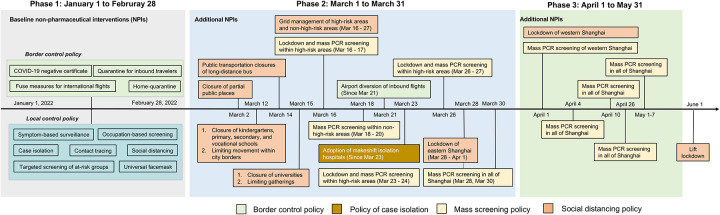
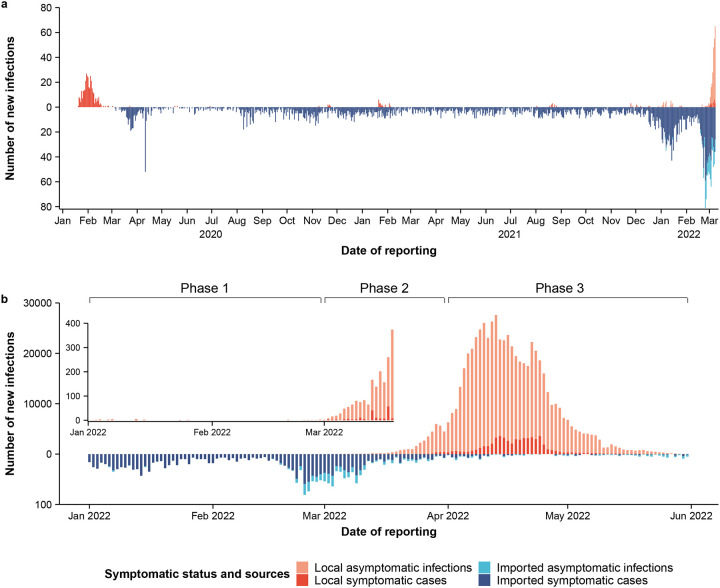
Methods: We extracted individual information on SARS-CoV-2 infections reported between January 1 and May 31, 2022, and on the timeline of the adopted non-pharmacological interventions. The epidemic was divided into three phases: i) sporadic infections (January 1-February 28), ii) local transmission (March 1-March 31), and iii) city-wide lockdown (April 1 to May 31). We described the epidemic spread during these three phases and the subdistrict-level spatiotemporal distribution of the infections. To evaluate the impact on the transmission of SARS-CoV-2 of the adopted targeted interventions in Phase 2 and city-wide lockdown in Phase 3, we estimated the dynamics of the net reproduction number ( R t ).
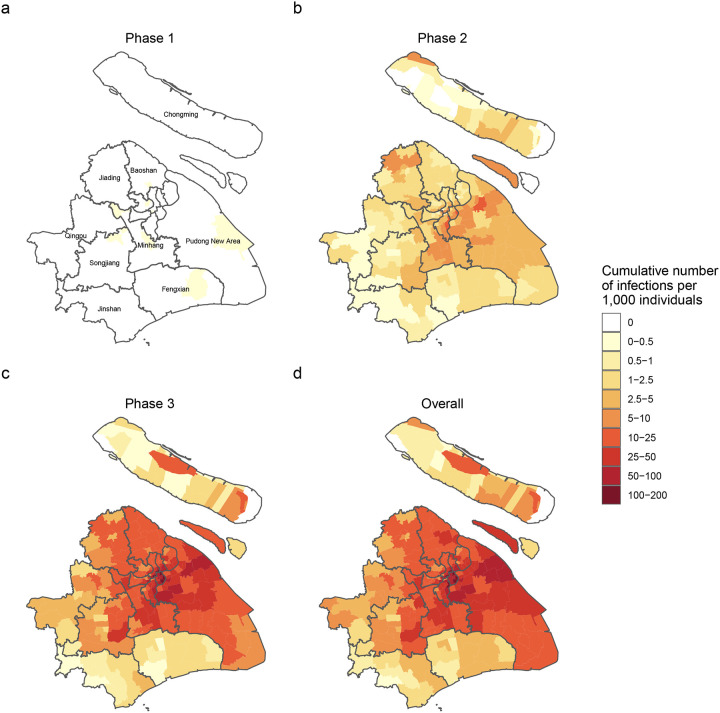
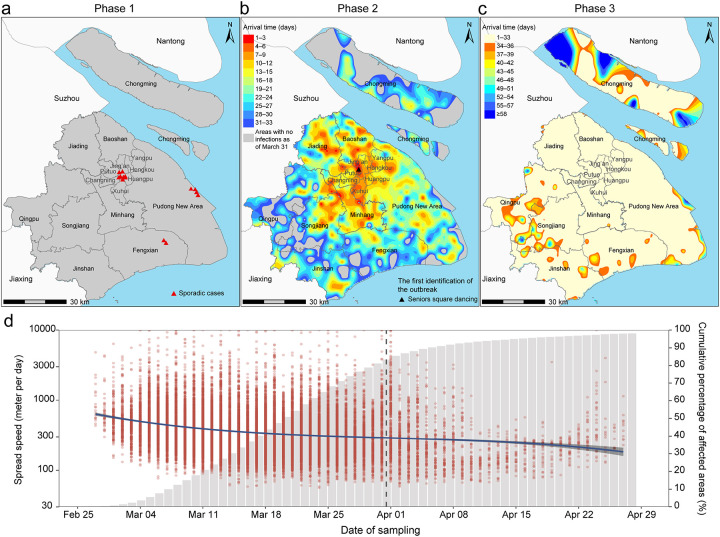
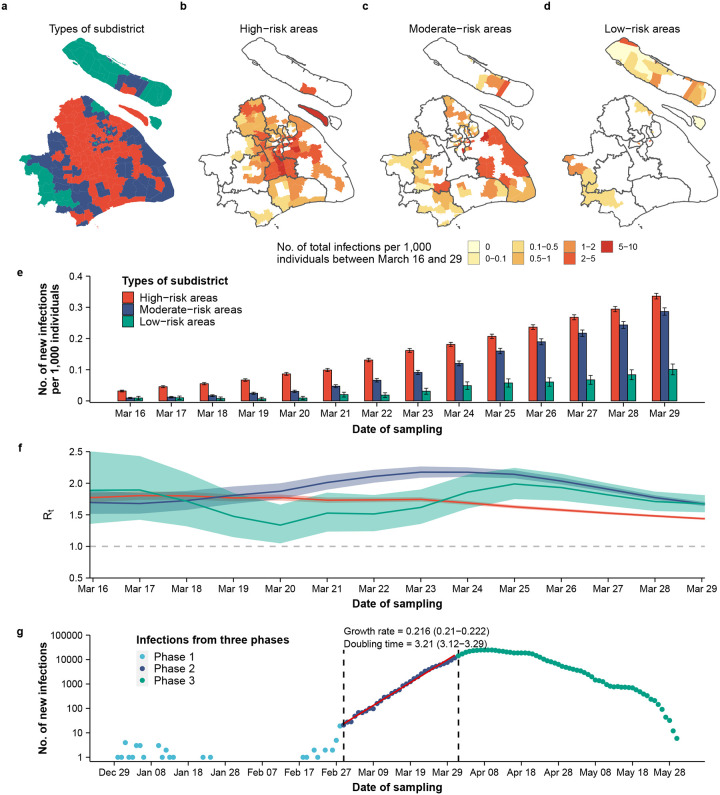
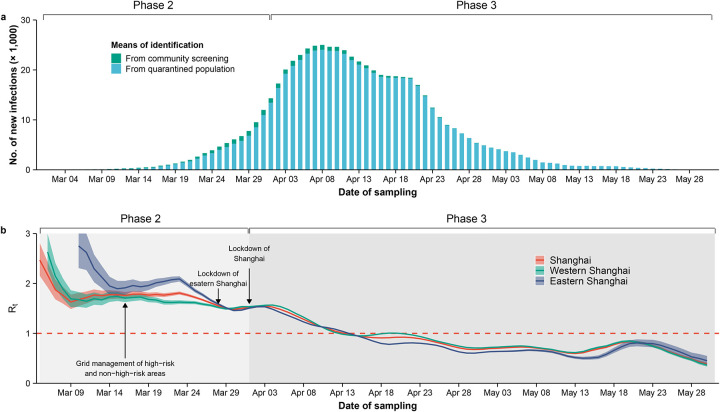
Findings: A surge in imported infections in Phase 1 triggered cryptic local transmission of the Omicron variant in early March, resulting in the largest coronavirus disease 2019 (COVID-19) outbreak in mainland China since the original wave. A total of 626,000 SARS-CoV-2 infections were reported in 99.5% (215/216) of the subdistricts of Shanghai. The spatial distribution of the infections was highly heterogeneous, with 40% of the subdistricts accounting for 80% of all infections. A clear trend from the city center towards adjacent suburban and rural areas was observed, with a progressive slowdown of the epidemic spread (from 544 to 325 meters/day) prior to the citywide lockdown. During Phase 2, R t remained well above 1 despite the implementation of multiple targeted interventions. The citywide lockdown imposed on April 1 led to a marked decrease in transmission, bringing R t below the epidemic threshold in the entire city on April 14 and ultimately leading to containment of the outbreak.
Interpretation: Our results highlight the risk of widespread outbreaks in mainland China, particularly under the heightened pressure of imported infections. The targeted interventions adopted in March 2022 were not capable of halting transmission, and the implementation of a strict, prolonged city-wide lockdown was needed to successfully contain the outbreak, highlighting the challenges for successfully containing Omicron outbreaks.
Funding: Key Program of the National Natural Science Foundation of China (82130093).
Research in context: Evidence before this study: On May 24, 2022, we searched PubMed and Europe PMC for papers published or posted on preprint servers after January 1, 2022, using the following query: ("SARS-CoV-2" OR "Omicron" OR "BA.2") AND ("epidemiology" OR "epidemiological" OR "transmission dynamics") AND ("Shanghai"). A total of 26 studies were identified; among them, two aimed to describe or project the spread of the 2022 Omicron outbreak in Shanghai. One preprint described the epidemiological and clinical characteristics of 376 pediatric SARS-CoV-2 infections in March 2022, and the other preprint projected the epidemic progress in Shanghai, without providing an analysis of field data. In sum, none of these studies provided a comprehensive description of the epidemiological characteristics and spatiotemporal transmission dynamics of the outbreak.Added value of this study: We collected individual information on SARS-CoV-2 infection and the timeline of the public health response. Population-based screenings were repeatedly implemented during the outbreak, which allowed us to investigate the spatiotemporal spread of the Omicron BA.2 variant as well as the impact of the implemented interventions, all without enduring significant amounts of underreporting from surveillance systems, as experienced in other areas. This study provides the first comprehensive assessment of the Omicron outbreak in Shanghai, China.Implications of all the available evidence: This descriptive study provides a comprehensive understanding of the epidemiological features and transmission dynamics of the Omicron outbreak in Shanghai, China. The empirical evidence from Shanghai, which was ultimately able to curtail the outbreak, provides invaluable information to policymakers on the impact of the containment strategies adopted by the Shanghai public health officials to prepare for potential outbreaks caused by Omicron or novel variants.
Figures
References
-
- World Health Organization. Tracking SARS-CoV-2 variants. 2022. - PubMed
Publication types
LinkOut - more resources
Full Text Sources
Miscellaneous