


Cerebral ischemia in the developing brain
- PMID: 35765984
- PMCID: PMC9536116
- DOI: 10.1177/0271678X221111600
Cerebral ischemia in the developing brain
Abstract
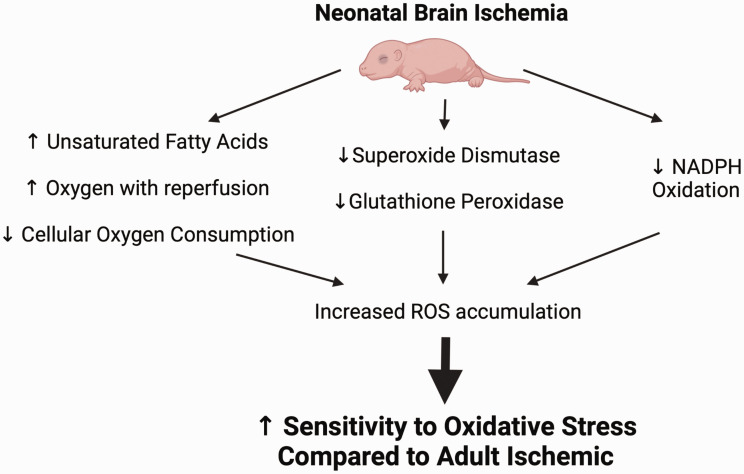
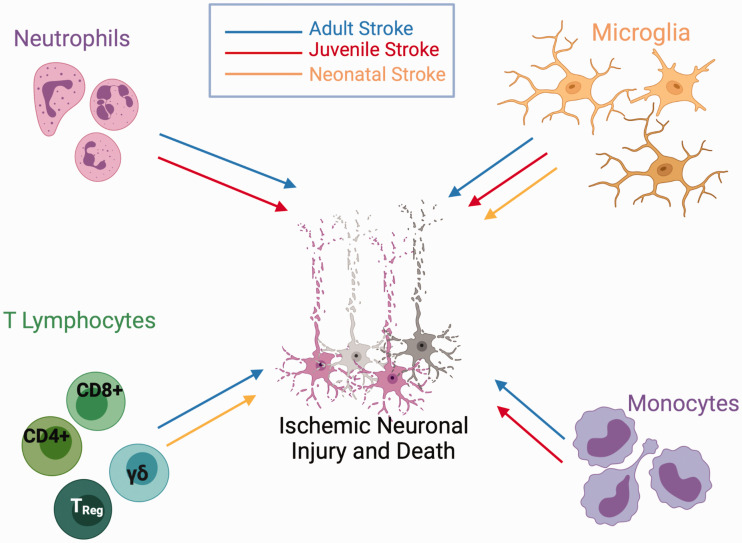
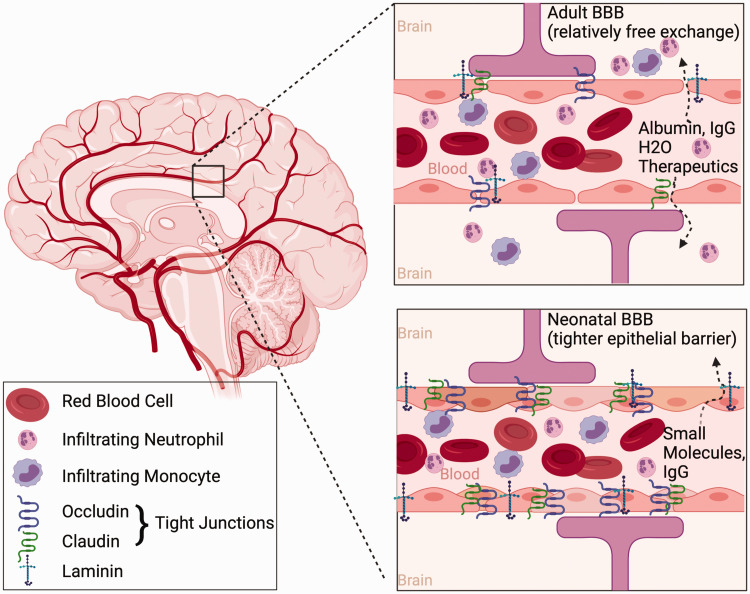
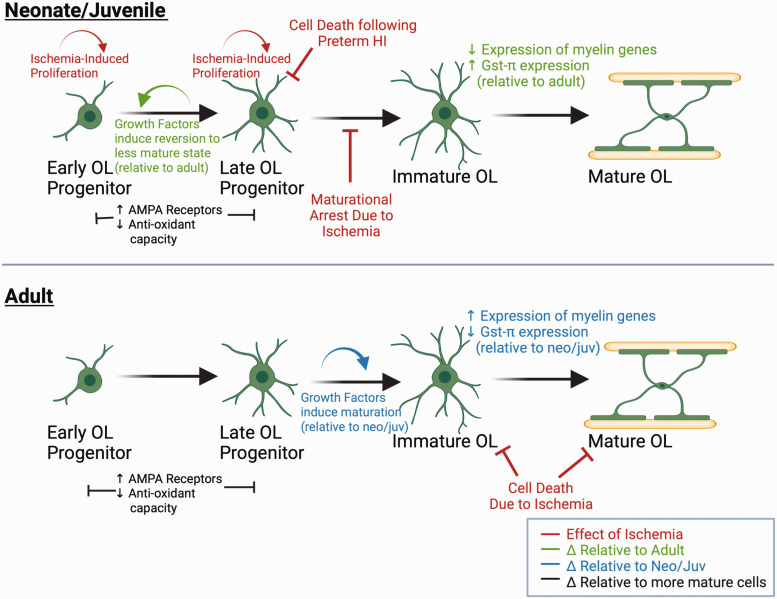
Brain ischemia affects all ages, from neonates to the elderly population, and is a leading cause of mortality and morbidity. Multiple preclinical rodent models involving different ages have been developed to investigate the effect of ischemia during different times of key brain maturation events. Traditional models of developmental brain ischemia have focused on rodents at postnatal day 7-10, though emerging models in juvenile rodents (postnatal days 17-25) indicate that there may be fundamental differences in neuronal injury and functional outcomes following focal or global cerebral ischemia at different developmental ages, as well as in adults. Here, we consider the timing of injury in terms of excitation/inhibition balance, oxidative stress, inflammatory responses, blood brain barrier integrity, and white matter injury. Finally, we review translational strategies to improve function after ischemic brain injury, including new ideas regarding neurorestoration, or neural repair strategies that restore plasticity, at delayed time points after ischemia.
Keywords: Juvenile; global cerebral ischemia; neonatal ischemia; neurodevelopment; neurorestoration; pediatric stroke.
Conflict of interest statement
Figures
References
-
- Topjian AA, de Caen A, Wainwright MS, et al. Pediatric post-cardiac arrest care: a scientific statement from the American Heart Association. Circulation 2019; 140: e194–e233. - PubMed
-
- Meaney PA, Nadkarni VM, Cook EF, et al. Higher survival rates among younger patients after pediatric intensive care unit cardiac arrests. Pediatrics 2006; 118: 2424–2433. - PubMed
-
- Arrich J, Holzer M, Havel C, et al. Hypothermia for neuroprotection in adults after cardiopulmonary resuscitation. Cochr Database Syst Rev 2012; 9: CD004128. - PubMed
Publication types
MeSH terms
Grants and funding
LinkOut - more resources
Full Text Sources
