. 2022 Jun 29;12(1):10998.
doi: 10.1038/s41598-022-14644-6.

Evaluating utility and feasibility of mismatch repair testing of colorectal cancer patients in a low-middle-income country

Affiliations

Evaluating utility and feasibility of mismatch repair testing of colorectal cancer patients in a low-middle-income country

Inas Elsayed et al. Sci Rep. .

Abstract

Molecular pathology services for colorectal cancer (CRC) in Sudan represent a significant unmet clinical need. In a retrospective cohort study involving 50 patients diagnosed with CRC at three major medical settings in Sudan, we aimed to outline the introduction of a molecular genetic service for CRC in Sudan, and to explore the CRC molecular features and their relationship to patient survival and clinicopathological characteristics. Mismatch repair (MMR) and BRAF (V600E) mutation status were determined by immunohistochemistry. A mismatch repair deficient (dMMR) subtype was demonstrated in 16% of cases, and a presumptive Lynch Syndrome (LS) diagnosis was made in up to 14% of patients. dMMR CRC in Sudan is characterized by younger age at diagnosis and a higher incidence of right-sided tumours. We report a high mortality in Sudanese CRC patients, which correlates with advanced disease stage, and MMR status. Routine MMR immunohistochemistry (with sequential BRAF mutation analysis) is a feasible CRC prognostic and predictive molecular biomarker, as well as a screening tool for LS in low-middle-income countries (LMICs).


Conflict of interest statement

The authors declare no competing interests.

Figures
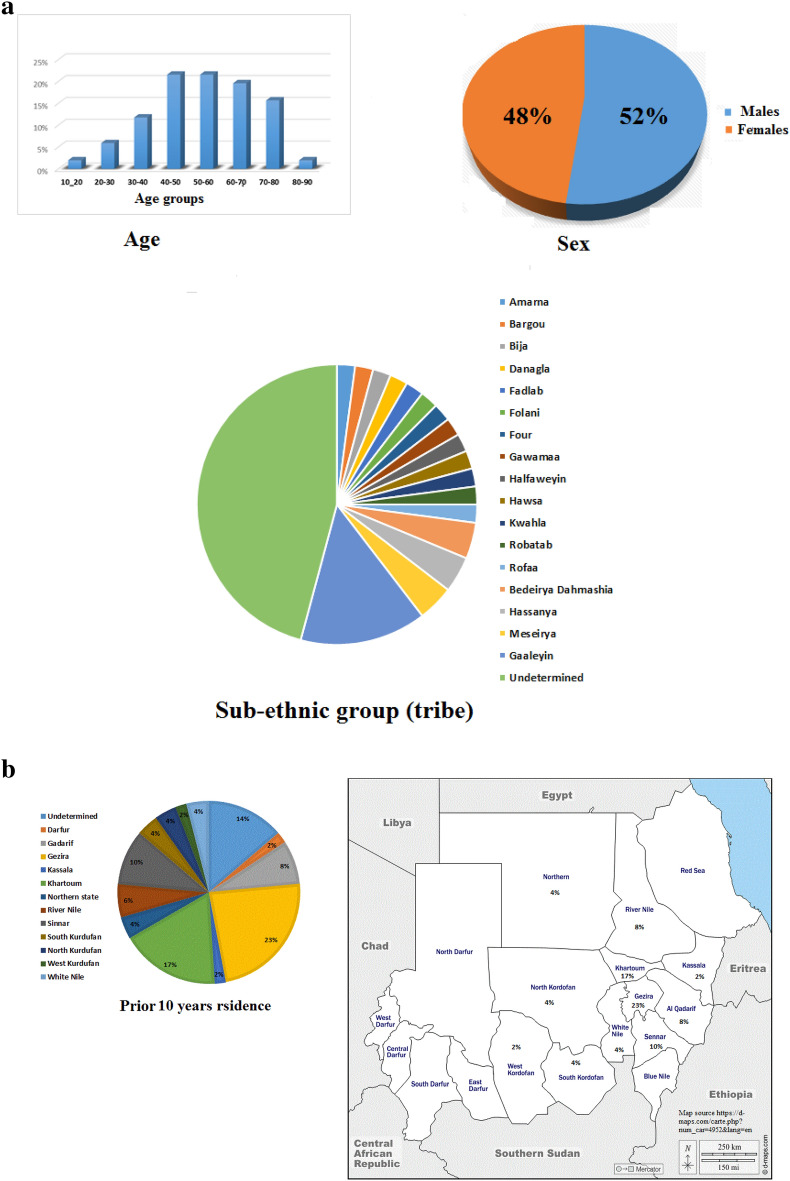
Figure 1
Figure 1
(a) Demographic data: Figure illustrates the age distribution, males and females percentages, and the sub-ethnic groups (tribes) of the studied CRC cases. (b) Prior 10 years residence of the studied cases: Figure illustrates the prior 10 years residence of the studied cases in Sudan’s 18 states. Sudan states map by D-maps.com, available from: https://d-maps.com/carte.php?num_car=4952&lang=en.
Figure 2
Figure 2
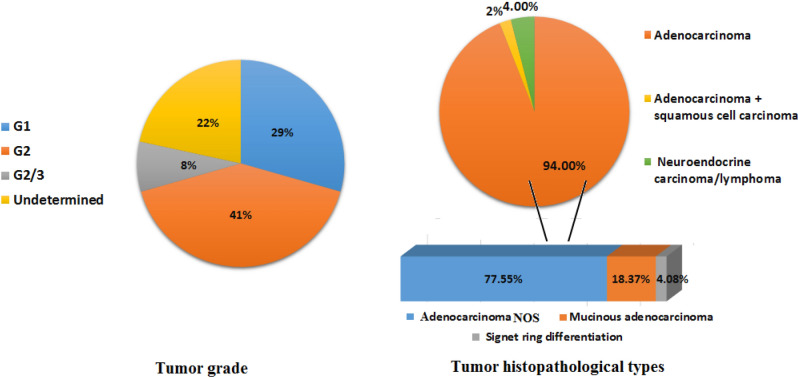
Histopathological characteristics: Figure summarizes the frequencies of: tumor differentiation grade, and tumor histopathological type.
Figure 3
Figure 3
MMR and BRAF IHC : H&E and IHC profiles of (a) proficient MMR, dMMR (MLH1 + PMS2) and dMMR(MSH2 + MSH6) loss samples, (b) BRAF IHC of a dMMR (MLH1 + PMS2) sample where i. and ii. BRAF wild-type, iii. Positive BRAF control, iv. Negative BRAF control.
Figure 4
Figure 4
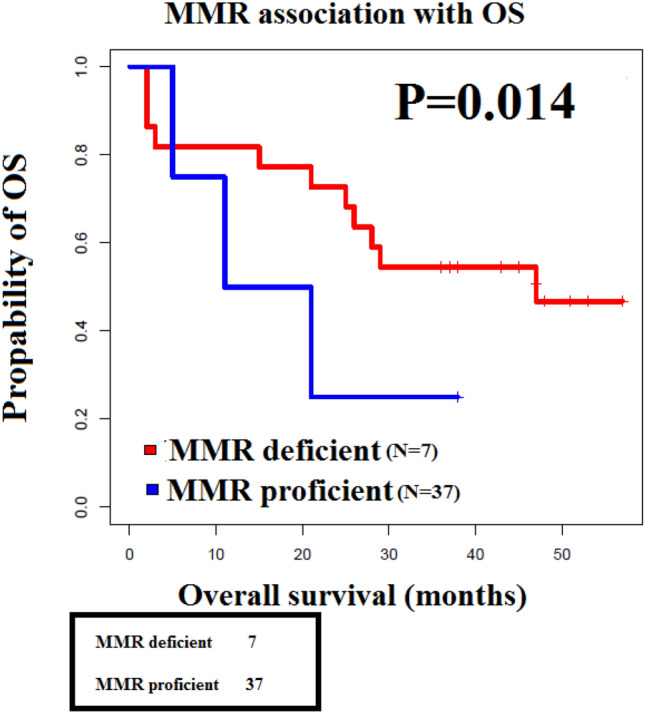
MMR status correlated with overall survival in Sudanese CRC patients: dMMR CRC showing worse OS compared to proficient MMR CRC.

References

    1. Cronin KA, et al. Annual report to the nation on the status of cancer, part i: national cancer statistics. Cancer. 2018;124:2785–2800. doi: 10.1002/cncr.31551. - DOI - PMC - PubMed
    1. Bray F, et al. Global cancer statistics 2018: GLOBOCAN estimates of incidence and mortality worldwide for 36 cancers in 185 countries. CA. Cancer J. Clin. 2018;68:394–424. doi: 10.3322/caac.21492. - DOI - PubMed
    1. The cancer Atlas Genome Comprehensive molecular characterization of human colon and rectal cancer. Nature. 2012;487:330–337. doi: 10.1038/nature11252. - DOI - PMC - PubMed
    1. Sveen A, et al. Colorectal cancer consensus molecular subtypes translated to preclinical models uncover potentially targetable cancer cell dependencies. Clin. Cancer Res. 2018;24:794–806. doi: 10.1158/1078-0432.CCR-17-1234. - DOI - PubMed
    1. Ryan E, Sheahan K, Creavin B, Mohan HM, Winter DC. The current value of determining the mismatch repair status of colorectal cancer: A rationale for routine testing. Crit. Rev. Oncol. Hematol. 2017;116:38–57. doi: 10.1016/j.critrevonc.2017.05.006. - DOI - PubMed

Publication types

MeSH terms

Substances